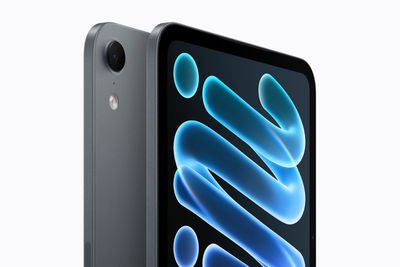
Apple's tech specs for the new iPad mini reveal that the 512GB model ships with a different version of the A20 Pro: a 6-core CPU with two super cores and four efficiency cores, plus a Dual 16-core Neural Engine. The 128GB and 256GB models meanwhile get a 5-core CPU (two super, three efficiency) and a 16-core Neural Engine.
All three models share a 7-core GPU, Neural Accelerators, and hardware-accelerated ray tracing. The nano-texture display glass option is also limited to the 256GB and 512GB models. Pricing starts at $699 for the Wi-Fi model and $849 for Wi-Fi + Cellular.
Apple's new iPad mini offers an optional nano-texture display for reduced glare, but the finish is limited to models with 256GB or 512GB of storage.
The nano-texture glass option costs an additional $100 in the U.S., bringing the starting price to $899 for the 256GB Wi-Fi model. The entry-level 128GB model is excluded from the option. Configurations with nano-texture glass also include an Apple polishing cloth in the box.
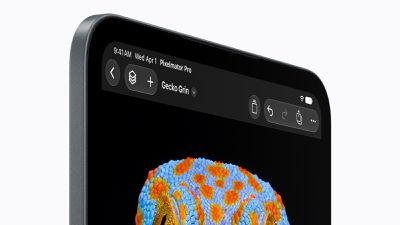
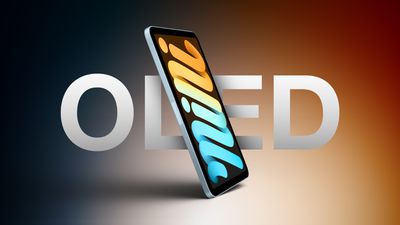
Apple says the finish is intended to improve visibility in bright environments, highlighting uses such as editing outdoors and working in the field. The option accompanies the iPad mini's switch to an 8.5-inch OLED Super Retina XDR display, which delivers deeper blacks and up to 1,200 nits of peak HDR brightness.
Nano-texture is also offered on the iPad Pro, although it is restricted to its 1TB and 2TB configurations. As such, the iPad mini makes the finish available at lower storage tiers.
The new display also supports 600 nits of full-screen brightness for SDR and HDR content and a minimum brightness of 1 nit. Apple Pencil Pro, Apple Pencil (USB-C), and Apple Pencil hover are supported.
The new iPad mini starts at $699 for the standard-glass 128GB Wi-Fi model. Pre-orders begin Wednesday, October 28, with availability starting Friday, November 6.
Just minutes after Apple announced a new iPad mini with an OLED display, A20 Pro chip, and more, Apple's marketing chief Greg Joswiak teased an "exciting week" ahead.
The new iPad mini is Apple's first water-resistant iPad, featuring an IP67 rating for water and dust resistance.
Apple tested the device for immersion in water up to one meter deep for up to 30 minutes under controlled laboratory conditions. The company highlights reading by the pool and working outdoors on a rainy day as situations where the protection could be particularly useful.
The new iPad mini's "Acoustic Display" audio system apparently helps make the protection possible. It uses specially designed woofers paired through the display, with tweeters hidden between the glass and aluminum enclosure. Apple says the system's sealed enclosure contributes to the IP67 rating while also improving bass and volume.
Apple cautions that splash, water, and dust resistance are not permanent conditions and can decrease with normal wear. The company advises against charging a wet iPad, and liquid damage is not covered under warranty.
Pricing starts at $699, with pre-orders beginning on Wednesday, October 28, ahead of availability on Friday, November 6.
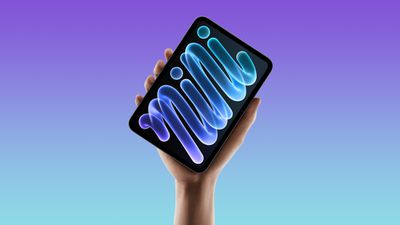
Apple today announced the biggest iPad mini update yet, bringing OLED to its smallest tablet for the first time. The new model features an 8.5-inch OLED display, an A20 Pro chip, and IP67 water and dust resistance housed in a 5.4mm thin design. Pre-orders open Wednesday, October 28, at 10:10 a.m. Pacific Time on apple.com and in the Apple Store app, with availability starting Friday, November 6.
Pricing starts at $699 for the Wi-Fi model and $849 for Wi-Fi + Cellular, with 128GB, 256GB, and 512GB configurations available in Midnight and Starlight color finishes. A matching TechWoven Smart Folio costs $79.
The system pairs specially designed woofers through the display to deliver what Apple describes as punchier bass and higher volume. Separate tweeters, which handle higher frequencies, are concealed between the display glass and aluminum enclosure.
Together, the components are designed to improve audio. The Acoustic Display's sealed enclosure also helps the new iPad mini achieve its IP67 rating.
The new iPad mini starts at $699 for Wi-Fi models and $849 for Wi-Fi and Cellular models. Pre-orders begin on Wednesday, October 28, with availability starting Friday, November 6.
The iPad Pro has an OLED display and supports adaptive refresh rates from 10Hz to 120Hz for smoother scrolling and animations. The new iPad mini's display upgrades instead include deeper blacks, up to 1,200 nits of peak HDR brightness, and an optional nano-texture finish.
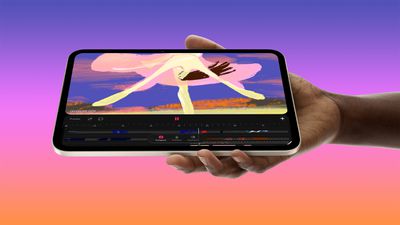
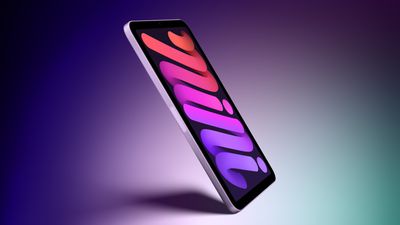
Apple today announced a new iPad mini with a larger 8.5-inch OLED display, a nano-texture display option, a thinner and lighter design, an A20 Pro chip, a new Acoustic Display audio system that eliminates speaker holes, IP67-rated water and dust resistance, a landscape front camera, Apple's N1 chip with Wi-Fi 7 and Bluetooth 6 support, and more. Altogether, Apple says this amounts to the iPad mini's "biggest update ever."
With an OLED display, Apple said the new iPad mini delivers higher contrast and more than twice the peak brightness compared to the previous model, so expect content to have richer and more vivid colors. The device can achieve up to 600 nits of brightness for standard content, up from 500 nits, and up to 1,200 nits for HDR content only.
The new model has a slightly larger 8.5-inch display, up from an 8.3-inch screen previously. Unfortunately for those hoping for a 120Hz refresh rate, Apple's tech specs do not mention ProMotion support, so the display appears to remain 60Hz.
With iPadOS 27.2, Apple said the new iPad mini supports extended display mode when connected to an external display, giving you extra space to work.
Just like the iPad Pro, the iPad mini can now be configured with a nano-texture display, which reduces glare in bright environments. A nano-texture display is a $100 upgrade option available for models with 256GB or 512GB of storage only.
The new iPad mini is around 15% thinner and lighter than the previous model. Specifically, the new Wi-Fi model is 5.4mm thick and weighs 0.56 pounds, whereas the previous-generation Wi-Fi model is 6.3mm thick and weighs 0.65 pounds.
The new iPad mini retains a Touch ID button on the top edge of the device, a USB-C port, a 12-megapixel rear Wide camera, two microphones, and the same advertised battery life. However, the rear True Tone camera flash is now "adaptive," which apparently "improves photos and makes document scanning better than ever."
Apple said the iPad mini now supports fast charging. The device can achieve a 50% charge in 30 minutes with a 35W-or-higher power adapter.
After debuting in the iPhone 18 Pro and iPhone Duo last month, the A20 Pro chip has now expanded to the iPad mini, but there are different versions of the chip depending on the storage capacity. Models with 128GB or 256GB of storage have a 5-core CPU, 7-core GPU, and a single 16-core Neural Engine, while configurations with 512GB of storage get a 6-core CPU, 7-core GPU, and a dual 16-core Neural Engine.
As already known, the A20 Pro chip is built with TSMC's advanced 2nm process and has Neural Accelerators in each GPU core. Apple says the A20 Pro chip offers up to 60% faster CPU performance, up to 2.7× faster graphics performance, and up to 4.5× faster AI performance compared to the A17 Pro chip in the previous iPad mini.
The new iPad mini features an innovative Acoustic Display system that delivers audio from behind the display. As a result, the device no longer has speaker holes.
"Specially designed woofers are paired through the display to produce punchier bass and more volume," said Apple. "In addition, custom tweeters are now hidden between the glass and aluminum enclosure for clearer highs."
On the new iPad mini, the 12-megapixel Center Stage front camera is positioned for landscape video calls, like on the latest iPad Pro, iPad Air, and iPad models. On the previous model, the camera is positioned for usage in portrait orientation.
Apple said its N1 chip with Wi-Fi 7 support enables "better performance when connected to 5GHz Wi-Fi networks" and "improves the overall performance and reliability of features like AirDrop and AirPlay." The previous model supports Wi-Fi 6E.
5G/LTE-enabled models received Apple's C2 chip for up to 50% faster cellular data speeds and improved power efficiency compared to the previous model.
The new iPad mini can be pre-ordered starting Wednesday, October 28 at the specific time of 10:10 a.m. Pacific Time, and it will begin arriving to customers and launch in Apple Stores on Friday, November 6. In the U.S., pricing starts at $699. In in the U.S., Apple includes a 20W USB-C Power Adapter and a USB-C cable in the box.
In the U.S., the previous iPad mini initially started at $499 when it launched in 2024, but Apple increased the starting price to $599 in June. With the new model starting at $699, the iPad mini has now received two price increases this year.
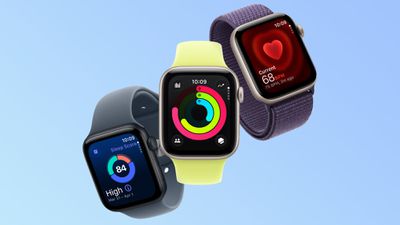
Some Apple Watch users running watchOS 27 are reporting a daylight saving glitch after clocks went back in the UK and Europe on Sunday. In a MacRumors forums thread, five users – several in the UK and central Europe – say their watch shows the correct time when activated, but the Always-On display keeps showing summer time, leaving it an hour fast.
The problem has also been reported in standby mode. Restarting the watch resolved the issue for three users, while a sixth poster says switching watch face also worked. It's not clear which mix of watchOS 27 versions or Apple Watch models are affected. Clocks go back across most of the U.S. this coming Sunday, November 1.
In a post on X, Bloomberg's Mark Gurman suggested that a new iPad mini could be announced today. If not, it should be unveiled tomorrow at the latest.
When Apple holds events on Wednesdays, it increasingly does so following three days of announcements. OLED iPad mini today, M6 iMac and MacBook Pro on Tuesday and touch MacBook Pro on Wednesday would make sense.
— Mark Gurman (@markgurman) October 26, 2026
Here are 10 new features and changes expected for the iPad mini 8:
Apple's latest A20 Pro chip, manufactured with TSMC's advanced 2nm process. Expect up to around 1.5× faster CPU performance and up to around 2.5× faster GPU performance compared to the A17 Pro chip in the current iPad mini. A20 Pro also introduces a "dual 16-core Neural Engine" for a total of 32 cores.
With the A20 Pro chip, the next iPad mini will have 12GB of RAM, up from 8GB of RAM in the current model. This means the device will support the ability to customize the pace and expressiveness of Siri AI's voice.
A slightly larger OLED display with better overall image quality compared to the current LCD model, thanks to richer colors and higher contrast ratio with true blacks. Apple has apparently tested both 60Hz and 120Hz (ProMotion) refresh rates for the new model, but it is unclear which option it chose.
Slimmer bezels around the display compared to the current model.
Landscape front camera, meaning the camera will be in the right bezel instead of the top bezel when holding the device in an upright position.
Apple's custom-designed N1 chip with Wi-Fi 7 and Bluetooth 6 support.
Apple's custom-designed C1X or C2 modem for cellular configurations.
A redesigned speaker system with no speaker holes and potentially an iPhone earpiece-like speaker in the top bezel.
Bloomberg's Mark Gurman thinks Apple's announcements this week could arrive as a three-day rollout starting today. Writing on X, Gurman said that when Apple holds events on Wednesdays, it "increasingly does so following three days of announcements," adding that an OLED iPad mini today, M6 iMac and MacBook Pro updates on Tuesday, and a touch-screen MacBook Pro on Wednesday "would make sense."
Gurman is speculating rather than confirming Apple's scheduling, but he could have a point. His earlier reporting suggested the M6 iMac and 14-inch MacBook Pro arriving on Wednesday, with the touchscreen MacBook Pro also expected that day. Apart from Apple's Greg Joswiak's "Pro and Tell" hint last week, Apple has yet to make any formal announcements.
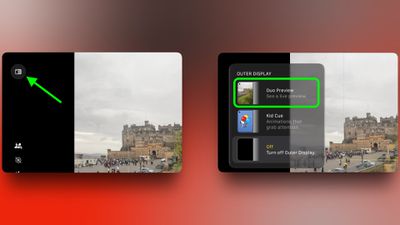
Getting someone to relax in front of a camera is a lot easier when they can see how they look. Apple acknowledges this on its new foldable iPhone Duo with a feature called Duo Preview, which shows a live preview on the outer display.
This way, whoever you're photographing can adjust their pose, fix their hair, or straighten their costume before you take the shot. It works for both photos and videos.
With Duo Preview enabled, the outer display mirrors what's captured by the main camera, so it feels like looking in a mirror rather than at a viewfinder. The outer display also shows only the preview, so there are no camera controls on that side obstructing the view. Keep reading to learn how to use it.
How to Use Duo Preview
Unfold your iPhone Duo so you're looking at the inner display.
Open the Camera app.
Tap the Outer Display Options button (it looks like a column view icon) in the top-left corner, then tap Duo Preview.
Point the rear cameras at your subject, and they'll see a mirrored live preview of the frame on the outer display so they can adjust before you shoot.
Tap the shutter button to take a photo or Record to shoot video. You can also press either volume button or click the Camera Control.
Duo Preview is one of several Camera features that take advantage of the Duo's foldable design, alongside Kid Cue and Smart Take. Check out our full guide to see what the iPhone Duo's camera can and can't do for the rest.
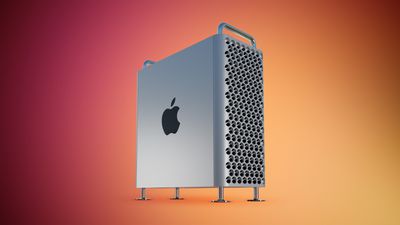
Owners of Apple's 2019 Mac Pro could repurpose its enclosure for a custom PC using a conversion kit being crowdfunded by Practical Prototyping (via Hackster).
The project comes after Apple discontinued the Mac Pro in March, confirming that it has no plans for future models. For owners of the 2019 Intel-based tower, the conversion offers a potential way to keep using its distinctive enclosure with newer PC components.
Mechanical engineer Stefan Bond developed the kit to accommodate a conventional ATX motherboard and power supply inside the Mac Pro 7,1 chassis. The proposed conversion is reversible, with no permanent changes to the case required.
Builders need to provide their own computer components and remove Apple's existing internals before installing the kit. The package supplies mounting hardware and adapters rather than a complete computer, so the enclosure, processor, memory, graphics card, storage, and power supply are separate expenses.
Space inside the converted enclosure imposes some restrictions. The reported graphics card limit is 308mm in length and 140mm in height, while air coolers can be up to 140mm tall. A separate mounting accessory supports a 240mm liquid cooler, and the design accommodates two SATA drives in either the 2.5-inch or 3.5-inch format.
The conversion is designed to reuse Apple's three front fans through custom adapter boards, along with the power button and indicator light. An interface for the two top-mounted USB-C connectors supports USB 3.1 Gen 1.
Pledges for the kit on Kickstarter start at approximately $500, excluding shipping, according to Hackster. Shipping is estimated to begin in March 2027, although crowdfunding pledges do not guarantee delivery.
Apple's expected switch to OLED for the MacBook Pro will help accelerate a sharp decline in mini-LED laptop displays, with annual panel shipments forecast to fall roughly 75% between 2025 and 2027, according to Counterpoint Research.
Apple's MacBook Pro models have used mini-LED displays since 2021, but Counterpoint expects notebook panel shipments using the technology to drop 38% in 2026 and another 60% in 2027. Those consecutive declines would leave shipments at approximately a quarter of their 2025 level.
OLED is heading in the opposite direction. Notebook OLED panel shipments are projected to grow 50% this year and 24% next year, amounting to an 86% increase over 2025. Counterpoint identifies the anticipated OLED MacBook Pro and demand for premium AI PCs as drivers, even as the overall notebook display market is expected to shrink 3% in 2026.
The forecast points to a rapid change in manufacturers' display choices. Counterpoint says OLED's thinner profile, image quality, and improving cost competitiveness are encouraging adoption, with tandem OLED designs and larger production facilities supporting further growth.
For MacBook Pro users, the display transition is also expected to bring touch input to the Mac for the first time. Samsung Display is reportedly the exclusive supplier of the new 14-inch and 16-inch OLED touch panels, manufactured on its 8.6-generation line in Asan, South Korea, according to The Elec.
The OLED models are expected to sit above the existing mini-LED versions initially, giving buyers a choice during the transition. Gurman says Apple will eventually discontinue the mini-LED models, although the new OLED machines could carry starting prices up to $500 higher.
Two executives who have spent roughly three decades each at Apple are handing over responsibility for its displays, as part of a broader series of engineering leadership changes reported by Bloomberg's Mark Gurman.
Victor Yin now oversees much of Apple's display development following years of preparation under Wei Chen and John Zhong. Chen and Zhong, each with approximately 30 years at the company, are taking on more limited responsibilities as advisers. Gurman describes their eventual departures as part of a succession process that has been underway for several years.
Apple's October promotions also include engineering leaders Rajesh Ambati, Louie Sanguinetti, and Derek Shaeffer, who have all become vice presidents. Their work covers connectivity hardware and software, with Sanguinetti's contributions to wireless hardware stretching back decades.
The appointments follow Apple's decision to expand Johny Srouji's role to chief hardware officer, bringing hardware engineering and hardware technologies under his leadership. A subsequent reorganization of product development sought to improve coordination between the teams designing Apple's chips and devices.
Gurman also reports that some hardware program managers have been laid off in recent weeks as Srouji and CEO John Ternus remove management layers. The cuts follow earlier reports of Ternus' efforts to accelerate product development and reduce the number of positions between engineers and senior leadership.
Elsewhere at Apple, App Store head Carson Oliver has received a vice president title, while Steve Smith has taken charge of corporate development. Both appointments were reported earlier this month.
The next refreshes of the devices are expected to retain LCD displays. Gurman anticipates a new iMac to arrive this week and a MacBook Air refresh in early 2027, but offered no time frame for either model's transition to OLED.
Earlier this month, a security researcher discovered that private cryptographic keys associated with eight of Indian company eMudhra's intermediate certificate authority (CA) certificates were weak. The compromised keys could have allowed attackers to impersonate legitimate websites, potentially putting users' sensitive information at risk. However, there is currently no evidence that the keys were exploited maliciously.
eMudhra's certificates were widely trusted by all major web browsers, including Safari, Chrome, Edge, and Firefox, but Apple and the other companies behind those browsers have since taken action to protect users.
In a support document, Apple said it has been blocking eMudhra's compromised TLS web certificates since October 19 in Safari, Mail, and apps that use Apple's networking and security frameworks. The certificates are blocked automatically with no software update required, so most Apple device owners do not need to take any action.
There is one exception. Apple said those who use macOS command-line tools, such as system administrators, should be aware that some of those tools can still accept the compromised certificates until Apple releases a macOS update with a fix. In the meantime, Apple said those who use command-line tools can remove root CA certificates from the /etc/ssl/cert.pem file.
Apple has not provided a release date for the macOS update that will include the necessary changes to the /etc/ssl/cert.pem file by default.
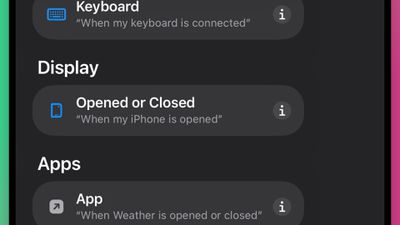
The iPhone Duo includes a new Shortcuts automation trigger that runs actions when the device is opened or closed. YouTuber Stephen Robles highlighted the trigger, which is called "Opened or Closed" and can be found under the Display automations category. It was first spotted in September by code sleuth pdfu in the iPhone Duo simulator.
One possible use case is making the Duo switch to a different wallpaper when the device is opened and back when it's closed. MacStories' Federico Viticci has said he plans to start "brainstorming hinge automations."


 Apple's tech specs for the new iPad mini reveal that the 512GB model ships with a different version of the A20 Pro: a 6-core CPU with two super cores and four efficiency cores, plus a Dual 16-core Neural Engine. The 128GB and 256GB models meanwhile get a 5-core CPU (two super, three efficiency) and a 16-core Neural Engine.

 Just minutes after Apple

 Apple's
 Some Apple Watch users running watchOS 27 are reporting a daylight saving glitch after clocks went back in the UK and Europe on Sunday. In a
 Bloomberg's Mark Gurman thinks Apple's announcements this week could arrive as a three-day rollout starting today.




 Apple is testing
 The iPhone Duo includes a new Shortcuts automation trigger that runs actions when the device is opened or closed. YouTuber