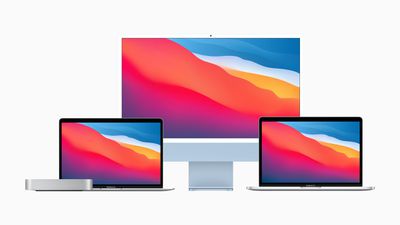
Despite only being released in November, sales of the M1-powered MacBook Air, MacBook Pro, and Mac mini now represent the majority of Mac sales, outperforming Mac computers powered by Intel processors, according to Apple CEO Tim Cook.
Cook made the remarks during Apple's "Spring Loaded" event yesterday, where it introduced a completely redesigned 24-inch iMac powered by the M1 Apple silicon chip. Cook says that the M1 and Apple silicon "isn't just an upgrade, but a breakthrough," while touting Mac's industry-leading customer satisfaction.
Apple announced at WWDC 2020 that it would embark on a two-year-long transition to its own silicon for its entire Mac lineup, breaking away from Intel. With the launch of the first Apple silicon-powered iMac yesterday, Apple now sells four Mac computers powered by Apple silicon. Alongside them, Apple continues to sell a 16 and 13-inch MacBook Pro, 21.5-and 27-inch iMac, and the high-end Mac Pro, all with Intel processors.
According to Cook, the four M1-powered Macs now outperform the five remaining Intel-powered computers in its lineup in terms of sales. During the keynote, Cook's comment went largely unnoticed but is likely to be a key point the CEO makes during Apple's upcoming earnings call, which is being held on April 28.
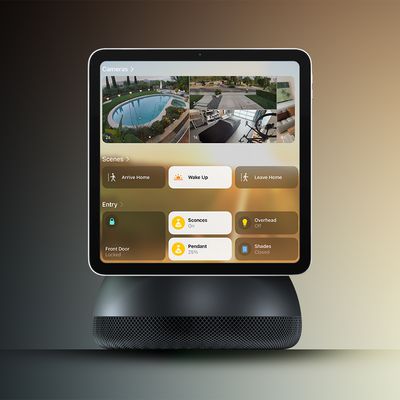
Apple's long-rumored smart home hub will have an iMac G4-style design and a host of unique features, Bloomberg's Mark Gurman reports.
The smart home hub is said to feature a square 6-inch display, with variants that can be placed on a countertop or mounted on a wall. It features a single FaceTime camera on the front, with microphones and speakers in its connected base. Gurman described the...
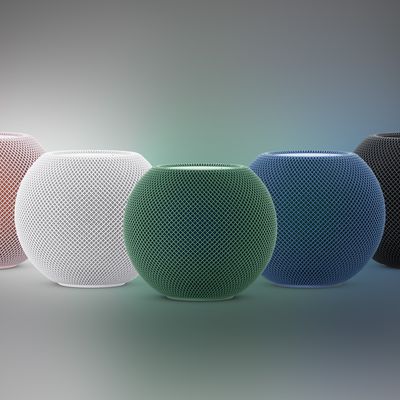
Apple plans to introduce a series of new smart home products on Tuesday, October 13, according to Bloomberg's Mark Gurman.
Apple reportedly plans to debut its long-awaited smart home hub device, a new HomePod mini, and a new Apple TV on the date. The new HomePod mini and Apple TV are set to retain their existing designs, but tout faster chips to support Siri AI. The new HomePod mini will...
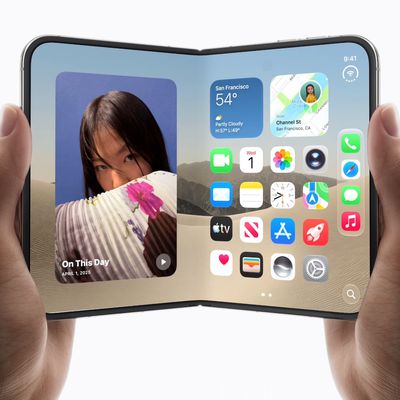
The iPhone Duo is reportedly facing production difficulties ahead of its October launch, with early output expected to be limited.
A person said to be close to Foxconn's supply chain told China's Jiemian News that final assembly yields for Apple's first foldable iPhone were only slightly above 60% as of September 17. The source said that, under Apple's current quality standards, it could...
M1 replaced the entry level machines for Air, Pro and mini, which I assume were already the best sellers over the more expensive options in the categories so this doesn't surprise me too much.
I'm surprised by the lower 8 GB ram. Is that because the M1 is so power efficient that we don't need a pile of Ram?
I use my MP for photo editing (Capture One - who are working on a native M1 version) and occasional video editing (although could be more if it wasn't choppy now).
I might jump on a 27" iMac someday. Or a newer Mac Pro. For now I'm holding on, but it's 8 years old and starting to chunk a bit with larger files (12 core, tons of Ram). I'd love to see the efficiency difference between an M1 iMac. Hopefully there will be YT reviews (by power users) soon enough.
Cheers, Brian
The default 8GB RAM is just a planned obsolescence tactic by Apple. The M1 has such great performance that consumers might stick with it for a long time, so Apple put 8GB RAM as default to increase wear and tear on the SSD. Since users cannot upgrade the RAM nor SSD themselves, people will end up having to just replace the whole computer sooner.
Are you seriously going to compare the M1 with its 8 cores and 20 something watt power consumption to a 64 core threadripper that costs $5k and draws over 10X the power?
Apple's first foldable iPhone, with a book-style design featuring a 5.4-inch outer display and a 7.6-inch inner display with a minimal crease down the middle.