Berlin-based Security Research Labs has detailed various exploits within the iPhone 5s' Touch ID security feature and iOS 7 that allow would-be criminals to bypass the device's security features, reports Reuters.
The method for bypassing the Touch ID security feature found on the iPhone 5s is very similar to the one used by the Chaos Computer Club, which also claimed to hack Touch ID earlier this month. A video posted on the group’s website shows how Touch ID can be bypassed using information gathered from fingerprints left on the victim’s phone display, demonstrating that a photo taken with the iPhone 4s can be used for developing a mold.
Another video by the group outlines a scenario in which a knowledgeable criminal could steal an iPhone 5s running iOS 7, use Control Center on the lock screen (enabled by default) to turn on Airplane Mode and disable the device’s connectivity, then using a fingerprint mold to bypass the lock screen and disable other various security features. Ultimately, the group shows how an attacker could conceivably gain complete control of a victim's device, Apple ID, and even other services such as Google accounts.
The group ends the video by suggesting Apple do the following to increase security efficiency in iOS 7:
1. Make Airplane Mode inaccessible from the lock screen by default and require PIN after setting Airplane Mode or removing SIM Card 2. Warn users not to store password-reset email accounts on iDevices 3. When device is lost for good, advise users to revoke its privileges 4. Do not inform potential attackers how the device is protected 5. Upon reconnecting to the Internet, iOS should not allow email retrieval before the device’s wipe- or don’t-wipe status can be retrieved
Aside from any future changes Apple may make to increase security, users can already prevent the simple bypass of the Remote Wipe feature by turning off access to Control Center from the lock screen.
iOS 7 has recently been the subject of much praise by security officials, including the New York Police Department, which passed out flyers in New York City recommending users to update to iOS 7, along with government officials who have praised iOS 7’s Activation Lock. Meanwhile, Touch ID has been the subject of much scrutiny since its release, with U.S. Senator Al Franken sending a letter to Tim Cook asking a number of questions about the security of the system and the exact fingerprint storage process. Apple has also published an extensive knowledge base article about the benefits of the Touch ID system to alleviate some consumer concerns.
I have seen a lot of "not thought of / invented here" attitude.
Not saying they don't, but it takes a lot of crying on many occasions.
Listen to.... what, exactly?
Pretty much all security can be bypassed if you have physical access to the device and enough time / money / resources / skill. Security on phones is no exception to this, indeed they can be far less secure than say a desktop as if it's stolen with other items those items often provide data to help bypass that security.
Touch ID is simply another form of pass code and all pass codes do is try to discourage the 'casual' theft of phones for resale and prevent a typical thief from accessing your data. Touch ID isn't suddenly going to turn a device into a digital Fort Knox. What it will do is actually far more useful - it removes a pain point and makes using a pass code far easier and more convenient (dare I say, even makes it a little bit fun). That, in turn, will see a far higher percentage of iOS devices having some form of security active and that will make them a less attractive target.
The only time anyone really needs to worry about this is if someone figures out a genuine bypass that removes security and gives full access to the phone that can be done simply and easily. Everything else is just grandstanding for media attention.
Why not just set a restriction (Settings | General | Restrictions) on making changes to accounts? Then the find my iPhone can't be turned off without knowing an additional 4 digit code
How the hell can you get that fingerprint on the glass so easily? You coated your finger with some type of grease? I press my thumb hard on the glass and got no fingerprint at all after multiple times. Your method may work in theory, but in reality, you wont be able to get a fringerprint from iPhone screen. Even if you can get that print, it must be the correct fingerprint on file.
Somehow, middle finger can work the best for touch ID because you dont use it to operate the phone ever, but thumb and index fingers.
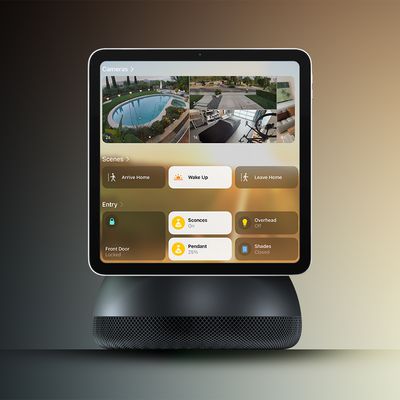
Apple's long-rumored smart home hub will have an iMac G4-style design and a host of unique features, Bloomberg's Mark Gurman reports.
The smart home hub is said to feature a square 6-inch display, with variants that can be placed on a countertop or mounted on a wall. It features a single FaceTime camera on the front, with microphones and speakers in its connected base. Gurman described the...
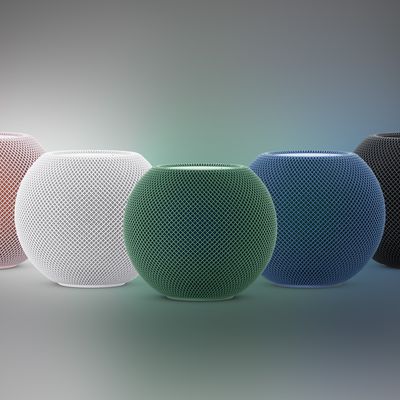
Apple plans to introduce a series of new smart home products on Tuesday, October 13, according to Bloomberg's Mark Gurman.
Apple reportedly plans to debut its long-awaited smart home hub device, a new HomePod mini, and a new Apple TV on the date. The new HomePod mini and Apple TV are set to retain their existing designs, but tout faster chips to support Siri AI. The new HomePod mini will...
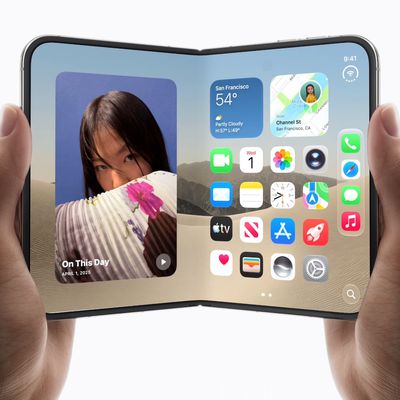
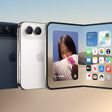
The iPhone Duo is reportedly facing production difficulties ahead of its October launch, with early output expected to be limited.
A person said to be close to Foxconn's supply chain told China's Jiemian News that final assembly yields for Apple's first foldable iPhone were only slightly above 60% as of September 17. The source said that, under Apple's current quality standards, it could...
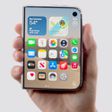
Apple's first foldable iPhone, with a book-style design featuring a 5.4-inch outer display and a 7.6-inch inner display with a minimal crease down the middle.









































Top Rated Comments
Listen to.... what, exactly?
Pretty much all security can be bypassed if you have physical access to the device and enough time / money / resources / skill. Security on phones is no exception to this, indeed they can be far less secure than say a desktop as if it's stolen with other items those items often provide data to help bypass that security.
Touch ID is simply another form of pass code and all pass codes do is try to discourage the 'casual' theft of phones for resale and prevent a typical thief from accessing your data. Touch ID isn't suddenly going to turn a device into a digital Fort Knox. What it will do is actually far more useful - it removes a pain point and makes using a pass code far easier and more convenient (dare I say, even makes it a little bit fun). That, in turn, will see a far higher percentage of iOS devices having some form of security active and that will make them a less attractive target.
The only time anyone really needs to worry about this is if someone figures out a genuine bypass that removes security and gives full access to the phone that can be done simply and easily. Everything else is just grandstanding for media attention.
Somehow, middle finger can work the best for touch ID because you dont use it to operate the phone ever, but thumb and index fingers.