

Got a tip for us?Let us know
Ask MacRumors
Powered by AI — responses may not always be accurate
iPhone Duo
Contents
The iPhone Duo is Apple's first foldable device, featuring two displays instead of one. Apple introduced the iPhone Duo alongside the iPhone 18 Pro and iPhone 18 Pro Max on September 9.
Apple designed the iPhone Duo with a passport-style shape, and it is wider than it is tall when open. When closed, there's a 5.4-inch outer display, and it unfolds to a 7.6-inch inner display. At 7.6 inches, the inner display is the largest iPhone display to date, while the outer display is sized similarly to the now-discontinued 5.4-inch iPhone mini. Both displays have the same aspect ratio so content scales appropriately and it feels natural moving from the outer display to the larger inner display.
At 5.2mm thick when unfolded, the iPhone Duo is the thinnest iPhone yet, but it's also the heaviest iPhone at 254 grams. When folded, the Duo is 11.3mm thick.
Apple built the iPhone Duo for durability, and it has a mirror-polished grade 5 titanium frame and a 3D-printed hinge cover with a micro-blasted finish, along with internal support ribs and ceramic fiber antenna inserts for rigidity. The iPhone Duo has an IP68 dust and water resistance rating. It comes in Star White and Night Sky, which is a dark blue color.
The hinge has over 100 components for smooth opening and closing and to protect the display. It supports the display center when it's open, and there is a satisfying magnetic click when the device closes. The outer display is protected by Ceramic Shield 2, while the back is protected by standard Ceramic Shield. The inner display is made up of 10 ultrathin layers, including a nano-texture cover layer made from a stiff, custom polymer that reduces glare and helps hide the crease. Glass above and below the display panel add structure, and custom adhesives let all of the layers glide in a way that relieves bend stress and minimizes the crease in the middle of the device.
Both displays are OLED with support for 120Hz ProMotion, True Tone, Always-On, and up to 3,000 nits peak brightness outdoors. The 7.6-inch inner display has a resolution of 1878 x 2670 at 430 pixels per inch. The 5.4-inch display has a resolution of 1398 x 2034 at 460 pixels per inch. On the inside display, there's a hidden FaceTime camera that's under the display panel, and a 12MP hole-punch front-facing camera on the outer display.
The iPhone Duo looks like a cross between a small iPhone and an iPad mini. It has volume buttons on the top, but no Action button and no mute switch. The right side includes a Touch ID side button and a Camera Control button. Apple used Touch ID instead of Face ID, and there is no TrueDepth camera system. Touch ID works when the device is open or closed, and it is used for Apple Pay and other biometric features. Apple also allows the iPhone Duo to be unlocked with a connected Apple Watch.
The iPhone Duo uses the same 2nm A20 Pro chip as the iPhone 18 Pro. It has two super cores and four efficiency cores, and it is up to 20 percent faster than the A19 Pro. There's a 7-core GPU with Neural Accelerators that's up to 40 percent faster than the A19 Pro, plus a new dual 16-core Neural Engine and 50 percent more memory bandwidth. A new vapor chamber cooling system offers up to 35 percent better sustained performance than the iPhone 17 Pro. An updated display engine supports both screens at one time.
Apple is adding Apple Pencil support to the iPhone Duo before the end of 2026, but it will only work with the USB-C Apple Pencil.
At the back of the iPhone Duo, there's a camera plateau where Apple hid much of the hardware in the device. There's a 48MP Fusion Main wide camera with a 26mm focal length and a 12MP 2x optical-quality zoom option at 52mm. Apple also included a 48MP Ultra Wide camera with a 13mm focal length and support for macro images. There is no telephoto lens and no variable aperture, with those features limited to the iPhone 18 Pro models. The cameras support Apple's new Photographic Styles 3 feature with texture and grain, along with manual controls for adjusting white balance, exposure, and more.
As for video, the Fusion camera supports 4K120 Dolby Vision recording, Cinematic mode up to 4K60 with the option to apply effects after capture, 4K30 Dual Capture, and 4K Dolby Vision time-lapse which is useful on the iPhone Duo because you can prop it up for recording without the need for a tripod.
Apple added several camera features unique to the iPhone Duo. Smart Take uses on-device AI to detect when everyone is ready for a group shot, so you don't have to use a timer. Duo Preview lets the person you're taking a photo of see a preview of the shot on the outer display, so they can make adjustments. Kid Cue shows Peanuts animations to get children to look at the camera, and Duo FaceTime lets you use both the inner and outer cameras on FaceTime calls so multiple people can join in.
There are batteries inside each half of the Duo, though they're managed as one battery. The iPhone Duo battery lasts for up to 24 hours of typical use when switching between both displays. It supports up to 31 hours of video playback and 26 hours of streaming video on the inner display, and 44 hours of video playback and 37 hours of streaming video on the smaller outer display.
Fast charging is included, and the iPhone Duo can charge to 50 percent in 20 minutes over USB-C with a 60W or better power adapter. It supports 25W MagSafe and Qi2 wireless charging and can charge to 50 percent in around 30 minutes with a 35 or better power adapter. The iPhone Duo is equipped with an Apple-designed C2 modem, which supports both sub-6GHz 5G and mmWave 5G (U.S. only). It is eSIM only worldwide, like the iPhone Air. There's also an N1 networking chip with Wi-Fi 7, Bluetooth 6, and Thread. Like all modern iPhones, the iPhone Duo supports Crash Detection and multiple satellite features like Emergency SOS, Messages via satellite, and Find My via satellite.
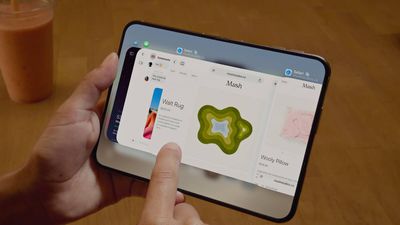
The iPhone Duo will come with iOS 27.1 preinstalled, and Apple is making several changes to iOS to support the new dual-screen layout. The Dock is vertical instead of horizontal, and accessible from the side of the display. Apple also moved the status bar to the upper corner, and there's a vertical Dynamic Island on both displays. There are two Home Screen pages with a widget column on the inner display, and you can use two apps side by side or two windows of the same app in Split View.
Content on the iPhone Duo adapts to whatever orientation the device is in, rotating and flipping between displays. You can use either display in portrait or landscape mode, and there's support for using the Duo half-folded too. You can sit it upright with the inner display folded, or prop it up tent style and use the outer display.
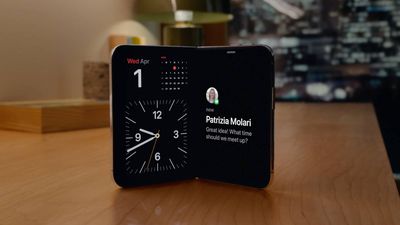
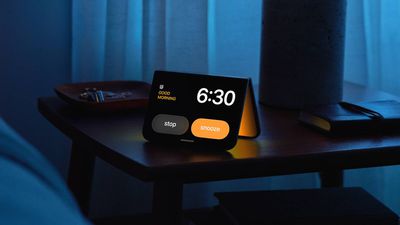
Apple is adapting all of its apps for the Duo's screen, and developers have the tools to add Duo support to their apps. Apple worked with developers like Netflix, Zoom, and Slack to customize apps to the dual-screen layout ahead of time. There's a new Duo-specific StandBy mode that works even when it's not charging. You can see widgets like Calendar and Weather with the device propped up, and there's a special alarm clock option that wakes you up with a soft glow.
The iPhone Duo is priced starting at $1,999 for 256GB of storage. Pre-orders will start at 5:00 a.m. Pacific Time on Friday, October 16, and a launch will follow on Friday, October 23 in more than 70 countries. It will expand to an additional 28 countries on October 30.
Note: See an error in this roundup or want to offer feedback? Send us an email here.
How to Buy
Pre-orders will start at 5:00 a.m. Pacific Time on Friday, October 16, and a launch will follow on Friday, October 23 in more than 70 countries. It will expand to an additional 28 countries on October 30.
The iPhone Duo is priced at $1,999 for 256GB of storage, $2,199 for 512GB, $2,599 for 1TB, and $3,199 for 2TB. Apple offers Apple Upgrade leasing through a partnership with Klarna, and lease pricing starts at $57.99 a month on a 24-month lease. Apple Card Monthly Installments are also an option and are priced starting at $83.29 per month.
Design
The iPhone Duo is Apple's first folding iPhone with a display that opens up like a book. It is a unique shape and size, and is distinct from any prior iPhone. Apple compared it to a passport in size and shape when introducing it.
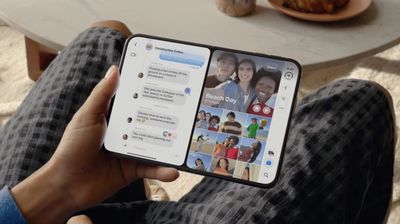
There's an outer display that can be used when the iPhone is closed, and a larger inner display that's accessible when it is unfolded. When closed, the iPhone Duo measures 84.1mm x 117.8mm x 11.3mm, and when open, it is 164.6mm x 117.8mm x 5.2mm. At 5.2mm, it is Apple's thinnest iPhone to date, beating the iPhone Air.
The inner display folds in half, and Apple used a strong substructure to minimize the look of the crease in the middle. There's a recycled aluminum structural frame, ceramic fiber antenna inserts, support ribs under the display for reinforcement, and a grade 5 titanium enclosure.
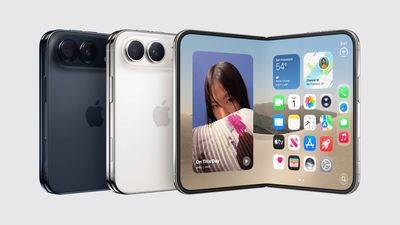
The iPhone Duo weighs 254 grams, and it is Apple's heaviest iPhone even though it is made from titanium. Apple is selling the iPhone Duo in Star White and Night Sky, which is a dark blue color.
The enclosure has a mirror-polished finish, while the hinge cover has a contrasting micro-blasted finish.
There are volume buttons at the top of the iPhone Duo, with stereo speakers and microphones at the top and bottom. On the right side, there's a Touch ID side button for biometric authentication, and a Camera Control button for quickly launching the Camera app. There is no Action button and no SIM tray because it is an eSIM-only iPhone. A USB-C port is located at the bottom for charging.
The back of the iPhone Duo is protected by Apple's scratch resistant Ceramic Shield material, and there's a camera plateau with two camera lenses.
Hinge
Apple designed a titanium hinge with a 3D-printed cover. There are more than 100 components in the hinge, which Apple says precisely control opening and closing while also supporting the center of the display.
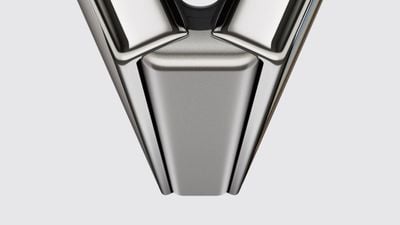
There are carbon fiber support plates underneath the hinge, and a magnetic array that is meant to offer a secure closure when the device is folded.
While Apple says the hinge design offers long-lasting reliability, it hasn't published any data on fold tests.
Positions
The iPhone Duo can be used open or closed because of the two displays, but Apple designed it to be used in multiple orientations and positions.
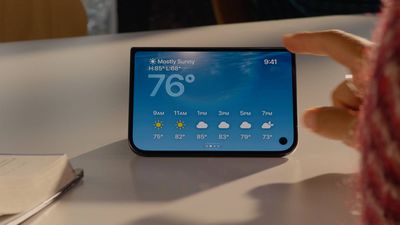
It can be used in portrait and landscape mode, as well as open in a tent shape or partially folded in either portrait or landscape mode. In portrait orientation, it can sit half-folded to watch movies on the upper part of the display. The tent position allows the iPhone Duo to serve as a tripod for taking a photo, and there's a special StandBy mode that displays widgets, the time, and other info.
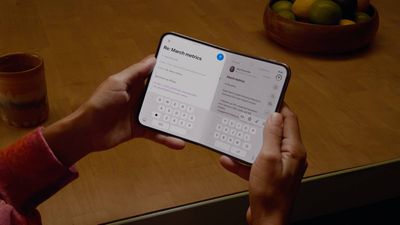
In landscape orientation, it can be partially folded like a book, which is ideal for reading or using two apps side by side.
Durability
The iPhone Duo has IP68 dust and water resistance. It is dust-tight and water-resistant in liquid up to 6 meters deep for 30 minutes. Apple warns that water and dust resistance are not permanent conditions, and liquid damage is not covered by Apple's standard warranty.
Displays
There are inner and outer displays. The outer display is smaller and used when the iPhone Duo is closed. It measures 5.4 inches and has a 1398 x 2034 resolution at 460 pixels per inch.
The Duo opens up into a bigger inner wide-angle OLED display that's 7.6 inches with an 1878 x 2670 resolution at 430 pixels per inch. While the outer display is covered with the same durable Ceramic Shield 2 material Apple uses for the iPhone 18 Pro models, the inner display is made from a custom polymer that Apple says is 40 percent stiffer than materials used in other foldable devices.
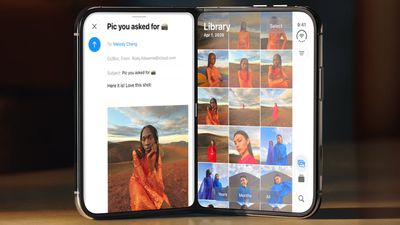
It has a scratch-resistant coating and a nano-texture layer that minimizes the look of the crease and cuts down on reflectivity. High-strength glass is above and below the folding display panel for durability, and Apple added custom adhesives to let the different layers glide past one another to alleviate bend stress.
Both displays have the same aspect ratio for a continuous experience whether the iPhone Duo is open or closed. They support 120Hz ProMotion refresh rates, 1000 nits max brightness, 1600 nits peak HDR brightness, 3000 nits peak outdoor brightness, 1 nit minimum brightness for Always On technology, and True Tone for matching the white balance of the display to the ambient lighting.
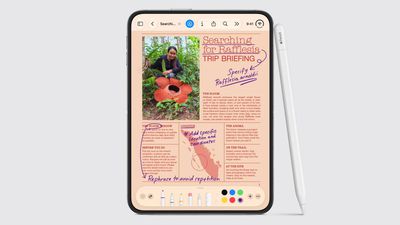
There's a Dynamic Island on both displays that shows Live Activities and other information, and support for the USB-C version of the Apple Pencil. Apple Pencil support is coming later this year.
Touch ID
Instead of Face ID, the iPhone Duo uses Touch ID like the iPad Air and iPad mini. It has a Touch ID side button that works when the iPhone is folded or unfolded. Apple phased out Touch ID in iPhones, but there wasn't room for the Face ID TrueDepth camera system in the iPhone Duo.
Multiple fingers can be registered with Touch ID, and it works the same as Face ID for authenticating logins and passwords and paying with Apple Pay in stores.
The iPhone Duo can also be unlocked with a paired Apple Watch.
A20 Pro Chip
Like the iPhone 18 Pro models, the iPhone Duo uses Apple's new 2nm A20 Pro chip. It has a 6-core CPU with two super cores and four efficiency cores, plus a 7-core GPU with Neural Accelerators for each core.
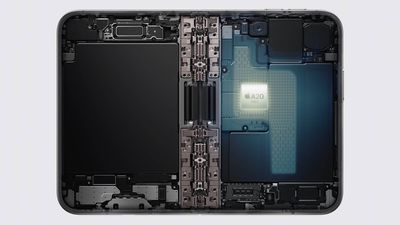
The CPU is up to 20 percent faster than the CPU in the A19 Pro chip, and there is up to 50 percent more memory bandwidth. With an upgraded thermal management system, the iPhone Duo supports up to 35 percent better sustained performance than the iPhone 17 Pro.
Apple says the iPhone Duo has a chip package inspired by M-series Apple silicon chips. The A20 Pro connects directly to a custom vapor chamber to dissipate heat.
The A20 Pro GPU is up to 40 percent faster and more power efficient than the A19 Pro GPU.
There's a dual 16-core Neural Engine with 2x the compute power for AI tasks, support for hardware-based ray tracing, and a display engine that drives the inner and outer displays at the same time.
Storage
The iPhone Duo starts with 256GB of storage. 512GB, 1TB, and 2TB versions are also available.
USB-C
The USB-C port in the iPhone Duo supports charging and up to 10Gb/s data transfer speeds.
Cameras
The iPhone Duo has a "Dual Fusion camera system" with a 48MP Main camera and a 48MP Ultra Wide camera. There is no Telephoto camera.
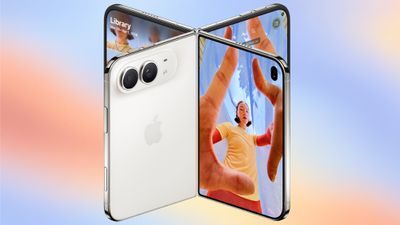
The Main camera is nearly the same camera that's in the iPhone Air, which means it is inferior to the iPhone 18 Pro camera setup. It has a 26mm focal length with an f/1.6 aperture, sensor-shift optical image stabilization, and the option to take photos at 24MP or 48MP. You can also zoom in 2x and take a 12MP photo at a 52mm focal length equivalent.
The Ultra Wide has a 13mm focal length with an f/2.2 aperture and a 120-degree field of view. It supports taking macro images.
Both of the rear cameras are usable when the iPhone Duo is folded and when it's unfolded.
Duo-Specific Camera Features
There are several Duo-only camera features that take advantage of the device's dual display and versatility.
Smart Take
Smart Take uses AI to determine when everyone (including the iPhone owner) is ready for a group shot, so no one has to use a timer or stay out of the picture to capture the image.
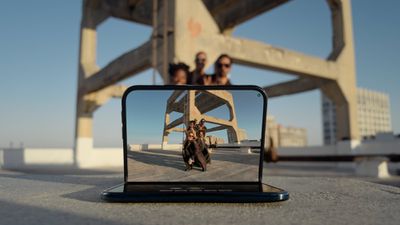
You can prop up the iPhone Duo in a half-folded orientation, get in frame, and then wait for the group shot to be taken.
Kid Cue
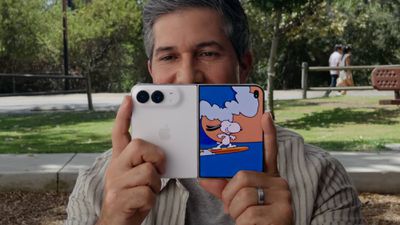
Kid Cue shows little Peanuts animations to children so they look at the camera when you're taking a photo.
Duo Preview
With Duo Preview, the Camera app shows a live preview of the shot on both displays, so the subject you're taking a photo of can make adjustments.

Duo FaceTime
Nearby friends can participate in a FaceTime call using the outer display while the iPhone owner uses the inner display, so nobody has to crowd around the iPhone or pass it around to get on video.

Duo FaceTime is not the same as Dual Capture, which records video with both the front and rear cameras. Duo FaceTime uses the outer display to allow another person to join in on a call.
Form Factor Features
The iPhone Duo can be used in multiple orientations, including when it's half-folded. The Duo stands up on its own, for taking FaceTime calls and recording video without holding it.
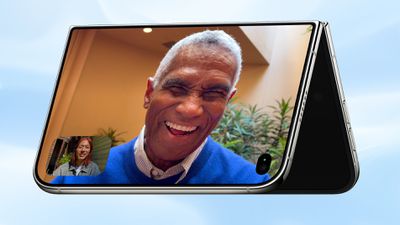
The folding mechanism acts like a built-in tripod and stand, so it's also useful for selfies and long exposures. You can also capture selfies with the higher-quality 48MP rear camera while using the outer display as a viewfinder, which isn't something you can do with a slab iPhone.
Video
Smart focus tracking is a feature new to the iPhone Duo and the iPhone 18 Pro models. It uses AI to keep a subject in focus at all times, and pick up subject tracking if the subject exits the frame and then reappears.
The Duo supports 4K Dolby Vision video recording at up to 120 fps, and Cinematic mode for recording videos in 4K Dolby Vision at up to 60 fps. For the first time, Cinematic mode effects can be added to a video after capture on the Duo and iPhone 18 Pro. Apple also says there's improved low-light video on the Duo when recording at 1080p.
Time-lapse video recording with stabilization up to 4K Dolby Vision is a new iPhone 18 Pro and iPhone Duo option. It's especially useful on the iPhone Duo because you can record a stable video without the need for a tripod.
Other Camera Features
There are several other camera bells and whistles that Apple has been adding to the iPhones over the years.
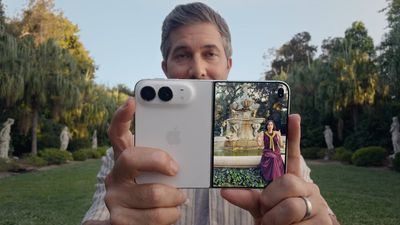
- Portrait Features - You don't need to choose Portrait mode before capturing an image to get a portrait shot. You can just snap a photo, and if there's a person or a pet, depth information is collected and Portrait mode is enabled automatically with a blurred background.
- Photographic Styles - Photographic Styles are filters that you can apply to images before they're captured. Intensity, tone, and color can be adjusted, and they are optimized for skin tones. Photographic Styles can be set for all images taken with the iPhone, or they can be applied afterward. There are new texture and grain settings for Photographic Styles this year.
- Smart HDR 5 - Recognizes one or more people in a scene and optimizes contrast, lighting, and even skin tones for each person so everyone looks their best.
- Photonic Engine - The Photonic Engine combines the best pixels from a high-resolution image and an image optimized for light capture, leading to a 24-megapixel image with detail drawn from an image twice the resolution.
- Night mode - Takes a series of images over a few seconds and aggregates them to allow for photography in extreme low lighting situations.
- Deep Fusion - Works in mid to low lighting conditions and brings out the texture and detail in the image.
- Portrait Lighting - Changes the lighting of Portrait mode photos with effects that include Natural, Studio, Contour, Stage, Stage Mono, and High-Key Mono.
- True Tone flash - True Tone flash is the built-in flash, and it is designed to match the ambient lighting so it doesn't throw off the white balance of the photo when used.
- Audio Mix - Audio Mix uses Spatial Audio to allow you to adjust how the audio sounds in videos after they're recorded. There are several options to choose from to cut out background noise, focus on a main person, and more.
- Wind Noise Reduction - Cuts down on the sound of wind when filming.
- Cinematic mode - A video mode that keeps the focus on the main subject that you're filming even as you move.
- Action mode - Boosts image stabilization to improve shaky handheld video.
- Panorama - Captures panoramic shots up to 63 megapixels.
- Burst mode - Allows a series of images to be captured all at once, which is good for high-action shots.
Front Cameras
The iPhone Duo's outer front-facing camera is 12MP, not 18MP like the iPhone 17 and iPhone 18 Pro models. It otherwise has the same features.
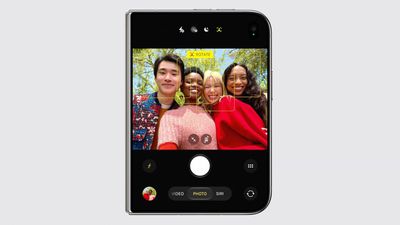
The inner display has a 1080p FaceTime camera that's under the display. Apple has not specified the resolution of the camera.
Missing Camera Features
Compared to the iPhone 18 Pro and Pro Max, the iPhone Duo has a more rudimentary camera system. It lacks many features available on the Pro models.
- Telephoto lens
- Pro Controls
- Apple Reference Image
- Variable aperture
- Second-generation sensor-shift optical image stabilization
- Adaptive True Tone flash
- Spatial photos and video recording
- ProRAW
- ProRes
- ProRes RAW
- Genlock
- Apple Log 2 video recording
- Studio-quality four-mic array
Battery Life
Apple says the iPhone Duo lasts for up to 24 hours of "typical use" that includes using both the outer and inner displays. Typical use is a metric Apple calculated based on the median usage values across iPhone users. It is supposed to be reflective of real-world use, featuring app use, games, web browsing, navigation, and more.
The battery lasts for up to 44 hours when watching video on the outer display and up to 31 hours when using the inner display. It lasts for up to 37 hours when using the outer display to stream video and up to 26 hours on the inner display.
Fast charging is supported, and the iPhone Duo can charge to 50 percent in around 20 minutes when using a 60W or higher power adapter and a USB-C cable.
MagSafe charging is supported and it can charge to 50 percent in around 30 minutes with a 35W or higher power adapter. MagSafe and Qi2 wireless charging are limited to 25W.
Connectivity
Apple equipped the iPhone Duo with its next-generation C2 modem, which supports both sub-6GHz and mmWave 5G in the United States. Apple says the C2 "delivers groundbreaking efficiency."
It also uses the Apple-designed N1 networking chip that supports Wi-Fi 7, Bluetooth 6, and Thread networking technology. There's also an Ultra Wideband chip for use with AirTags, the HomePod, and other devices that use UWB for indoor positioning.
The iPhone Duo is eSIM only and there is no physical SIM slot. It supports dual eSIM with two active eSIMs.
GPS and Satellite
The iPhone Duo supports precision dual-frequency GPS with GPS, GLONASS, Galileo, QZSS, BeiDou, and NavIC.
There's also built-in satellite support that offers connectivity in areas where no cellular or Wi-Fi connection is available. Satellite features include Emergency SOS with Crash Detection integration, Roadside Assistance, Messages, and Find My location sharing.
iOS 27 on iPhone Duo
iOS has been updated for the iPhone Duo's form factor. The Dock, Lock Screen controls, status bar, and app navigation bars are oriented vertically on the right side of the display when it's open. Apple also made the Dynamic Island vertical, and it expands to display alerts and Live Activities.
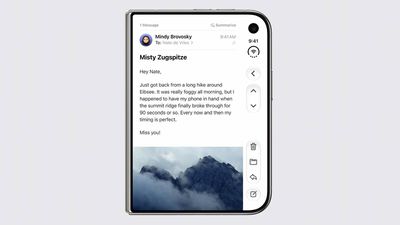
When the iPhone Duo is unfolded, there are two Home Screen pages with customizable widgets on the left. Two apps or two windows of the same app can be used side by side in Split View, and there are options to pair apps together and quickly switch between different pairs.
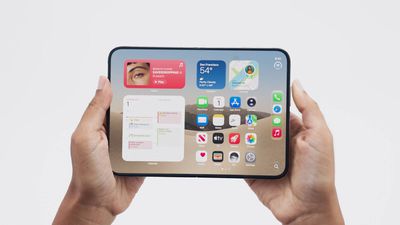
Apple says content reacts as the iPhone Duo folds, reorients when it's turned to the side, and switches to the correct display when flipped over. Some third-party apps like Slack, Zoom, and Netflix have already adapted their designs for the iPhone Duo, while Apple has SDKs for developers to adapt their apps to the device.
StandBy works differently on iPhone Duo. It activates when the iPhone Duo is standing up, even if the device isn't charging. It shows widgets, the time, and more, with new Calendar and Weather face options that join Clock, Modular, and Photos. Faces have deeper customization with new colors, fonts, and complications.
At night, iPhone Duo can turn into a bedside clock, waking users up with a soft glow.
iPhone Duo works with all Apple Intelligence features, including the new Siri AI and Visual Intelligence options.
What's Next for the iPhone Duo
Apple plans to introduce a second-generation iPhone Duo in 2027. The 2027 version will fall on the 20th anniversary of the iPhone's launch.

