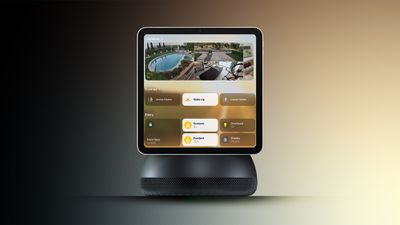
Apple plans to release an all-new smart home hub at some point between October and early next year, according to Bloomberg's Mark Gurman.
Apple Home Hub (Concept)
Siri AI is expected to be a core feature of the hub, which is designed to be placed in rooms throughout your house, such as a kitchen, living room, or bedroom. The report said the device will be available in tabletop and wall-mounted versions, with Apple apparently believing that many customers will buy more than one.
The hub will essentially combine a HomePod-like speaker with a 7-inch display. The report said the device runs an entirely new operating system based on the Apple TV's tvOS platform, with the interface described as tvOS blended with watchOS and iOS. There will be a grid of icons, widgets, and apps, along with customizable clock faces.
With built-in facial recognition, the hub can identify who is looking at the display and show personalized information, the report said. As a user approaches the hub, or moves away from it, the size of the interface elements will change.
Other features mentioned include FaceTime video calls, home security monitoring, HomeKit accessory management, photo galleries, a calendar, music playback, and an intercom system for households with multiple Apple home devices.
Apple also continues to work on an advanced in-home security camera that would compete with Amazon's Ring products, according to the report.
Apple's next MacBook Air is several months away, but if you've been holding off on an upgrade, here's why now could actually be a good time to buy.
The Current Air is the Best Value Mid-Tier Mac
The M5 MacBook Air starts at $1,299 following Apple's recent $200 price hike, but Amazon is already knocking $100 off, bringing it down to $1,199. The base model's 16GB of RAM means it's no longer hobbled out of the box, and in terms of capability for what you pay, nothing else in the Mac lineup comes close – not even the $699 MacBook Neo, whose A18 Pro chip, capped 8GB of RAM, and lack of Thunderbolt 4 make it a different class of machine entirely. Don't forget: Apple is also offering M5 MacBook Air models in its refurbished store, with up to 15 percent off regular prices.
Prices Are More Likely to Rise Than Fall
The $200 price hike Apple applied in late June to the MacBook Air was a direct result of the ongoing global memory chip shortage, and there's no sign that the pressure is easing. If component costs stay elevated into next year's M6 refresh, there's a real chance that the next MacBook Air launches at an even higher price than today's model. Grabbing an M5 Air now could therefore be tantamount to getting ahead of the next hike.
No Air Refresh is Imminent
The next 13-inch and 15-inch MacBook Air models aren't expected until early next year at the soonest, and they're likely to be an M6 chip bump rather than a redesign – so that's at least six months of waiting for a fairly modest spec-sheet upgrade. The bigger change is an OLED display, but that's even further out: Apple is reportedly bringing the Mac lineup's long-rumored OLED transition to the MacBook Pro first (complete with a touchscreen), and the latest rumors suggest an OLED MacBook Air won't arrive until 2028 or 2029. If a touchscreen OLED panel is what you're holding out for, you're really angling for a MacBook Pro, not an Air.
The Timing Could Work in Your Favor
Apple's back-to-school discounts, now live in the U.S., mean that education discounts and gift card promotions can cut the device's retail pricing. With those discounts in hand, it could work out to be the lowest price MacBook Air you can get before the next refresh (and who knows what price hikes that could bring).
It's Already More Mac Than Most People Need
Apple Silicon long ago passed the point where the MacBook Air struggles with everyday work. The M5 chip handles photo editing, light-to-medium video work, and heavy browser sessions without breaking a sweat. The chip's architecture is designed with AI computing in mind, and it also runs silent with no fan. Not only that, it will get macOS updates for years. For most buyers, the current Air won't feel slow before they're ready to replace it anyway.
Bottom Line
Wait if you want OLED or an M6-equipped machine. But otherwise, the M5 MacBook Air you can buy today is better than waiting for a marginally faster one arriving sometime in the first half of 2027.
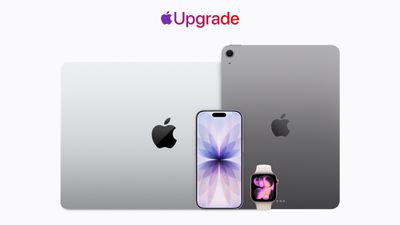
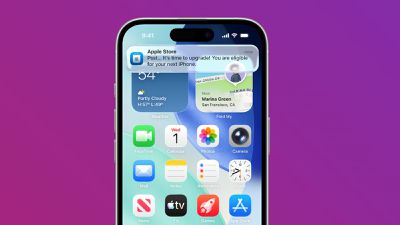
As expected, the Apple Upgrade program launched today, allowing customers in the U.S. to lease most iPhone, Apple Watch, iPad, and Mac models. While the program is offered by Apple, the leasing is handled by financing company Klarna.
The program essentially allows you to subscribe to an Apple device with monthly payments. At the end of the lease, you can return your device and either upgrade to a new one or move on. If you prefer to own your device at the end of the lease, you can pay an amount equal to the retail price minus any lease payments made to Klarna.
No matter which option you choose at the end of your lease, you will never pay more than the retail price of the device, according to Apple.
Apple Upgrade allows you to lease an iPhone for as little as $17.99 per month, with the complete breakdown of starting prices listed below.
iPhone
iPhone 17e: From $17.99/month for 24 months
iPhone 17: From $22.99/month for 24 months
iPhone Air: From $28.99/month for 24 months
iPhone 17 Pro: From $31.99/month for 24 months
iPhone 17 Pro Max: From $34.99/month for 24 months
Apple Watch
Apple Watch Series 11: From $11.99/month for 24 months
Apple Watch Ultra 3: From $24.99/month for 24 months
Apple Watch Hermès Series 11: From $40.78/month for 24 months
Apple Watch Hermès Ultra 3: From $47.03/month for 24 months
iPad
iPad mini: From $11.99/month for 36 months
iPad Air: From $15.99/month for 36 months
iPad Pro: From $24.99/month for 36 months
Mac
MacBook Air: From $24.99/month for 36 months
iMac: From $28.99/month for 36 months
MacBook Pro: From $38.99/month for 36 months
Mac Studio: From $48.99/month for 36 months
If a device is not listed above, it is not eligible for the Apple Upgrade program at this time. Notable exclusions include the iPhone 16, the Apple Watch SE, the entry-level iPad, the MacBook Neo, and the Mac mini.
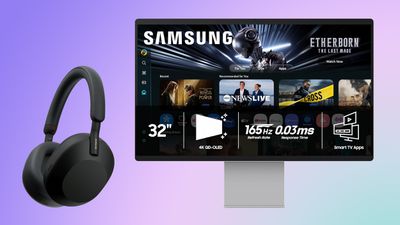
There's a big accessory sale happening on Amazon this week, with the year's best prices on Anker chargers, Samsung monitors, Sonos audio products, and much more.
Note: MacRumors is an affiliate partner with some of these vendors. When you click a link and make a purchase, we may receive a small payment, which helps us keep the site running.
Highlights this time around include a new batch of audio devices on sale, including the Sonos Ace Headphones for $279.00, down from $399.00, and Sony's WH-1000XM5 Noise Canceling Headphones for $248.00, down from $399.00. Another notable audio discount is on the Soundcore Sleep A30 Earbuds, which are designed to be worn in bed, available for $199.99, down from $229.99.
In terms of monitor and TV deals, there are quite a few Samsung deals happening this week on Amazon. The 32-inch Smart Monitor M9 has hit its second-best price on Amazon at $1,249.99, down from $1,599.99, beating the Prime Day deal by about $50. You'll also find solid sales on The Frame TVs and Odyssey monitors right now, including a great deal on The Frame TV 55-inch model for $697.99, a new record low price.
We're also tracking big discounts from brands like LG, Hisense, iVANKY, Jackery, and more in the lists below. Accessories on sale include USB-C wall chargers, MagSafe-compatible wireless chargers, portable batteries, headphones, docks, and monitors.
If you're on the hunt for more discounts, be sure to visit our Apple Deals roundup where we recap the best Apple-related bargains of the past week.
Deals Newsletter
Interested in hearing more about the best deals you can find in 2026? Sign up for our Deals Newsletter and we'll keep you updated so you don't miss the biggest deals of the season!
New models of the Apple TV and HomePod mini are "nearly ready to launch," with Apple planning to release them "this fall," according to Bloomberg's Mark Gurman. In other words, the devices would likely launch around September or October.
The report said both devices will be equipped with faster processors that support Siri AI.
Earlier rumors claimed the next Apple TV would be equipped with the A17 Pro chip, which is the oldest chip that supports Apple Intelligence. The device is also expected to feature Apple's N1 chip for Wi-Fi 7, Bluetooth 6, and Thread.
The next HomePod mini is expected to use an Apple Watch's S9 chip or newer. Other previously-rumored features for the speaker include the N1 chip, improved sound quality, a newer Ultra Wideband chip, and a red color option.
The current Apple TV 4K was unveiled in October 2022, while the HomePod mini was introduced in October 2020, so there has been a long wait for new models. Rumors about new Apple TV and HomePod mini models have been circulating for years and years by this point, but the devices were seemingly postponed until Siri AI launches.
Siri AI is available in the iOS 27, iPadOS 27, macOS 27, watchOS 27, and visionOS 27 betas. Those updates are expected to be released to the general public in September, at which point Siri AI will finally be available to the masses.
The current Apple TV 4K has an A15 Bionic chip from the iPhone 13 series, while the HomePod mini uses the S5 chip from the Apple Watch Series 5.
Both devices received price increases last month. In the U.S., the Apple TV now starts at $199 (up from $129), while the HomePod mini is now $129 (up from $99).
At least briefly, Apple became a $5 trillion company today based on market capitalization, which is the total value of all of the company's outstanding shares.
Apple's stock surpassed the $340 mark today in intraday trading, which pushed the company's market cap above $5 trillion for the first time ever. However, the stock price is bouncing up and down.
Apple is once again the world's most valuable public company, having surpassed Nvidia.
Apple today launched Apple Upgrade, a new U.S. leasing program for iPhone, iPad, Mac, and Apple Watch. Apple partnered with Klarna for Apple Upgrade, and it replaces the current iPhone Upgrade Program and iPhone Payments.
Apple Upgrade has lower base prices than the iPhone Upgrade Program, with iPhones available starting at $17.99 per month and the Apple Watch available starting at $11.99 per month. Macs can be leased starting at $24.99 per month, and iPads start at $11.99 per month. AppleCare+ is optional and not included in the lease price, with customers also able to opt for AppleCare One.
There are 12-month and 24-month leasing options for the iPhone and Apple Watch, along with 24-month and 36-month leasing options for the Mac and iPad. Lease cost varies based on device, and is lower with a device trade-in that's applied on a monthly basis. Apple has some sample pricing, minus taxes and trade-in credits:
256GB iPhone 17 Pro ($1,099) - Typical monthly payment is $31.99 with a 24-month lease or $45.99 with a 12-month lease.
42mm Apple Watch Series 11 ($399) - Typical monthly payment for a 24-month lease term is $11.99 per month, or $21.99 for a 12-month lease term.
256GB iPad Pro ($1,199) - Typical monthly payment is $24.99 for a 36-month lease term, or $31.99 for a 24-month lease term.
16GB 14-inch MacBook Pro ($1,999) - Typical monthly payment is $38.99 for a 36-month lease, and $53.99 for a 24-month lease.
When leasing an iPhone, customers are required to choose a plan from AT&T, Verizon, or T-Mobile, and prepaid plans are not eligible. iPhones need to be leased with a carrier plan, but the iPhones are unlocked so customers can switch carriers if desired. MVNOs like Mint Mobile or Visible are not supported.
At the end of the leasing period, customers can choose to return the device and exit the program, pay off the remaining amount owed on the device with a one-time payment and keep it, or return it and upgrade to a new device with a new lease.
The payoff amount is the difference between what was paid during the leasing period and the retail price of the device, minus any remaining trade-in credits. Klarna is not charging a fee for the leasing program, so an iPhone that's $1,099 can be leased and then purchased for $1,099 with no extra cost beyond taxes.
As with trade-ins, Apple will send a pre-labeled and prepaid shipping box for device returns or upgrades.
If you don't opt to pay the purchase fee at the end of the leasing program, you will not own the device and must return it.
Apple is discontinuing the iPhone Upgrade Program, and iPhones can no longer be purchased with it. Current participants can continue to make payments until their existing iPhones are paid off, but at the next purchase, they will need to switch over to Apple Upgrade or another payment option. Apple Card users can continue to buy devices with the Apple Card Monthly Installments plan or choose Apple Upgrade and get 3% Daily Cash back on lease payments made with Apple Card.
Apple Upgrade is available for online and in-store purchases. Customers can select their preferred leasing option, and after a soft credit check, get an instant approval from Klarna if eligible. Lease information like billing schedule, total price, and remaining payments can be managed in the Klarna app.
Most iPhones, iPads, Macs, and Apple Watch models are eligible for Apple Upgrade, but the program can't be used for iPhone 16, iPhone 16 Plus, Apple Watch SE, MacBook Neo, Mac mini, iPad (A16), and Studio Display purchases. Apple Upgrade cannot be used with EDU discounts, and leases aren't available for refurbished devices. Apple also excludes purchases made with the Apple Employee Purchase Plan and business, government, veteran, and military purchase programs.
Fine Print
Lease participants can opt to end a lease early and return a device, but Apple says there may be "substantial fees" for terminating a lease before the end of the term. The fee is the remaining amount of the lease, so terminating a lease three months early means paying the remaining three months. There is no fee for paying off a lease early.
Customers must upgrade, end the lease, or purchase the device at the end of the lease term. If that doesn't happen, the lease converts to a month-to-month lease for up to six months. Month-to-month payments will remain the same, but if there was a trade-in credit being applied monthly, it ends when the lease does, so payments could go up. At the end of the month-to-month lease add-on, customers will be charged the purchase fee.
Damage to an iPhone, losing an iPhone, or having an iPhone stolen could incur fees. Klarna assesses damage at return and charges accordingly. With AppleCare+, the cost is the applicable service fee, but without it, the full cost of the assessed damage has to be paid.
If a customer misses a payment, the payment is rolled into the next month's payment, but there are no late fees incurred. If there are three consecutive missed payments, the lease agreement ends and the customer has to pay the full outstanding balance minus the value of the device when returned. If Klarna is unable to collect payment, the case will be handed over to Klarna's debt collection agencies. Apple says Klarna support offers a one-month payment deferral and an early lease termination option with a repayment plan.
Leases are restricted to customers who are 18 or older (or legal age in their resident state) with a valid SSN or ITIN. Customers must be U.S. residents, and territories are excluded. An Apple Account in good standing is required, as is a Klarna account and a credit or debit card.
Availability
Apple devices can be leased with Apple Upgrade in stores or online starting today.
Apple will exclusively rely on Samsung Display for the production of OLED touch panels for its redesigned upcoming MacBook Pro models, according to a new report from Korea-based The Elec.
Citing industry sources, the publication says that the 14-inch and 16-inch panels will be produced at Samsung's 8.6-generation OLED line at Asan, in Korea's South Chungcheong Province. The estimated initial supply is said to be 2.5 million panels, and mass production is expected to begin around August.
Apple reportedly didn't consider LG Display or China's BOE Technology Group for panel development due to yield and efficiency issues, as well as already-busy OLED production lines, making Samsung the default sole supplier. Samsung is said to have secured the position by working closely with Apple from the outset, and adapting its panel specifications and manufacturing capabilities during development.
Bloomberg's Mark Gurman has repeatedly claimed that 14-inch and 16-inch MacBook Pro models with an OLED touch screen are pegged to launch in late 2026 to early 2027. However, his most recent update on the matter said that early 2027 is now more likely because of the global chip shortage.
An OLED panel with touch-screen support is just one aspect of a major refresh planned for the high-end MacBook Pro models, with other rumored features including M5 Pro and M5 Max chips, a Dynamic Island (i.e., no notch) and a thinner design. The laptops could have "MacBook Ultra" branding, and macOS 27 will include a touch-friendly interface ready for the laptops.
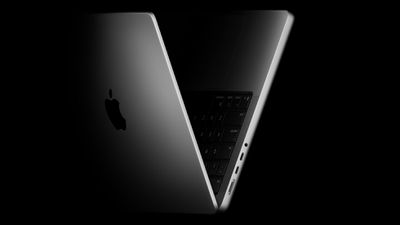
Apple's next high-end laptop is expected to bring the most substantial external changes to the MacBook Pro line since 2021. No renders, case leaks, or dimensions have emerged, but a series of reports have established much of what is set to change.
Bloomberg's Mark Gurman has said there is a good chance the model represents a "true overhaul" for the laptop, thanks to the combination of an OLED display and a thinner design, and Apple is reportedly working toward the thinnest and lightest products in their categories across the tech industry. The design is also expected to extend beyond this machine, with the entry-level 14-inch MacBook Pro due in 2027 said to resemble it.
Every MacBook Pro released since 2021 has measured 0.61 inches (15.5mm) thick for 14-inch models and 0.66 inches (16.8mm) thick for 16-inch models, figures that have remained unchanged across five chip generations. The next model is expected to be noticeably thinner and lighter, though no credible figure has been reported. Replacing the mini-LED backlight with a hybrid OLED panel removes a physical layer from the lid, so the reduction may be most pronounced in the upper half of the machine.
The notch is expected to be replaced by a hole-punch camera, a change first indicated by a roadmap from research firm Omdia and subsequently corroborated by Bloomberg. The cutout is said to be pill-shaped to accommodate an interactive Dynamic Island.
The notch has been the most distinctive feature of the MacBook Pro's display since 2021, and removing it would leave the menu bar as a continuous strip interrupted by a small island rather than divided in two. Apple appears to be preparing for the change in software, since the "Search or Ask" interface built into Spotlight in macOS 27 adopts a dark, pill-shaped design suited to a cutout of that shape.
The bezels surrounding the display may also shrink. Omdia claims Samsung Display will supply 14.3-inch and 16.3-inch panels, fractionally larger than the 14.2-inch and 16.2-inch displays currently in use, which within a largely unchanged chassis would result in narrower borders.
Apple is also said to be fitting a reinforced hinge so that the display does not wobble when tapped. Whether the lid will also tilt further back than the current model, which stops relatively early for structural reasons, is yet to be seen.
Several elements are expected to carry over. Bloomberg reported in February that the machine would look a lot like the current MacBook Pro, specifying that the keyboard and trackpad would be retained and that the device would remain a conventional clamshell in 14-inch and 16-inch sizes, rather than a detachable or convertible design. HDMI, MagSafe, and the SD card slot were reinstated in the 2021 redesign after an unpopular absence, and no report has suggested they will be removed again.
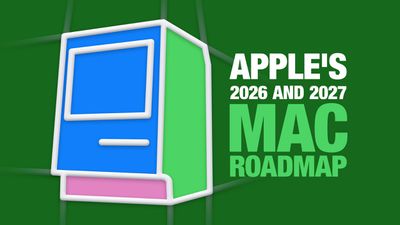
A shortage of memory chips has impacted the entire computer market, affecting Macs and PCs alike. Apple and other companies have raised prices, but Apple is better positioned than its competitors. Machines like the Mac mini and the Mac Studio are in demand for on-device AI agent use, and Apple plans to take advantage by refreshing its Mac lineup across 2026 and 2027.
Apple already launched the MacBook Neo and refreshed the MacBook Air and MacBook Pro models with M5-series chips, but there are more updates coming before the end of the year.
Fall 2026 Launches
14-inch MacBook Pro - The entry-level 14-inch MacBook Pro is expected to get an M6 chip, and it'll be one of the first machines with Apple's 2-nanometer chip technology.
iMac - The 24-inch iMac will get an update, and it'll also probably get the new M6 chip. No design or display changes are expected, so it'll continue to look like the current model from 2024.
Late 2026 to Early 2027
OLED MacBook Pro - A MacBook Pro (or MacBook Ultra) with an OLED touchscreen display could launch in late 2026, but Apple might also hold it until early 2027. The higher-end 14-inch and 16-inch MacBook models will use M5 Pro and M5 Max chips because Apple isn't going to release M6 Pro and M6 Max chips. The OLED MacBook Pro will have an updated design.
Mac Studio - Apple is working on a refreshed version of the Mac Studio with M5 Max and M5 Ultra chips, but launch timing is unclear because of RAM shortages and costs.
Mac mini - There are M5 Pro and M6 Mac mini models in development, but as with the Mac Studio, launch timing is not known. We could get these two machines as soon as 2026, in early 2027, or they might even be held until later in 2027.
2027 Mac Plans
MacBook Air - Refreshed 13-inch and 15-inch MacBook Air models are planned for early 2027. The new machines are likely to get the M6 chip Apple is working on.
14-inch MacBook Pro - An updated entry-level 14-inch MacBook Pro with an M7 chip could come in as soon as early 2027. It will not have an OLED display like Apple's higher-end MacBook Pro machines coming in late 2026 or early 2027, but it is expected to get the same design overhaul.
MacBook Neo - There's a new version of the low-cost MacBook Neo coming, but we don't know exactly when. It's expected to use a faster A19 Pro chip and it will come with more memory. New colors are also a possibility.
Late 2027 to Early 2028
Second OLED MacBook Pro - A second-generation OLED MacBook Pro will come approximately a year after Apple releases the first version. The late 2027 to early 2028 MacBook Pro models will get Apple's M7 Pro and M7 Max chips, which are built for artificial intelligence workloads.
2028
OLED MacBook Air - Apple plans to bring OLED displays to the MacBook Air, but 2028 is the earliest we'll see an OLED MacBook Air, and launch timing could even be pushed back.
OLED iMac - Apple is also working on an OLED iMac, but it's not known when exactly it will come out. It could be released sometime around the OLED MacBook Air.
Chip Mixing
According to Bloomberg, Apple is moving up development of its M7 chips that are built for AI workloads, skipping some M6 chips. Apple won't come out with an M6 Pro or M6 Max chip, which is why the first OLED MacBook Pro models will use M5 Pro and M5 Max chips instead of newer technology. Apple's rough chip release schedule:
M5 Ultra - Late 2026
M6 - Late 2026
M7 - First half of 2027
M7 Pro - End of 2027
M7 Max - End of 2027
M7 Ultra - 2028
Memory Prices
Global memory shortages caused Apple to make major changes to its Mac and iPad pricing in June, and prior to that, Apple discontinued some Mac mini and Mac Studio models that included higher RAM upgrade options. Limited memory availability could affect Apple's Mac launch plans, so timing could shift.
Buying Advice
If you're planning to pick up a MacBook Pro or an iMac, it's probably worth waiting because of the refreshes coming as soon as late 2026. The iMac is two years old and got a price hike recently, so it's an especially bad deal.
OLED touchscreen MacBook Pro models are likely to be even more expensive than the current models, so if you don't want to pay more for the new screen technology, it's an okay time to buy. It's probably best to hold off on an entry-level MacBook Pro until it's updated with the faster M6 chip.
Mac mini and Mac Studio models have extended shipping times already, and if you don't need something imminently, it's probably better to wait for new chips. Other Macs aren't getting refreshed until 2027, so now is a good time to buy the MacBook Neo and the MacBook Air.
Apple is on the verge of becoming a $5 trillion company based on market capitalization, which is the total value of all of the company's outstanding shares.
Apple's stock closed at $336.91 today, up around 22.5% since late June. The company's market cap is now around $4.94 trillion, although this figure is not precise due to the company buying back shares over time.
Apple is once again the world's most valuable public company, having surpassed Nvidia.
Apple today released iOS 26.6, iPadOS 26.6, and macOS Tahoe 26.6, all of which have a long list of security fixes.
iOS 26.6 and iPadOS 26.6 address almost 90 security vulnerabilities affecting everything from the App Store to the Neural Engine. Multiple kernel and WebKit vulnerabilities were fixed, along with problems affecting Wi-Fi, Siri, and the iPhone's image processing.
macOS Tahoe 26.6 has more than 130 vulnerability fixes, with many of those updates also available in macOS Sequoia 15.7.8 and macOS Sonoma 14.8.8. The latter two updates are available for Macs not running macOS Tahoe.
Apple's other updates, tvOS 26.6, watchOS 26.6, and visionOS 26.6, also have over 80 security fixes.
While Apple doesn't say that any of the vulnerabilities are known to have been actively exploited, now that the issues are public, devices that aren't updated could be vulnerable. It's a good idea to update all of your devices to the latest software that's available to keep yourself safe.
Apple today released macOS Tahoe 26.6, a small update to the macOS Tahoe operating system that came out last year. macOS Tahoe 26.6 comes a month after Apple released macOS Tahoe 26.5.2.
Mac owners can download the software by opening the System Settings app and then navigating to the Software Updates section.
According to Apple's release notes for the update, macOS Tahoe 26.6 includes security fixes for the Mac and it optimizes Spotlight for the release of macOS 27.
Apple today released iOS 26.6 and iPadOS 26.6, updates to the iOS and iPadOS 26 operating systems that came out in September. iOS 26.6 comes a month after the launch of iOS 26.5.2, a security update.
iOS 26.6 and iPadOS 26.6 can be downloaded on eligible iPhones and iPads over-the-air by going to Settings > General > Software Update.
According to Apple's release notes, iOS 26.6 and iPadOS 26.6 include security fixes for the iPhone and iPad. The updates also optimize the Spotlight index in preparation for iOS 27 and iPadOS 27.
iOS 26.6 will be one of the final updates to the iOS 26 operating system. Apple is beta testing iOS 27, and the software is set to launch this September alongside new iPhone models.
Apple today released watchOS 26.6, the sixth update to the watchOS 26 operating system that came out in September. watchOS 26.6 comes over two months after Apple released watchOS 26.5.
watchOS 26.6 can be downloaded for free on an iPhone running iOS 26.6 by opening up the Apple Watch app and going to General > Software Update, or initiating an update in the Settings app on the watch. To install the new software, the Apple Watch needs to have at least 50 percent battery and it needs to be placed on a charger.
According to Apple's release notes, watchOS 26.6 includes unspecified bug fixes and security updates.
Apple today released tvOS 26.6, the sixth update to the tvOS operating system that came out last fall. tvOS 26.6 is available for the Apple TV 4K, and it comes two months after Apple released tvOS 26.5.
tvOS 26.6 can be downloaded using the Settings app on Apple TV. Open up Settings and go to System > Software Update to get the new software. Apple TV owners who have automatic software updates activated will be upgraded to tvOS 26.6 automatically.
No new features were found in tvOS 26.6 during the beta testing period, so it likely focuses on bug fixes and performance improvements. Apple shares tvOS release notes on its website.
Apple today released visionOS 26.6, the sixth update to the visionOS 26 operating system that launched in September. visionOS 26.6 comes over two months after Apple released visionOS 26.5.
visionOS 26.6 can be downloaded on all Vision Pro headsets by navigating to the Settings app, selecting the General section, and choosing the Software Update option. To install an update, the Vision Pro headset needs to be removed, and there is a software progress bar available on the exterior EyeSight display.
Apple's release notes say that visionOS 26.6 includes bug fixes and security improvements in addition to optimizing the Spotlight index for the upcoming visionOS 27 launch.
visionOS 26.6 is recommended for all Vision Pro users.
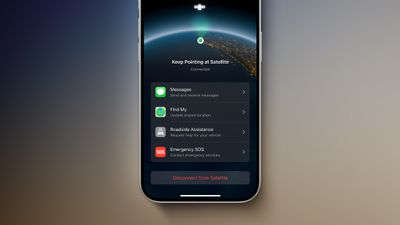
Amazon is planning to deploy up to 5,105 low Earth orbit satellites that will use Globalstar spectrum to provide voice, data, messaging, and emergency services to devices like the iPhone. Amazon's project is expected to improve existing iPhone satellite features and support new features.
Apple uses Globalstar for the satellite features on the iPhone and Apple Watch Ultra 3, and Amazon is in the process of acquiring the company. Apple and Amazon have worked out a deal that will see Globalstar operating alongside Amazon's Leo satellite network, with Globalstar and Amazon Leo powering future satellite services for Apple.
Amazon's proposed 5,105-satellite constellation will allow devices to have satellite-based cellular service in areas where a cell tower is unavailable. Amazon says the system will give customers improved speed and throughput, and it will be able to reach any compatible mobile device with a satellite-capable chipset. Amazon specifically highlights its Apple partnership in its blog post announcing the satellite plan.
Amazon Leo already announced an agreement with Apple to power satellite services for supported iPhone and Apple Watch models—including Emergency SOS via satellite, Messages, Find My, and Roadside Assistance via satellite—and to collaborate with Apple on future satellite services using the expanded network.
Amazon plans to deploy five orbital shells meant to reach different parts of the planet. Three will cover heavily populated areas, while others will extend service toward polar areas. Amazon has filed an application with the FCC for the system, and is awaiting approval. Amazon expects to deploy satellites starting in 2028, with the Globalstar merger set to close in 2027 after it receives regulatory approval.
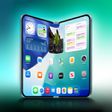
Apple's first foldable iPhone, with a book-style design featuring a ~5.5-inch outer display and a ~7.8-inch inner display with a minimal crease down the middle.


 Apple Home Hub (Concept)
 Note: MacRumors is an affiliate partner with some of these vendors. When you click a link and make a purchase, we may receive a small payment, which helps us keep the site running.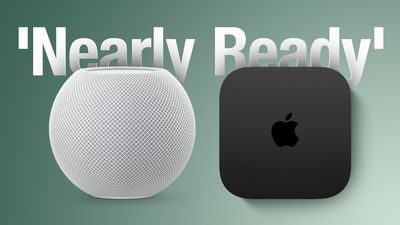
 At least briefly, Apple became a $5 trillion company today based on market capitalization, which is the total value of all of the company's outstanding shares.