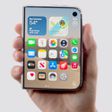
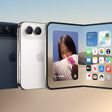
Apple's 20th anniversary iPhone is expected to arrive in the fall of 2027 with the most significant redesign the device has seen since the iPhone X.

The first iPhone was announced in January 2007 and went on sale that June, meaning the device's 20th anniversary technically falls on June 29, 2027. Apple rarely launches new high-end iPhones outside of its September timeframe, and the anniversary models are still expected to arrive in the fall of that year, just as the iPhone X did in 2017 despite marking the 10th anniversary of a device that launched in June.
The 2027 model has been rumored for well over a year, with reports pointing to an all-glass design, new display technology, and a series of upgrades Apple has been working toward for several generations. Much as the iPhone X set the template for the years of iPhones that followed, the anniversary model is likely to define the device's design direction for some time.
Apple could skip the name "iPhone 19" in the same way it skipped "iPhone 9" ahead of the iPhone X in 2017, with rumors so far variably referring to the device as the "iPhone 20" and the "iPhone XX." Here is everything that has been rumored for the device so far:
- Curved all-glass design with edge-to-edge display: Apple is reportedly aiming for a new design with curved glass generously wrapping around the front and back, described by Bloomberg's Mark Gurman as a curved iPhone without cutouts in the display. Facilities in Apple's supply chain have reportedly finished renovations ahead of production, with manufacturing quality said to be around that of the first-generation iPhone Air. The panel is said to curve down around all four edges for a borderless effect, going beyond the curved displays used by other manufacturers. Rather than the aggressively curved "waterfall" edges seen on some Samsung panels, Apple is said to be seeking an equal-depth quad-curved design with very shallow "micro-curves," which could make edge swipes feel more natural and reduce distortion of on-screen content. Bending the display circuitry around every edge reportedly requires an ultra-thin film encapsulation layer to protect the OLED panel from moisture and air, and one leak claims a bezel of 1.1mm, compared to approximately 1.44mm on the iPhone 17 Pro.
- More advanced display: Apple is reported to be adopting a Samsung-made panel using Color Filter on Encapsulation, which removes the polarizing film and applies the color filter directly onto the encapsulation layer. The technique reduces the thickness of the display stack and lets more light through, improving brightness while reducing power draw, and the panel is said to be paired with next-generation 16nm display driver chips. Apple is also said to be employing a crater-shaped light diffusion layer designed to even out brightness so the display appears uniformly lit across all areas, including at the curved edges.
- Under-display Face ID: Apple reportedly wants to move the Face ID system beneath the panel, using a "spliced micro-transparent glass" window that allows infrared sensors to pass through the display. The technology is expected to debut on iPhone 18 Pro models first, but DSCC's Ross Young has said it is unlikely to be fully ready even for 2027, and expects an iPhone 18 Pro-style smaller Dynamic Island to remain.
- Two size options: Unlike the iPhone X, which launched in a single 5.8-inch size, Apple is planning two anniversary models roughly matching the iPhone 18 Pro and Pro Max at 6.3 and 6.9 inches, although the larger model could be marketed as a 7-inch device owing to its slimmer bezels and all-screen design.
- Custom Apple image sensor: Apple is reported to be developing its own stacked image sensor to replace the Sony sensors used across the iPhone lineup, having already built a working prototype. The sensor is said to use LOFIC technology, allowing each pixel to store varying amounts of light and potentially reaching up to 20 stops of dynamic range.
- Solid-state haptic buttons: Apple is rumored to be reviving "Project Bongo" to replace the mechanical Side button, volume buttons, Action button, and Camera Control with haptic equivalents integrated into the frame. The buttons have reportedly passed tests for use with gloves, wet hands, extreme temperatures, and with a case fitted. An ultra-low energy microprocessor is claimed to keep the solid-state buttons functional even when the handset is powered off or the battery has run out.
- A21 chip: Both anniversary models are expected to use a second-generation 2-nanometer "A21" chip, shared with the second-generation foldable iPhone.
- High bandwidth memory: Apple is reported to be considering mobile HBM, a form of DRAM that stacks memory chips vertically and connects them using through-silicon vias to increase signal transmission speeds. Connecting the memory to the iPhone's GPU is said to be a strong candidate for improving on-device AI performance, and Apple has reportedly discussed the plan with memory suppliers Samsung and SK Hynix, both of which expect to begin mass production after 2026.
- Apple modem in the United States: Apple is aiming to have modems that outperform Qualcomm's on speed and AI functionality by 2027, following the C1 and C1X used in the iPhone 16e and iPhone Air, and the C2 on the iPhone 18 Pro outside the United States only. With the 20th anniversary iPhone, an Apple-designed modem should come to the high-end devices for the first time in the United States, delivering an efficiency boost for better battery life.
- Pure silicon battery: Apple is said to be pairing the new display with pure silicon battery technology for improved power efficiency, which offers higher energy density than conventional lithium-ion cells and could allow greater capacity in the same physical space. One leaker has claimed a 6,000mAh battery could come to the device, though it is unclear where that figure comes from.
Reverse wireless charging, under-display audio that eliminates the earpiece slit, and a next-generation Ceramic Shield have all been mentioned by one leaker, but it is unknown whether these claims are based on supply chain information.
With the device still more than a year away, the final 20th anniversary iPhone could still change considerably from the current picture provided by rumors. A two-stage rollout has been reported for the curved panel itself, with the 2027 implementation said to introduce some distortion and brightness loss at the edges before a more advanced version follows in 2028.
Apple is expected to launch the 20th anniversary iPhone in the fall of 2027 alongside a second-generation foldable iPhone, following the iPhone 18, iPhone 18e, and iPhone Air 2 in the spring.