NY Times reports on Intel's extensive testing of the Core i7 (Nehalem) processors which officially launched today. The company has invested over $500 million annually to test these chips in an effort to avoid any show-stopping bugs.
This cautious attitude comes from experience for Intel who recalled their Pentium chips in 1994 after a widely publicized bug in its floating point calculation unit.
After the Pentium flaw, Intel also fundamentally rethought the way it designed its processors, trying to increase the chance that its chips would be error-free even before testing. During the late 1990s it turned to a group of mathematical theoreticians in the computer science field who had developed advanced techniques for evaluating hardware and software, known as formal methods.
Even with such testing, Intel says it would be impossible to evaluate every possible scenario. As an additional safety net, Intel has included software in the Nehalem chips which can be changed after they ship.
Apple is expected to eventually adopt versions of Intel's Core i7 in future Macs.
Apple's long-rumored smart home hub will have an iMac G4-style design and a host of unique features, Bloomberg's Mark Gurman reports.
The smart home hub is said to feature a square 6-inch display, with variants that can be placed on a countertop or mounted on a wall. It features a single FaceTime camera on the front, with microphones and speakers in its connected base. Gurman described the...
Apple plans to introduce a series of new smart home products on Tuesday, October 13, according to Bloomberg's Mark Gurman.
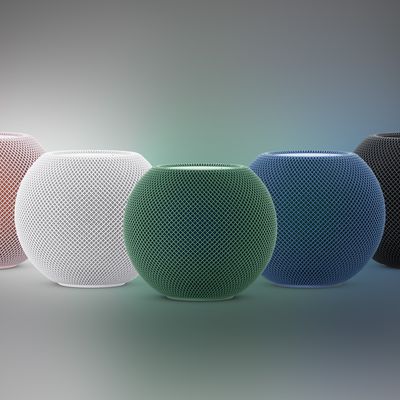
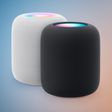
Apple reportedly plans to debut its long-awaited smart home hub device, a new HomePod mini, and a new Apple TV on the date. The new HomePod mini and Apple TV are set to retain their existing designs, but tout faster chips to support Siri AI. The new HomePod mini will...
The iPhone Duo is reportedly facing production difficulties ahead of its October launch, with early output expected to be limited.
A person said to be close to Foxconn's supply chain told China's Jiemian News that final assembly yields for Apple's first foldable iPhone were only slightly above 60% as of September 17. The source said that, under Apple's current quality standards, it could...
Apple's first foldable iPhone, with a book-style design featuring a 5.4-inch outer display and a 7.6-inch inner display with a minimal crease down the middle.