iPhone 18 Pro Variable Aperture Camera Enters Production - MacRumorsOpen MenuShow RoundupsShow Forums menuVisit ForumsOpen Sidebar
Skip to Content

iPhone 18 Pro Variable Aperture Camera Enters Production

Apple has started ramping up its supply chain for a new variable aperture camera system expected to debut in the iPhone 18 Pro and Pro Max this September, reports Korea's ETNews.
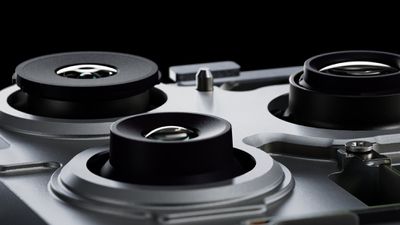
iphone 17 cameras zoom
Apple has never implemented a variable aperture on an iPhone. From the iPhone 14 Pro through the iPhone 17 Pro, the main camera uses a fixed ƒ/1.78 aperture, meaning the lens remains fully open at all times when capturing images.

In contrast, a variable aperture lets the camera control how much light reaches the sensor. In low-light conditions, it opens to admit more light, while in bright scenes, it closes to avoid overexposure. This should also give users more control over depth of field.

In December 2024, Apple supply chain analyst Ming-Chi Kuo was first to say that that the main rear camera on both ‌iPhone 18 Pro‌ models will offer variable aperture. A report from October 2025 said Apple was moving ahead with plans to bring the technology to next-generation iPhones and was discussing components with suppliers.

According to industry sources cited by today's report, Chinese supplier Sunny Optical has already started producing the actuators that enable the aperture mechanism, while camera module assembly will follow in early summer. Apple's primary camera partner LG Innotek is said to be preparing to begin production around June or July, with dedicated equipment being installed at its Gumi facility in South Korea. Module makers such as Cowell are also expected to take part in the process.

LG Innotek is reportedly likely to take on a larger share of production for the main camera module due to the system's added complexity. A similar thing happened when Apple adopted a folded tetraprism zoom lens in the iPhone 15 Pro Max, where LG Innotek initially served as the sole supplier.

The ‌iPhone 18 Pro‌ and ‌iPhone 18 Pro‌ Max are expected to be announced alongside Apple's first foldable iPhone sometime around September.

Related Roundup: iPhone 18 Pro

Popular Stories

Dynamic Island iPhone 18 Pro Feature

iPhone 18 Pro Display Sizes: What to Expect

Thursday July 30, 2026 4:30 am PDT by
Apple won't change the display size of this year's iPhone 18 Pro models, but a different change to the display has been rumored several times now. Apple is expected to stick with 6.3-inch and 6.9-inch displays for the iPhone 18 Pro and iPhone 18 Pro Max, respectively. For context, those are the display sizes of the current iPhone 17 Pro and iPhone 17 Pro Max. Meanwhile, rumors continue to ...
TMRS 200 Latest iPhone 18 Pro Leaks and Rumors Thumb

The MacRumors Show: Latest iPhone 18 Pro Leaks and Rumors

Friday July 3, 2026 9:13 am PDT by
On this week's episode of The MacRumors Show, we discuss the latest leaks and rumors surrounding the iPhone 18 Pro. Subscribe to The MacRumors Show YouTube channel for more videos Tata Electronics, one of Apple's manufacturing partners in India, was hit by a ransomware attack that resulted in more than 200,000 internal files being posted online, including component lists, supplier data,...
Dynamic Island iPhone 18 Pro Feature

iPhone 18 Pro: Five Rumored Design Changes

Tuesday July 7, 2026 7:49 am PDT by
Apple's upcoming iPhone 18 Pro models are not expected to introduce a sweeping design overhaul – that's reportedly being saved for next year's 20th-anniversary iPhone models. But that doesn't mean the new devices will be indistinguishable from their predecessors. Apart from four new color options (expected to be Dark Cherry, Light Blue, Dark Gray, and Silver), the iPhone 18 Pro and iPhone 18 ...

Top Rated Comments

15 weeks ago
Sounds like a total gimmick to me. What kind of DOF difference are we even talking about with sensors this tiny?

> it closes to avoid overexposure

Not really an issue when you’ve got fully electronic shutters that can do absurdly short exposure times.
Score: 11 Votes (Like | Disagree)
15 weeks ago

So that will require a small motor?
There have long been micro mechanical machines in iPhones for image stabilisation and autofocus in the cameras. For variable aperture, instead of a motor, shape memory alloy nitinol is used.
Score: 6 Votes (Like | Disagree)
Abstract Avatar
15 weeks ago

Using F stops to create a shallow depth of field is nice but it depends on there being enough available light to manage the trick in the first place, so, A – is this a faux variable aperture, just electronic trickery and B – will the point and click crowd just find the whole thing unnecessarily complicated
No, the problem is that current cameras already shoot wide open (i.e. at max aperture), so you’re already getting the shallowest depth of field possible for the sensor size and lens.

Being able to change the aperture means you can now “stop down” (i.e. making the aperture smaller), which improves depth of field so that the background is less blurry.

The problem is (and someone else has already said this) is that current cameras have sensors so small that we almost have infinite depth of field already. The only time we don’t is for macro or near-macro photography, where we often get background blur.
Score: 6 Votes (Like | Disagree)
15 weeks ago

Hi I’m not a real techie like most of you but will this variable aperture involve any physical moving parts?
Yes
Source: I'm a real techie
Score: 5 Votes (Like | Disagree)
jerryjohnson Avatar
15 weeks ago
Variable aperture sounds great on paper, but Apple’s real challenge is still software processing. Better natural photos > more camera specs.
Score: 2 Votes (Like | Disagree)
UliBaer Avatar
15 weeks ago
I also thought the variable aperture is completely useless for depth of field in photography, cause the microscopic lenses and sensors already picture in focus from here to South Africa.

But in another thread I learned, that for capturing video [edit] in very bright light conditions [/edit] it is advantageous to close down the aperture to get longer exposure times per picture frame and thereby introducing motion blur for the cinematic effect. That's the only reason I can imagine, where closing down the aperture is advantageous.
Score: 2 Votes (Like | Disagree)

🔗 Related Apple News & Rumors

Stay updated with the latest Apple ecosystem news and verified rumors