Watch Brain-Controlled iPad in Action for the First Time - MacRumorsOpen MenuShow RoundupsShow Forums menuVisit ForumsOpen Sidebar
Skip to Content

Watch Brain-Controlled iPad in Action for the First Time

For the first time, an individual has been seen publicly controlling an iPad entirely through thought, thanks to Apple's new brain-computer interface (BCI) protocol and Synchron's implantable Stentrode device.


A new video from Synchron shows how Mark, a participant in the company's COMMAND clinical study and a person living with ALS, can navigate the ‌iPad‌'s Home Screen, launch apps, and compose text, all without moving his hands, speaking, or using his eyes.

Mark's control of the ‌iPad‌ is powered by a combination of Apple's accessibility feature "Switch Control" and the Stentrode BCI, which is implanted into a blood vessel above the brain's motor cortex. The endovascular implant captures neural signals related to motor intent and wirelessly transmits them to an external decoder. That decoder interfaces directly with iPadOS through Apple's BCI HID standard.

The BCI HID protocol enables closed-loop communication between Apple devices and Synchron's technology, with the system dynamically sharing contextual on-screen data to optimize performance and responsiveness. Dr. Tom Oxley, Synchron's founder and CEO said:

This is the first time the world has seen native, thought-driven control of an Apple device in action. Mark's experience is a technical breakthrough, and a glimpse into the future of human-computer interaction, where cognitive input becomes a mainstream mode of control.

Apple first collaborated with Synchron in early pilot projects using Apple Vision Pro, which Mark controlled through thought in 2024. The integration then expanded to iPhones and iPads, with support built into Apple's accessibility frameworks. Apple is expected to roll out broader support for the BCI HID protocol across its platforms later in 2025.

Synchron has now implanted its Stentrode in 10 patients across the United States and Australia, under FDA's investigational device exemption. Unlike Neuralink's more invasive N1 chip, which embeds electrodes directly into brain tissue, Synchron's approach avoids open-brain surgery, relying on a safer, catheter-based procedure through the jugular vein.
Popular Stories

Apple Event Logo

Apple Working on All-New Operating System

Wednesday July 29, 2026 11:39 am PDT by
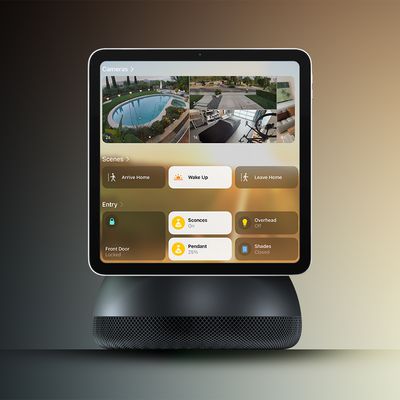
Apple is developing an all-new operating system that is essentially a mix of tvOS, watchOS, and iOS, according to Bloomberg's Mark Gurman. In a report this week, he said the operating system will feature a grid of icons, widgets, and apps, along with customizable clock faces. The new software platform is intended for Apple's long-rumored smart home hub. With built-in facial recognition,...
imac video apple feature

Apple Made Its Second-Biggest Acquisition Ever This Year

Wednesday July 29, 2026 12:03 pm PDT by
Apple this year acquired Israeli startup Q.ai for close to $2 billion, according to the Financial Times. That would make this Apple's second-biggest acquisition ever, after it paid $3 billion for the popular headphone maker Beats in 2014. This is also the largest known Apple acquisition since the company purchased Intel's smartphone modem business and patents for $1 billion in 2019. Q.ai...
Dynamic Island iPhone 18 Pro Feature

iPhone 18 Pro: Twelve Changes Coming to Apple's Next Flagship

Thursday July 30, 2026 3:43 am PDT by
We're less than two months out from the launch of Apple's premium next-generation smartphone lineup, and while we're not expecting a dramatic change in terms of functionality, there are still several enhancements rumored to be coming to the iPhone 18 Pro and iPhone 18 Pro Max. One thing worth noting is that Apple is reportedly planning a major change to its iPhone release cycle this year,...

Top Rated Comments

TechRunner Avatar
13 months ago
This is amazing technology. I had an acquaintance who died from ALS twenty or so years ago. Something like this would have been such a gift to him and his family.
Score: 21 Votes (Like | Disagree)
Klaren031 Avatar
13 months ago

For the first time, an individual has been seen publicly controlling an iPad entirely through thought, thanks to Apple's new brain-computer interface (BCI) protocol and Synchron ('https://www.businesswire.com/news/home/20250804537175/en/Synchron-Debuts-First-Thought-Controlled-iPad-Experience-Using-Apples-New-BCI-Human-Interface-Device-Protocol')'s implantable Stentrode device.


A new video from Synchron shows how Mark, a participant in the company's COMMAND clinical study and a person living with ALS, can navigate the iPad's Home Screen, launch apps, and compose text, all without moving his hands, speaking, or using his eyes.

Mark's control of the iPad is powered by a combination of Apple's accessibility feature "Switch Control" and the Stentrode BCI, which is implanted into a blood vessel above the brain's motor cortex. The endovascular implant captures neural signals related to motor intent and wirelessly transmits them to an external decoder. That decoder interfaces directly with iPadOS through Apple's BCI HID standard.

The BCI HID protocol enables closed-loop communication between Apple devices and Synchron's technology, with the system dynamically sharing contextual on-screen data to optimize performance and responsiveness. Dr. Tom Oxley, Synchron's founder and CEO said:


Apple first collaborated with Synchron in early pilot projects using Apple Vision Pro ('https://www.macrumors.com/2024/07/30/vision-pro-can-now-be-controlled-with-brain/'), which Mark controlled through thought in 2024. The integration then expanded to iPhones and iPads, with support built into Apple's accessibility frameworks. Apple is expected to roll out broader support for the BCI HID protocol across its platforms later in 2025.

Synchron has now implanted its Stentrode in 10 patients across the United States and Australia, under FDA's investigational device exemption. Unlike Neuralink's more invasive N1 chip, which embeds electrodes directly into brain tissue, Synchron's approach avoids open-brain surgery, relying on a safer, catheter-based procedure through the jugular vein.
Article Link: Watch Brain-Controlled iPad in Action for the First Time ('https://www.macrumors.com/2025/08/04/watch-brain-controlled-ipad/')

I live with MS. In a near future I won’t be able to use my hands. This technology is absolutely amazing!
Score: 14 Votes (Like | Disagree)
star-affinity Avatar
13 months ago

Us in a few years

If I can have WALL-E by my side like that, I think I'm up for it.

No, but seriously – this is really cool tech! Nice work Apple and Synchron!
Score: 13 Votes (Like | Disagree)
MacUserFella Avatar
13 months ago
Us in a few years


Attachment Image
Score: 11 Votes (Like | Disagree)
nikon1 Avatar
13 months ago
I’d much prefer this technology over something that requires open brain surgery. And IIRC, Neuralink is a Musk project which creates a very large “Not in my brain” reaction.
Score: 10 Votes (Like | Disagree)
CocktailHour Avatar
13 months ago
Happy about this.
Score: 8 Votes (Like | Disagree)

🔗 Related Apple News & Rumors

Stay updated with the latest Apple ecosystem news and verified rumors