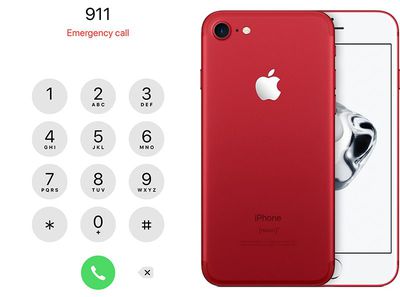
EENA, short for the European Emergency Number Association, has called on Apple to integrate a solution called Advanced Mobile Location into iOS to improve the safety of iPhone users in emergency situations.
Advanced Mobile Location recognizes when an emergency call is made and, if not already activated, activates a smartphone's GPS or Wi-Fi to collect the caller's precise location information. The handset then sends an automatic SMS to the emergency services with the caller's location, before turning the GPS off again.
For months, EENA said it has tried to establish contact with Apple to work on a solution that automatically provides accurate location derived from iPhones to emergency services and rescuers, but with no result so far.
Advanced Mobile Location is allegedly up to 4,000 times more accurate than current emergency systems, which rely on cell tower location with a radius of up to several miles, or assisted GPS, which can fail indoors. EENA lists several real scenarios where AML's location accuracy was less than 12 meters.
Last year, Google implemented a new AML-based solution called Emergency Location Service into Google Play services that automatically works on Android smartphones running its Gingerbread operating system or newer.
AML also must be supported by carriers. EENA said the service is fully operational in several European countries, including the UK, Estonia, Lithuania, Austria, and Iceland, as well as New Zealand, on all mobile networks.
In terms of privacy, Google said it never sees or handles the precise location obtained by its Emergency Location Service feature. Instead, the location is sent from the smartphone to emergency services only when a user explicitly places an emergency call, either directly or through their mobile network.
EENA said AML has saved many lives by more accurately pinpointing a person's position. Accordingly, several minutes of time can be saved, according to the European Telecommunications Standards Institute:
Ambulance Service measurements show that, on average, 30 seconds per call can be saved if a precise location is automatically provided, and several minutes can be saved where callers are unable to verbally describe their location due to stress, injury, language or simple unfamiliarity with an area.
EENA said it recognizes the efforts of Apple to improve the safety of its customers. It acknowledged the SOS functionality of the Apple Watch, which can automatically send the location of a caller to a specified contact. However, it believes the location should be sent to emergency services and rescuers as well.
Apple certainly cares about the safety of its customers. It doesn't appear to have publicly provided a reason against supporting AML.
"Oh, I don't know why this is needed since people calling emergency services can just tell the dispatcher their location."
Except when they can't.
People get lost in places other than urban areas, where there are no streets, etc. People can be critically injured or critically ill but still able to place a call to (or attempt to call) emergency services and then lose consciousness before they can tell the dispatcher their location. There are situations where is it not safe for someone to talk but has need of emergency services (for instance, they're hiding from someone who is trying to kill them and talking would give their location away and put them at risk of being discovered by the attacker).
This would be incredibly useful, and could be implemented properly to minimize the risk to privacy.
Right, but there are risks to every GPS feature on iOS, in my car. But if, say, I'm on a run at 8pm and feel something really bad coming on, I collapse, and the last thing I can pull myself to do is activate SOS. Lowering my privacy to emergency is fist to know where I am is a risk I'll take. And, in fact, this already is built into many cars which have emergency buttons.
In a lot of emergency instances the victim literally has under 5 minutes to get medical help before something catastrophic happens to them so notifying just family or a friend may only let them know they need to pick up a body at the morgue. And again, it would be something the user would have opt into along with the rest of SOS's features. It wouldn't be default on.
Or are you going to suggest... this is going to mean a hacker will be able to track your location because Apple will have opened a security hole in the firmware..
Or will you be worried the government will be tracking you personally 24/7. Because they have nothing better to do? Even though they can track you in a million other ways...
lol, I mean seriously... come on people. To be honest I'm blown away that this isn't already a thing. Pizza delivery guys have had your exact location for a while now yet the ambulance can only get it if you tell them, which isn't always an option or you might not actually know
This whole thing is pretty much redundant in the United States. We have had Enhanced 911 for years now. Phase II of E911 already sends GPS data when you call 911 to an agency that has the upgraded E911 equipment in their dispatch centers.
For example, here is the Verizon Wireless disclosure page on E911.
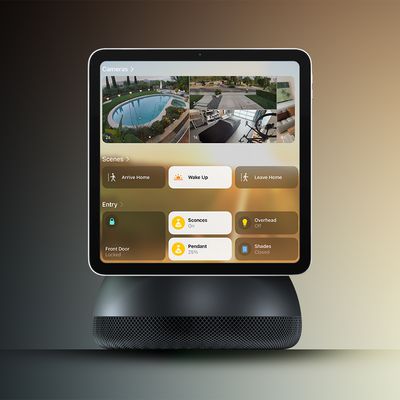
Apple's long-rumored smart home hub will have an iMac G4-style design and a host of unique features, Bloomberg's Mark Gurman reports.
The smart home hub is said to feature a square 6-inch display, with variants that can be placed on a countertop or mounted on a wall. It features a single FaceTime camera on the front, with microphones and speakers in its connected base. Gurman described the...
Apple plans to introduce a series of new smart home products on Tuesday, October 13, according to Bloomberg's Mark Gurman.
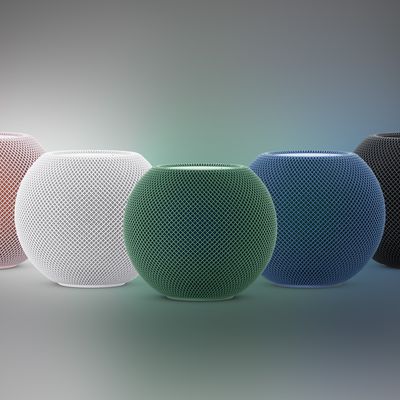
Apple reportedly plans to debut its long-awaited smart home hub device, a new HomePod mini, and a new Apple TV on the date. The new HomePod mini and Apple TV are set to retain their existing designs, but tout faster chips to support Siri AI. The new HomePod mini will...
Friday September 25, 2026 8:16 am PDT by Joe Rossignol
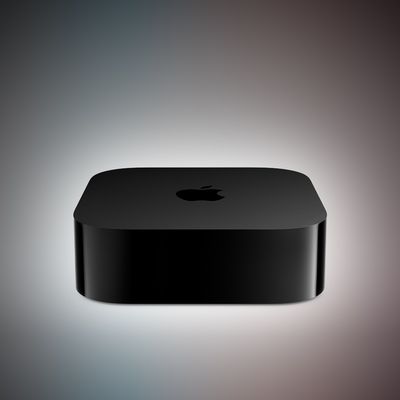
MacRumors contributor Aaron Perris has uncovered an image file from Apple for an unreleased Apple TV 4K, suggesting that a new model will finally be released soon. The image is specifically for an "Apple TV 4K (4th generation)" model.
Apple TV 4K (4th generation) image (on a gradient)
The image reveals that the Apple TV will have the same external design as the current model, with all of its...
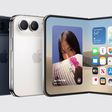
Apple's first foldable iPhone, with a book-style design featuring a 5.4-inch outer display and a 7.6-inch inner display with a minimal crease down the middle.



































Top Rated Comments
I hope Apple implements this feature.
Except when they can't.
People get lost in places other than urban areas, where there are no streets, etc. People can be critically injured or critically ill but still able to place a call to (or attempt to call) emergency services and then lose consciousness before they can tell the dispatcher their location. There are situations where is it not safe for someone to talk but has need of emergency services (for instance, they're hiding from someone who is trying to kill them and talking would give their location away and put them at risk of being discovered by the attacker).
This would be incredibly useful, and could be implemented properly to minimize the risk to privacy.
In a lot of emergency instances the victim literally has under 5 minutes to get medical help before something catastrophic happens to them so notifying just family or a friend may only let them know they need to pick up a body at the morgue. And again, it would be something the user would have opt into along with the rest of SOS's features. It wouldn't be default on.
For example, here is the Verizon Wireless disclosure page on E911.
http://www.verizon.com/about/consumer-safety/enhanced-911