Microsoft and Johnson Controls today revealed a new product partnership in a smart thermostat called "GLAS." The thermostat has been built by Johnson Controls, the company that made the first electric thermostat, with Microsoft providing all of the internal software, including the ability for users to awake and control its functions with smart AI assistant Cortana (via The Verge).
In the announcement video, GLAS is showcased as having an aluminum edge that attaches the thermostat to a wall, as well as a translucent touchscreen display that will let users tap and swipe through different temperature and control settings. The video mentioned that GLAS will monitor indoor and outdoor air temperature, as well as be knowledgeable of when a user is in the room or away from home, saving them money on their energy bills.
GLAS will run using Microsoft's Windows 10 IoT Core operating system as well as the company's Azure Cloud computing platform. Microsoft provided the following description on its YouTube channel for the device, although any other official information has yet to come out:
Heating and cooling account for roughly 48% of the energy use in a typical U.S. home, making it the largest energy expense for most families. In the commercial building sector, the cost is approximately 40%. Johnson Controls, one of the leading providers of HVAC, Fire and Security systems in the world, is changing how spaces are viewed and controlled. As the inventors of the first thermostat, Johnson Controls has innovated once again with GLAS.
Utilizing Windows 10 IoT Core, Cortana voice services, and Azure Cloud, GLAS is a simple to use, elegant thermostat that brings leading energy savings and air quality monitoring to everyday spaces. Johnson Controls is reinventing the thermostat and our lives.
The upcoming Johnson Controls GLAS thermostat is one of the newest devices using Microsoft's Cortana Devices SDK, which enables third-party hardware manufacturers to bake in the voice-activated AI to new devices. The company announced it would be opening up Cortana to new hardware makers late last year, confirming it wanted to see Cortana placed within fridges, toasters, thermostats, and other Internet of Things devices.
One of the first devices coming out of the announcement is tipped to be a Cortana-based smart speaker made by Harman Kardon. That speaker is rumored to launch sometime this fall, and will enter the market as a competitor to the Amazon Echo and Apple's upcoming HomePod.
I like my Ecobee. I liked the Nest more at my old house, but refused to buy it again because they became an Alphabet company. The new Ecobee has Alexa crap baked into it with microphones, so I doubt I'll be buying another Ecobee. Hopefully this one lasts me a long time, but I haven't been super thrilled with the performance of the wireless sensors. At least they sent me a new one for the one that was giving me real troubles disconnecting 15ft line of sight and would disconnect a couple times per day, meaning I'd have to dismiss dozens of messages if I needed to use the control panel on my wall. The other sensors just don't have the range to work well where I need them, but I've at least got one working in a spot downstairs now. Hopefully in the future we can get BT LE mesh sensors so they can pass data along between them back to the main unit. The main problem I have with Ecobee is that the software isn't that great. It's a lot less intuitive than the Nest, but I do like the HomeKit integration, which partially makes up for that.
Microsoft and Johnson Controls today revealed a new product partnership in a smart thermostat called "GLAS." The thermostat has been built by Johnson Controls, the company that made the first electric thermostat, with Microsoft providing all of the internal software, including the ability for users to awake and control its functions with smart AI assistant Cortana (via The Verge ('https://www.theverge.com/2017/7/19/16000474/microsoft-cortana-thermostat-johnson-controls-glas')).
In the announcement video, GLAS is showcased as having an aluminum edge that attaches the thermostat to a wall, as well as a translucent touchscreen display that will let users tap and swipe through different temperature and control settings. The video mentioned that GLAS will monitor indoor and outdoor air temperature, as well as be knowledgeable of when a user is in the room or away from home, saving them money on their energy bills.
GLAS will run using Microsoft's Windows 10 IoT Core operating system as well as the company's Azure Cloud computing platform. Microsoft provided the following description on its YouTube channel for the device, although any other official information has yet to come out: The upcoming Johnson Controls GLAS thermostat is one of the newest devices using Microsoft's Cortana Devices SDK, which enables third-party hardware manufacturers to bake in the voice-activated AI to new devices. The company announced ('https://www.macrumors.com/2016/12/14/microsoft-cortana-third-party-hardware-apps/') it would be opening up Cortana to new hardware makers late last year, confirming it wanted to see Cortana placed within fridges, toasters, thermostats, and other Internet of Things devices.
One of the first devices coming out of the announcement is tipped to be a Cortana-based smart speaker made by Harman Kardon ('https://www.macrumors.com/2017/05/08/cortana-smart-speaker-harmon-kardon/'). That speaker is rumored to launch sometime this fall, and will enter the market as a competitor to the Amazon Echo and Apple's upcoming HomePod ('https://www.macrumors.com/roundup/homepod/').
Article Link: Microsoft Partners With Johnson Controls for New Cortana Thermostat 'GLAS' ('https://www.macrumors.com/2017/07/20/microsoft-thermostat-glas/')
Lol, Cortana. Anyone who says Siri is the worst assistant has never used Cortana. It's terrible on Xbox one, at least.
If all these various voice activated devices are used in a single setting, they're going to need to be programmable to activate by something other than Hey Siri or Hey Cortana, otherwise you'll have multiple devices responding. I already have that issue with Siri now. When you think about it, if you've generally always have your phone on you, it makes the most sense to have it be what controls any of the devices, instead of individual devices being separately controllable.
So much easier to say, "Hey Siri, turn the thermostat up to 72 and turn the light off in the bedroom" and have both processes taken care of by a single iPhone, Watch, iPad or Mac, imho.
Apple already has a solution for this. When I’m wearing my watch and I raise my wrist and say, “hey Siri” both my watch and phone Siri activates, but my phone somehow knows my watch Siri is active and the phone automatically cancels the Siri almost immediately. I haven’t turned on hey Siri on my iPad so I’m not sure how it would playout, but I’m assuming it’ll be similar to how the iPhone and watch combination works, and automatically cancel all but the watch. I can only imagine the home pod will take priority over all other Apple devices since it has long range microphones.
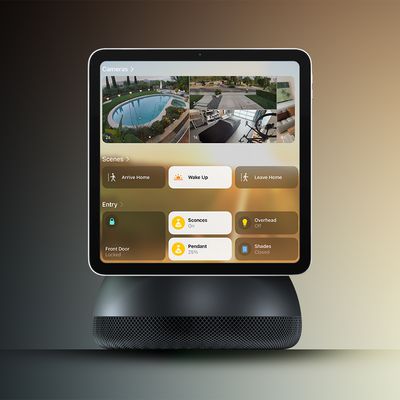
Apple's long-rumored smart home hub will have an iMac G4-style design and a host of unique features, Bloomberg's Mark Gurman reports.
The smart home hub is said to feature a square 6-inch display, with variants that can be placed on a countertop or mounted on a wall. It features a single FaceTime camera on the front, with microphones and speakers in its connected base. Gurman described the...
Apple plans to introduce a series of new smart home products on Tuesday, October 13, according to Bloomberg's Mark Gurman.
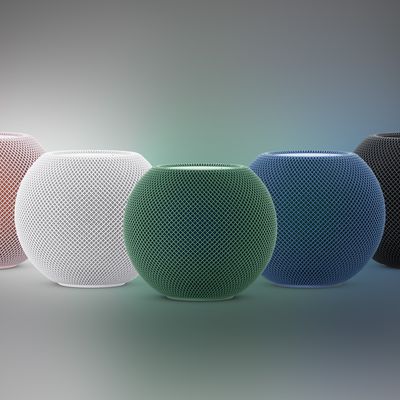
Apple reportedly plans to debut its long-awaited smart home hub device, a new HomePod mini, and a new Apple TV on the date. The new HomePod mini and Apple TV are set to retain their existing designs, but tout faster chips to support Siri AI. The new HomePod mini will...
Friday September 25, 2026 8:16 am PDT by Joe Rossignol
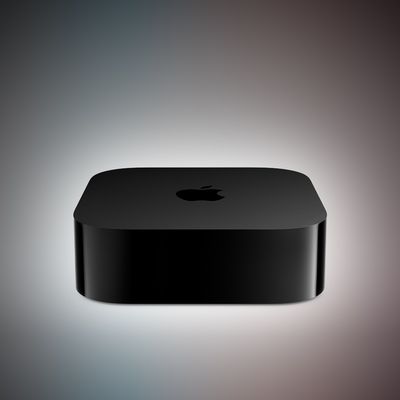
MacRumors contributor Aaron Perris has uncovered an image file from Apple for an unreleased Apple TV 4K, suggesting that a new model will finally be released soon. The image is specifically for an "Apple TV 4K (4th generation)" model.
Apple TV 4K (4th generation) image (on a gradient)
The image reveals that the Apple TV will have the same external design as the current model, with all of its...
Apple's first foldable iPhone, with a book-style design featuring a 5.4-inch outer display and a 7.6-inch inner display with a minimal crease down the middle.




































Top Rated Comments