A story published by Wired News reports Transitive Corp. of Los Gatos, California has developed a product called QuickTransit, offering the possibility of emulation at near-native speed. It fully supports accelerated 3-D graphics and 80 percent computational performance on the main processor according to Wired. This means Macs could run Windows-native or Linux-native software with no recompiling necessary, with no noticeable loss in performance. This software version of a rosetta stone has reportedly been aquired by six different PC manufacturers with public announcements to come later this year. Transitive launched the software on Monday with versions for Itanium, Opteron, x86 and Power/PowerPC chips.
Transitive is attempting to move away from the term 'emulator' to describe their software, embracing instead 'hardware virtualization.' They are keen to keep away from emulator, since up until now the term has suggested "things that are very slow" according to Transitive's President & CEO Bob Wiederhold.
Friday October 30, 2026 3:20 pm PDT by Joe Rossignol
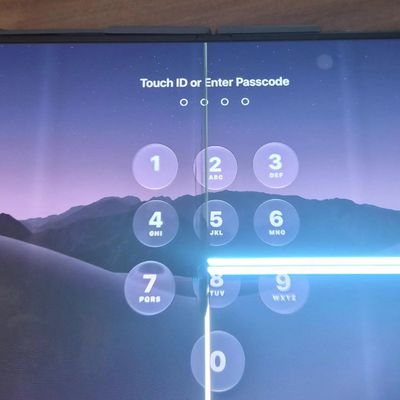
In a memo shared with Apple Stores and Apple Authorized Service Providers this week, and later obtained by MacRumors, Apple provided technicians with guidance on how to diagnose and address the iPhone Duo's inner display cracking issue.
If a customer reports the issue, Apple advised technicians to inspect the iPhone Duo and repair or replace it in accordance with their standard procedures....
Thursday October 29, 2026 1:47 pm PDT by Joe Rossignol
While the new iPad mini has an OLED display, the device does not support ProMotion, meaning the display's refresh rate is limited to 60Hz instead of 120Hz.
ProMotion support would have allowed for the iPad mini's refresh rate to automatically adjust from 10Hz to 120Hz depending on the content being displayed, but evidently Apple has kept the feature exclusive to the iPad Pro among iPad...
Thursday October 29, 2026 11:52 am PDT by Joe Rossignol
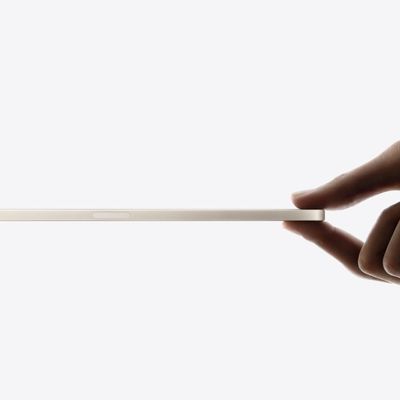
In the U.S. and most other countries, Apple's website shows the new iPad mini being held by pinched fingers, but this is not the case in South Korea.
The new iPad mini shown with pinched fingers on Apple's website in the U.S.
On its South Korean website, Apple simply shows an image of the iPad mini on its own.
The new iPad mini shown without pinched fingers on Apple's website in South Korea ...