Apple Silicon Exec Explains Mac Mini AI Demand and On-Device Future - MacRumorsOpen MenuShow RoundupsShow Forums menuVisit ForumsOpen Sidebar
Skip to Content

Apple Silicon Exec Explains Mac Mini AI Demand and On-Device Future

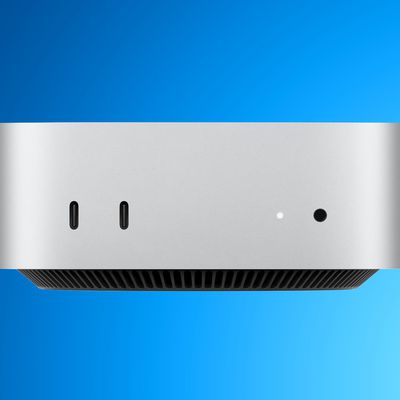
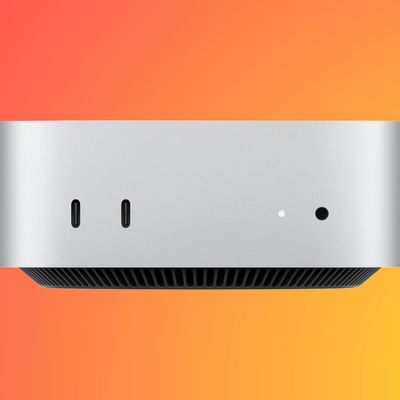
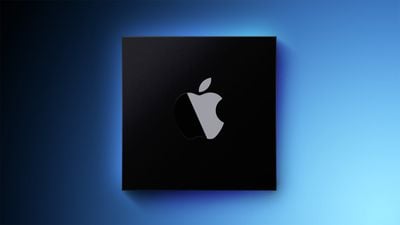
Apple's Mac mini and Mac Studio have become the machines of choice for running AI agents, according to Doug Brooks, Apple's senior product manager of Apple silicon.
apple silicon feature joeblue
Brooks made the claim while discussing Apple's chip strategy in a newly published interview with The Deep View conducted just prior to WWDC 2026 in June.

Brooks says that the company has seen "incredible demand" for the two desktop Macs. When it comes to agentic workloads, "people often want a system that's under their control, isolated from their primary machine, and capable of running 24 hours a day, seven days a week," said Brooks.

"A Mac mini is an amazing system for that," he added.

Many AI tools are also Mac-first or Mac-only, which Brooks says has helped cement the Mac's standing among developers, including those at frontier AI labs where Macs are said to be a common sight.

The Apple executive also conceives of agentic AI as a whole-chip problem rather than a GPU one. "It's not just about the GPU crunching on an LLM anymore," he said. "It's about the whole chip contributing to different parts of the task, tool-calling, and the things that are happening around those workflows. It really plays to the strengths of Apple silicon."

Brooks links Apple's position of strength in modern AI back to chip decisions made long before LLMs like ChatGPT arrived. He points to the Neural Engine, which is built for power-efficient matrix math, along with lesser-known neural accelerators inside the CPU that handle time-sensitive tasks like speech.

Apple more recently added neural accelerators to the GPU, which has extended AI performance across the board from iPhone-class parts up to the Mac's largest silicon. Brooks ties that progress to Apple's design method, where a chip is built for a specific machine, and the hardware and software are developed in tandem.

He also described a shift toward running AI locally rather than in the cloud – a move motivated by privacy, security, and the rising cost of inference as agents consume more tokens. However, Brooks envisions a hybrid future in which agents decide what runs on-device and what gets sent to the cloud.

He also singled out what he calls "transparent AI" on iPhone and iPad, referring to features scattered throughout the operating system and third-party apps that work quietly without announcing themselves as AI.

Some of the examples he cited include Draw Things, an image generator that runs across iPhone, iPad, and Mac, and SwingVision, which analyzes tennis and pickleball gameplay in real time using the iPhone's cameras.

"The speed of AI development right now is just crazy," Brooks said. "I can't imagine where we're going to be a year from now, three months from now, or even a month from now," he added.

You can read the full interview over on The Deep View website.
Related Roundup: Mac mini
Buyer's Guide: Mac Mini (Caution)
Related Forum: Mac mini

Popular Stories

apple price hike

Apple Just Increased Prices on MacBooks, iPads, and More

Thursday June 25, 2026 5:44 am PDT by
Apple today dramatically increased device prices across multiple product lines. Subscribe to the MacRumors YouTube channel for more videos. After temporarily taking it down earlier today, Apple's online store is back up with a series of product price increases. The changes are as follows: HomePod mini: $129, up from $99 (+$30) HomePod: $349, up from $299 (+$50) Apple TV: $199, up from...
mac mini blue

Apple Hikes M4 Pro Mac Mini Starting Price Amid Rising Memory Costs

Thursday June 25, 2026 6:10 am PDT by
Apple today increased the starting price of the Mac mini with M4 Pro chip by $200, taking the higher-tier model up to $1,599 on its online store. When the M4 Pro model launched in October 2024, the starting price was $1,399, but Apple has been hit by the rapid expansion of AI data centres, which has driven up the demand for memory and storage chips across the tech industry. Apple had...
iphone 17 ceramic shield

iPhone 18 With 9GB RAM Still Won't Support Two New iOS 27 Features

Friday July 3, 2026 12:10 pm PDT by
The lower-end iPhone 18 and iPhone 18e will be equipped with 9GB of RAM, up from 8GB in the iPhone 17 and iPhone 17e, according to supply chain analyst Ming-Chi Kuo. In a social media post, Kuo said the 1GB increase in RAM will ensure that Apple Intelligence features continue to run smoothly on the pair of devices. The higher-end iPhone 18 Pro, iPhone 18 Pro Max, and foldable "iPhone Ultra...

Top Rated Comments

Nugget Avatar
5 hours ago at 06:01 am

Are you really believing this guy's claims? Sure, people have gotten some toy models to work at a snail's pace, but nobody is paying Apple's RAM prices for real LLM models to run on.
I run a DGX Spark here (128gb RAM) and an M5 Max (128gb RAM) and the Mac is faster, but the CUDA stack has better software support. There are some large, quality models that run well in MLX mode on the Mac, and I'm basically just waiting until I can buy whatever M5 Ultra is released, whenever it's released, specifically for local AI.
Score: 12 Votes (Like | Disagree)
5 hours ago at 06:00 am

Are you really believing this guy's claims? Sure, people have gotten some toy models to work at a snail's pace, but nobody is paying Apple's RAM prices for real LLM models to run on.
Completed eBay auctions would like a word...
Score: 9 Votes (Like | Disagree)
3 hours ago at 07:11 am

Are you really believing this guy's claims? Sure, people have gotten some toy models to work at a snail's pace, but nobody is paying Apple's RAM prices for real LLM models to run on.
Apple Silicon is well supported and has a very active community surrounding it.

Running local LLMs is basically a choice between CUDA (DGX Spark or a rig with multiple Nvidia GPUs) or Metal (Apple Silicon Macs). The others (AMD and Intel) have very immature software ecosystems and aren't worth the hassle.

It's definitely not just about running toy models. I run DeepSeek V4 Flash on my 128GB M4 Max with an inference engine called DwarfStar, speed is good and output quality is practically indistinguishable from something like Sonnet 4.6 (I have uncapped access to Anthropic models at work and I'm required to use them so I have a good feel for that).
Score: 6 Votes (Like | Disagree)
Powerbooky Avatar
5 hours ago at 05:48 am

How much memory are people generally getting for AI on those Mac minis? Are they mostly M4 Pros with 48 GB RAM or are many M4s with 24 GB or less? Just curious.
To run a local AI for a specific task, you need 48GB or more to make it run comfortably. The models used are often around 32GB and when loaded into the unified memory can run very fast. It can be done via SSD as well, but that will slow the AI processing extremely, not to mention the wear it will cause on the SSD. There are smaller AI models for Mac's with less RAM, but at some point they are not as "smart", fast and useful as the larger ones. Of course it depends on the task at hand.

If more users do move away from AI in the cloud as the current trend shows, I'm sure that the demand for more memory in Mac mini's or Mac Studio's will increase big time and the worldwide shortage will continue for the coming years. Even when datacenters stop buying everything.
Score: 5 Votes (Like | Disagree)
50 minutes ago at 09:41 am

How much memory are people generally getting for AI on those Mac minis? Are they mostly M4 Pros with 48 GB RAM or are many M4s with 24 GB or less? Just curious.
For LLMs that can help with writing or simple coding tasks: 24GB
For LLMs that can code ambitious features: 64GB
For LLMs that that can code whole applications: 128-512GB

Basically, the more vram, the better models you can run.

Memory and me,our bandwith are the biggest constraints. Hence why M2-M4 Ultra/M4 with 128-512GB are fetching big money in eBay even though M5 is the latest SoC.

For this use the Mac Mini and Studio have been exceptional value for money compared with windows alternatives. Mini and studio are also small and have very low power consumption compared with power hungry Nvidia chips.

We have now reached a point where it’s financially better to buy a $2-7k mini or studio than spending the equivalent on OpenAI and Anthropic every month.
Score: 3 Votes (Like | Disagree)
Nugget Avatar
1 hour ago at 09:12 am

No, it hasn't. None of the "AI" companies are making a profit. None. It's a stock-pumping scam because the tech world is out of ideas.
Now that's a different subject entirely than what I was talking about and the Brooks quote you referenced. I'm not interested in the AI market, I am interested in AI technology. The underlying technology has grown and expanded wildly in the past 3 years, as evidenced by the fact that so many in this thread are reporting success and positive results from their locally-hosted AI tasks on apple silicon and other solutions like DGX and STRIX. That was a fever dream three years ago and now it's just a regular Monday.
Score: 3 Votes (Like | Disagree)

🔗 Related Apple News & Rumors

Stay updated with the latest Apple ecosystem news and verified rumors