Apple Secures Half of TSMC's 2nm Production Capacity for iPhone 18
Apple has ordered almost half of TSMC's initial 2nm production capacity for the iPhone 18 as the pure foundry begins mass production of its next-generation chip process.
According to DigiTimes, TSMC's 2nm process went into production in the fourth quarter of 2025 as planned, with the foundry setting substrate pricing at a premium $30,000 per unit. Despite the steep costs, chip manufacturers are said to be scrambling to secure production slots, with Apple leading the charge alongside Qualcomm for the largest allocations.
The Taiwan-based semiconductor manufacturer expects to produce between 45,000 to 50,000 wafers monthly across its Baoshan and Kaohsiung facilities by the end of 2025, with capacity scaling to over 100,000 wafers per month in 2026.
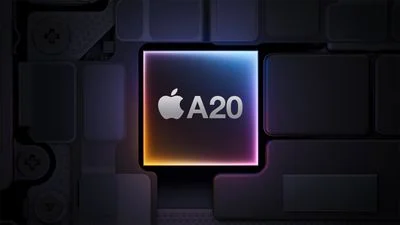
TSMC's 2nm process promises a major leap forward from current 3nm technology, with up to 15% faster performance and 30% better power efficiency compared to the A19 chips expected in iPhone 17 models. The advanced node allows for higher transistor density, which should translate to improved processing capabilities and battery life for Apple's A20 chips. Industry analysts Ming-Chi Kuo and Jeff Pu have said the A20 chip in iPhone 18 models will be manufactured with TSMC's first-generation 2nm (N2) process, so it seems all but confirmed that Apple will adopt the more advanced silicon wafer technology.
Beyond Apple and Qualcomm, TSMC's 2nm customer list will expand in 2027 to include NVIDIA, Amazon's Annapurna, Google, and more than ten other major clients. TSMC is accelerating capacity expansion plans as a result, with full utilization expected in 2026.
In a change to Apple's usual iPhone launch cycle, iPhone 18 Pro models are expected to launch in fall 2026, with the base iPhone 18 and entry-level iPhone 18e scheduled for release the following March.
Popular Stories
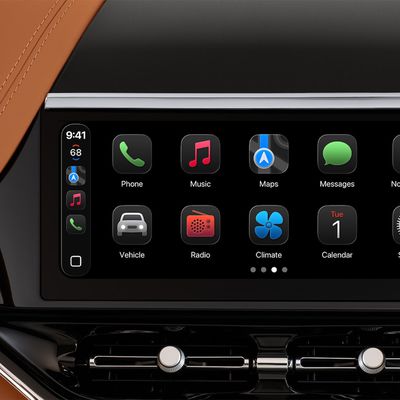
Last year, Apple launched CarPlay Ultra, the long-awaited next-generation version of its CarPlay software system for vehicles. Nearly nine months later, CarPlay Ultra is still limited to Aston Martin's latest luxury vehicles, but that should change fairly soon.
In May 2025, Apple said many other vehicle brands planned to offer CarPlay Ultra, including Hyundai, Kia, and Genesis.
In his Powe...
Apple today confirmed to Reuters that it has acquired Q.ai, an Israeli startup that is working on artificial intelligence technology for audio.
Apple paid close to $2 billion for Q.ai, according to sources cited by the Financial Times. That would make this Apple's second-biggest acquisition ever, after it paid $3 billion for the popular headphone and audio brand Beats in 2014.
Q.ai has...
The calendar has turned to February, and a new report indicates that Apple's next product launch is "imminent," in the form of new MacBook Pro models.
"All signs point to an imminent launch of next-generation MacBook Pros that retain the current form factor but deliver faster chips," Bloomberg's Mark Gurman said on Sunday. "I'm told the new models — code-named J714 and J716 — are slated...
Apple recently updated its online store with a new ordering process for Macs, including the MacBook Air, MacBook Pro, iMac, Mac mini, Mac Studio, and Mac Pro.
There used to be a handful of standard configurations available for each Mac, but now you must configure a Mac entirely from scratch on a feature-by-feature basis. In other words, ordering a new Mac now works much like ordering an...
Apple is planning to launch new MacBook Pro models with M5 Pro and M5 Max chips alongside macOS 26.3, according to Bloomberg's Mark Gurman.
"Apple's faster MacBook Pros are planned for the macOS 26.3 release cycle," wrote Gurman, in his Power On newsletter today.
"I'm told the new models — code-named J714 and J716 — are slated for the macOS 26.3 software cycle, which runs from...