Apple's First 5G Chip for iPhones Reportedly Won't Support mmWave
Apple is rumored to have been working on its own 5G modem for iPhones since 2018, but the first version of the chip might lack mmWave support.
Taiwanese industry publication DigiTimes today reported that Apple's in-house 5G modem has yet to incorporate mmWave technology. Until that changes, Apple will likely continue to rely on its existing 5G chip supplier Qualcomm for iPhone models that support mmWave, including U.S. models of all iPhone 12 models and newer.
Apple analyst Ming-Chi Kuo in July said two iPhone models with an Apple-designed 5G modem will be released in 2025, including a new iPhone SE in the first quarter of the year and an ultra-thin iPhone 17 model in the third quarter. As a lower-priced device, it would make sense for the next iPhone SE to lack mmWave support, and it might also be a necessary compromise in order for the ultra-thin iPhone 17 to achieve a slimmer design.
mmWave is a set of 5G frequencies that promise ultra-fast speeds at short distances, which is ideal for dense urban areas. By comparison, sub-6GHz 5G is generally slower than mmWave, but the signals travel further, better serving suburban and rural areas. sub-6GHz networks are still more common than mmWave networks in many countries.
All existing iPhones that are currently sold by Apple are equipped with Qualcomm modems for cellular connectivity, but Kuo expects Apple to transition away from Qualcomm over time. Earlier this year, Apple extended its 5G modem supply agreement with Qualcomm for iPhone launches through 2026, so Apple still has plenty of time.
In 2019, Apple acquired the majority of Intel's smartphone modem business, as part of its efforts to design its own 5G chip. It is unclear if Apple's chip would have any consumer benefits over Qualcomm's modems, but it would reduce Apple's reliance on an external supplier. In 2017, Apple sued Qualcomm over alleged anticompetitive practices and $1 billion in unpaid royalty rebates. The two companies settled the lawsuit in 2019.
Popular Stories
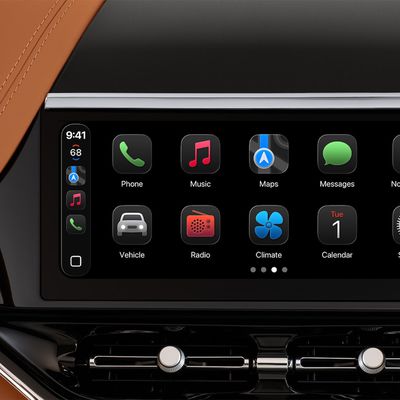
Last year, Apple launched CarPlay Ultra, the long-awaited next-generation version of its CarPlay software system for vehicles. Nearly nine months later, CarPlay Ultra is still limited to Aston Martin's latest luxury vehicles, but that should change fairly soon.
In May 2025, Apple said many other vehicle brands planned to offer CarPlay Ultra, including Hyundai, Kia, and Genesis.
In his Powe...
Apple today confirmed to Reuters that it has acquired Q.ai, an Israeli startup that is working on artificial intelligence technology for audio.
Apple paid close to $2 billion for Q.ai, according to sources cited by the Financial Times. That would make this Apple's second-biggest acquisition ever, after it paid $3 billion for the popular headphone and audio brand Beats in 2014.
Q.ai has...
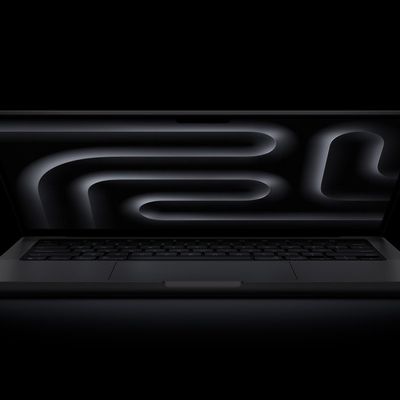
The calendar has turned to February, and a new report indicates that Apple's next product launch is "imminent," in the form of new MacBook Pro models.
"All signs point to an imminent launch of next-generation MacBook Pros that retain the current form factor but deliver faster chips," Bloomberg's Mark Gurman said on Sunday. "I'm told the new models — code-named J714 and J716 — are slated...
Apple recently updated its online store with a new ordering process for Macs, including the MacBook Air, MacBook Pro, iMac, Mac mini, Mac Studio, and Mac Pro.
There used to be a handful of standard configurations available for each Mac, but now you must configure a Mac entirely from scratch on a feature-by-feature basis. In other words, ordering a new Mac now works much like ordering an...
Apple is planning to launch new MacBook Pro models with M5 Pro and M5 Max chips alongside macOS 26.3, according to Bloomberg's Mark Gurman.
"Apple's faster MacBook Pros are planned for the macOS 26.3 release cycle," wrote Gurman, in his Power On newsletter today.
"I'm told the new models — code-named J714 and J716 — are slated for the macOS 26.3 software cycle, which runs from...