TSMC Not Charging Apple for Defective 3nm Chips Ahead of iPhone 15 Pro Introduction

Chip supplier TSMC has taken the unusual step of not charging Apple for defective 3nm chips ahead of the introduction of the iPhone 15 Pro and the A17 Bionic chip, The Information reports.
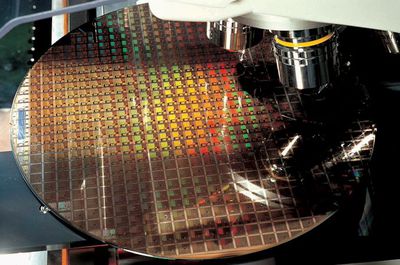
tsmc semiconductor chip inspection 678x452
The ‌iPhone‌ 15 Pro is widely rumored to feature the A17 Bionic chip – Apple's first chip manufactured with a ‌3nm‌ fabrication process. The ‌3nm‌ node allows transistors to be even more densely packed, resulting in better performance and efficiency.

Introduction of upgraded chip technology like ‌3nm‌ involves the production of a high number of defective chips until the manufacturing process can be perfected. According to The Information, TSMC is only charging Apple for "known good dies," with no fee for defective chips. This is highly unconventional, since TSMC clients usually have to pay for the wafer and all of the dies it contains, including any defective ones.

Since Apple's orders from TSMC are so large, it can apparently justify absorbing the cost of defective chips. Apple's willingness to be the supplier's first customer for new manufacturing processes helps it pay for the research and development of new nodes, as well as the facilities to make them.

The size of Apple's orders also enable TSMC to more quickly learn how to improve and scale up a node during mass production. Once production and yield issues with manufacturing ‌3nm‌ chips improves and other customers seek the technology, TSMC can demand higher prices from those clients, as well as charge for defective dies.

Update: According to Apple analyst Ming-Chi Kuo, The Information's report is not quite accurate. Kuo says that Apple's standard deal with TSMC does not ever include "defective" chips. Apple purchases "finished goods" that are of the expected quality rather than "wafer-buy," which can include defective chips.

Most chip buyers have a "wafer-buy" deal with TSMC and must eat the cost of defective chips, but in the case of TSMC and Apple, TSMC absorbs the cost through the price of the chips.

Popular Stories

Aston Martin CarPlay Ultra Screen

Apple's CarPlay Ultra to Expand to These Vehicle Brands Later This Year

Sunday February 1, 2026 10:08 am PST by
Last year, Apple launched CarPlay Ultra, the long-awaited next-generation version of its CarPlay software system for vehicles. Nearly nine months later, CarPlay Ultra is still limited to Aston Martin's latest luxury vehicles, but that should change fairly soon. In May 2025, Apple said many other vehicle brands planned to offer CarPlay Ultra, including Hyundai, Kia, and Genesis. In his Powe...
Apple Logo Black

Apple's Next Launch is 'Imminent'

Sunday February 1, 2026 12:31 pm PST by
The calendar has turned to February, and a new report indicates that Apple's next product launch is "imminent," in the form of new MacBook Pro models. "All signs point to an imminent launch of next-generation MacBook Pros that retain the current form factor but deliver faster chips," Bloomberg's Mark Gurman said on Sunday. "I'm told the new models — code-named J714 and J716 — are slated...
iOS 26

iOS 26.3 and iOS 26.4 Will Add These New Features to Your iPhone

Tuesday February 3, 2026 7:47 am PST by
We are still waiting for the iOS 26.3 Release Candidate to come out, so the first iOS 26.4 beta is likely still at least a week or two away. Following beta testing, iOS 26.4 will likely be released to the general public in March or April. Below, we have recapped known or rumored iOS 26.3 and iOS 26.4 features so far. iOS 26.3 iPhone to Android Transfer Tool iOS 26.3 makes it easier...
Apple MacBook Pro M4 hero

New MacBook Pros Reportedly Launching Alongside macOS 26.3

Sunday February 1, 2026 5:42 am PST by
Apple is planning to launch new MacBook Pro models with M5 Pro and M5 Max chips alongside macOS 26.3, according to Bloomberg's Mark Gurman. "Apple's faster MacBook Pros are planned for the macOS 26.3 release cycle," wrote Gurman, in his Power On newsletter today. "I'm told the new models — code-named J714 and J716 — are slated for the macOS 26.3 software cycle, which runs from...
iOS 26 Home Feature

Apple Gives Final Warning to Home App Users

Tuesday February 3, 2026 8:55 am PST by
In 2022, Apple introduced a new Apple Home architecture that is "more reliable and efficient," and the deadline to upgrade and avoid issues is fast approaching. In an email this week, Apple gave customers a final reminder to upgrade their Home app by February 10, 2026. Apple says users who do not upgrade may experience issues with accessories and automations, or lose access to their smart...

Top Rated Comments

NT1440 Avatar
33 months ago

Only a company with Apple's influence can get away with this...
They’re single-handedly funding the N3 node, so it’s not “getting away” with anything. Apple put up billions in capital investment to get this node up and running. Without them, N3 wouldn’t be produced.
Score: 32 Votes (Like | Disagree)
SigurTom Avatar
33 months ago
Makes sense, I only pay for known good iPhones.
Score: 26 Votes (Like | Disagree)
jecowa Avatar
33 months ago
The way I heard it was that TSMS's 1st-gen 3nm process was not very desirable by customers because of its yield, and Apple was kind of saving them by using it. So maybe not charging them for defects is their thanks back to Apple.
Score: 22 Votes (Like | Disagree)
jz0309 Avatar
33 months ago
Unusual? Been in semi industry for decades and a lot of companies pay for “known goo die”…
Score: 19 Votes (Like | Disagree)
teknikal90 Avatar
33 months ago

Unusual? What kind of moron pays for broken materials?
according to the article, the entire industry?
Score: 13 Votes (Like | Disagree)
BorisDG Avatar
33 months ago

Sounds like TSMC is getting a high yield of 3nm chips for the iPhone 15s… ??
Around 85% which is not bad, but not perfect/optimal for sure.

Unusual? What kind of moron pays for broken materials?
They can build other products from the "defective" chips. Look at A15 for example. It has so many variations, because of yield issues:

Full A15 (5 GPU / 6 CPU cores):

* iPhone 13 Pro/13 Pro Max/14/14 Plus

Binned A15 #1 (4 GPU / 6 CPU cores):

* iPhone 13/13 Mini, SE (3rd gen)

Binned A15 #2 (5 GPU / 6 CPU underclocked cores)

* iPad Mini 6

Binned A15 #3 (5 GPU / 5 CPU cores - 1x Blizzard efficiency core disabled):

* Apple TV 4K (3rd gen)
Score: 13 Votes (Like | Disagree)