Google Working on Browser for iOS That Would Break Apple's App Store Rules
Google's Chromium developers are working on an experimental web browser for iOS that would break Apple's browser engine restrictions, The Register reports.
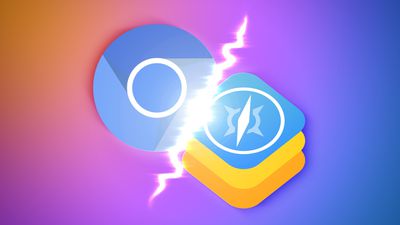
The experimental browser, which is being actively pursued by developers, uses Google's Blink engine. Yet if Google attempted to release it on the App Store, it would not pass Apple's App Review process.
Apple's App Store rules dictate that browser apps on iOS and iPadOS must use its own WebKit browser engine. This means that while browsers like Chrome and Microsoft Edge are built with Chromium on macOS and Windows, their iOS counterparts are forced to use Apple's WebKit, making them behave similarly to Safari.
Based on the visible code commits, the app purportedly looks like the start of an alternate browser build and is still missing some key features at this early stage. Google claims that the app is merely "an experimental prototype [...] with the goal to understand certain aspects of performance on iOS," and "it will not be available to users and we'll continue to abide by Apple's policies."
Even so, Google's experimental iOS browser project could be a sign that the company is anticipating changes to Apple's platform rules that would enable it to release a truly home-grown browser. Apple's browser engine restriction is the subject of growing antitrust scrutiny, most recently by the Biden administration, which has recommended the passing of new legislation to ban "gatekeeper" companies like Apple from banning alternative browser engines on its platform.
Similar recommendations have been made by antitrust authorities in the United Kingdom, Australia, and Japan. The European Union's Digital Markets Act is expected to compel Apple to allow third-party app stores and lift its browser engine restrictions as soon as next year. At minimum, the active project means Google would have a considerable head-start on developing a Blink-based browser for iOS if one is able to be distributed in the future.
Popular Stories
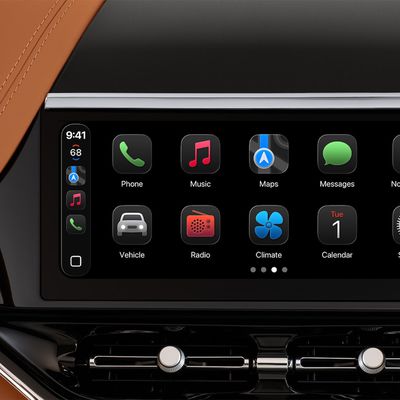
Last year, Apple launched CarPlay Ultra, the long-awaited next-generation version of its CarPlay software system for vehicles. Nearly nine months later, CarPlay Ultra is still limited to Aston Martin's latest luxury vehicles, but that should change fairly soon.
In May 2025, Apple said many other vehicle brands planned to offer CarPlay Ultra, including Hyundai, Kia, and Genesis.
In his Powe...
We are still waiting for the iOS 26.3 Release Candidate to come out, so the first iOS 26.4 beta is likely still at least a week or two away. Following beta testing, iOS 26.4 will likely be released to the general public in March or April.
Below, we have recapped known or rumored iOS 26.3 and iOS 26.4 features so far.
iOS 26.3
iPhone to Android Transfer Tool
iOS 26.3 makes it easier...
The calendar has turned to February, and a new report indicates that Apple's next product launch is "imminent," in the form of new MacBook Pro models.
"All signs point to an imminent launch of next-generation MacBook Pros that retain the current form factor but deliver faster chips," Bloomberg's Mark Gurman said on Sunday. "I'm told the new models — code-named J714 and J716 — are slated...
Apple is planning to launch new MacBook Pro models with M5 Pro and M5 Max chips alongside macOS 26.3, according to Bloomberg's Mark Gurman.
"Apple's faster MacBook Pros are planned for the macOS 26.3 release cycle," wrote Gurman, in his Power On newsletter today.
"I'm told the new models — code-named J714 and J716 — are slated for the macOS 26.3 software cycle, which runs from...
In 2022, Apple introduced a new Apple Home architecture that is "more reliable and efficient," and the deadline to upgrade and avoid issues is fast approaching.
In an email this week, Apple gave customers a final reminder to upgrade their Home app by February 10, 2026. Apple says users who do not upgrade may experience issues with accessories and automations, or lose access to their smart...