Apple to Expand Support for Passwordless Sign-Ins Across Websites and Apps - MacRumorsOpen MenuShow RoundupsShow Forums menuVisit ForumsOpen Sidebar
Skip to Content

Apple to Expand Support for Passwordless Sign-Ins Across Websites and Apps

Apple, Google, and Microsoft today announced plans to expand support for a passwordless sign-in standard created by the FIDO Alliance and the World Wide Web Consortium (W3C), promising a faster, easier, and more secure sign‑in process.
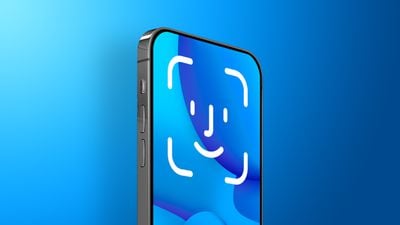
Beyond iPhone 13 Better Blue Face ID
The expanded standards-based capabilities will give websites and apps the ability to offer an end-to-end passwordless sign-in option, according to the announcement. Instead of entering a password, users will sign in through the same action that they take multiple times each day to unlock their devices, such as Face ID on the iPhone.

The new approach is described as "radically more secure" compared to passwords and legacy multi-factor technologies, such as one-time passcodes sent over SMS.

Apple, Google, and Microsoft already support FIDO Alliance standards across their platforms, but expanded support will give users two new capabilities for more seamless and secure passwordless sign-ins, as outlined in the announcement:

1. Allow users to automatically access their FIDO sign-in credentials (referred to by some as a "passkey") on many of their devices, even new ones, without having to reenroll every account.
2. Enable users to use FIDO authentication on their mobile device to sign in to an app or website on a nearby device, regardless of the OS platform or browser they are running.

These new capabilities are expected to become available across Apple, Google, and Microsoft platforms over the coming year, the announcement said.

"Working with the industry to establish new, more secure sign-in methods that offer better protection and eliminate the vulnerabilities of passwords is central to our commitment to building products that offer maximum security and a transparent user experience — all with the goal of keeping users' personal information safe," said Kurt Knight, Apple's Senior Director of Platform Product Marketing, in a press release.
Popular Stories

Home Hub Command Center with Dome Base Feature

Apple Smart Home Hub to Feature iMac G4-Style Design

Wednesday September 30, 2026 4:36 am PDT by
Apple's long-rumored smart home hub will have an iMac G4-style design and a host of unique features, Bloomberg's Mark Gurman reports. The smart home hub is said to feature a square 6-inch display, with variants that can be placed on a countertop or mounted on a wall. It features a single FaceTime camera on the front, with microphones and speakers in its connected base. Gurman described the...

HomePod minis on gradient feature 1 1

Three New Apple Smart Home Products Coming on October 13

Wednesday September 30, 2026 4:04 am PDT by
Apple plans to introduce a series of new smart home products on Tuesday, October 13, according to Bloomberg's Mark Gurman. Apple reportedly plans to debut its long-awaited smart home hub device, a new HomePod mini, and a new Apple TV on the date. The new HomePod mini and Apple TV are set to retain their existing designs, but tout faster chips to support Siri AI. The new HomePod mini will...
Apple TV Sans Remote Feature

New Apple TV 4K Leaked

Friday September 25, 2026 8:16 am PDT by
MacRumors contributor Aaron Perris has uncovered an image file from Apple for an unreleased Apple TV 4K, suggesting that a new model will finally be released soon. The image is specifically for an "Apple TV 4K (4th generation)" model. Apple TV 4K (4th generation) image (on a gradient) The image reveals that the Apple TV will have the same external design as the current model, with all of its...

Top Rated Comments

58 months ago

Can someone explain the security of this? Obviously I doubt that my facial data would be shared with the website, but how does it remain secure?

Would website devs need to drastically change how they code websites or would the phone handle the translation between the website asking for a password and the user just being able to scan their face?
Sure! This happens to be an area of interest for me.

The root of this technology is public-key cryptography. With PKC, there are always two related keys: A private key, and a public key. The public key is easily derived from the private key, but the private key cannot be derived from the public key. The public key can decrypt anything encrypted by the private key and vice-versa, but they cannot decrypt things they themselves encrypt without the other key.

When you are signing up, your local device generates the keys, sends the public key to the service you are accessing (this is effectively your "password", but much more secure), and stores the private key in secure storage (so on an iPhone, the Secure Enclave).

In the future, when you log in, the website sends a challenge, which is just a random string of bytes. You unlock the private key on your local device (for iPhone, using biometrics), and sign the challenge locally. A digital signature is a cryptographic hash of the contents of the message being signed (in this case, the server challenge), which is then encrypted with your private key. When you send the signed challenge back to the server, it uses the public key to decrypt the signature (thus verifying it was you that signed the challenge) and then verifies that the hash of the challenge is correct (thus verifying you signed what the server sent and not some other string of bytes). Since the signature both verifies that 1) your private key is the one that created the signature and 2) the challenge the server sent is the one that was signed, you are securely authenticated without needing to send your secret to the server.

Pretty cool, huh?

Edit: answering the other question: Yes, there are some changes that need to be made to websites to handle this. They need to be able to store the public keys, and they need to be able to handle the challenge and response. The WebAuthn standard handles this for websites, and there are a lot of drop-in libraries for just about any web application stack now.
Score: 41 Votes (Like | Disagree)
kiranmk2 Avatar
58 months ago
Hope this works - even using a password manager is more hassle than it needs to be. The use of biometrics will hopefully also remove the need for 2FA codes.


Score: 17 Votes (Like | Disagree)
zorinlynx Avatar
58 months ago
My main concern with "passwordless" logins is authentication from "first principles".

If you don't have any of your own devices, and want to log into your accounts from a brand new, unknown device, what do you do? I have a couple of critical passwords memorized so that I can get into my stuff if I lose all my devices. These companies seem intent on eliminating all passwords, but at some point you have to have a way to log in if you're starting from scratch.

Conversely, if they do have a mechanism for logging in from scratch, how do they secure it so a bad actor can't pretend to be you logging in from scratch?
Score: 15 Votes (Like | Disagree)
58 months ago
I have relatives who are very vocal about how much they hate [remembering] passwords. I think this would be a welcome convenience for many people if it works as advertised.
Score: 9 Votes (Like | Disagree)
58 months ago
For those asking how this works, here's a simplified explanation based on my understanding from reading and watching the online resources about it.

To register on a new site, say widget.com
[LIST=1]
* You go widget.com and navigate to its new-account creation page
* Type in what you want your username to be and then click "create account"
* Your phone will bring up a system sheet confirming you want to create a credential for widget.com. After you confirm, the phone will create a site-specific credential token (called "passkey" in FIDO parlance), the security of which is based on public-key encryption.
* The phone will store the token and private-key portion of the token on your iCloud Keychain. It will share the public-key portion of the token with widget.com so it can save it on their server.

Whenever you visit widget.com in the future, Safari will know you have a saved credential for the site and will confirm you'd like to login, similar to how it works today for traditional passwords saved in your keychain, including you proving you have rightful access to your keychain (Face ID, passkey, etc...). But instead of a password, Safari will present the passkey (token) to the site (which it already has stored on their server to compare), then verify you're the rightful owner of the token by proving to the site that your phone has the private key associated with the token (challenge/response).
Score: 7 Votes (Like | Disagree)
58 months ago

As a developer, what do I need to do to support this? How does this actually work?

Based on reading Apple's full press release, it sounds to me like this is just:
1 - Your device automatically generates a password when an account is created, the same as Safari can already do.
2 - Your device automatically fills in the password when it's requested, the same as all browsers can already do.
3 - Your devices will automatically sync these passwords with each other, possibly with more interoperability between brands, so, ie, Windows and Linux and Mac and iOS and Android will all implement the same standards so everything will be more seamless when mixing different types of devices together.
4 - The automatic password stuff is all handled in the background, without any UI needing to be involved, so the end user won't ever see a text field that gets populated automatically for them. So from the perspective of a web developer, not much will change. IDK - will this just make it so that input fields of type password and type hidden are rendered the exact same (which is to say, not at all?)
Except it's not passwords, it's public-key cryptography.

If you're running a service, you need to set up the service to handle WebAuthn, or whatever this extended standard will be called.

If you're building a client, you'll need to implement whatever APIs are necessary to do the client-side portion of the authentication. This is what the FIDO standard covers, but again, not sure what the APIs will look like outside of the web browser (again, WebAuthn).

So no, it's not zero-effort, but it is infinitely more secure than either passwords or TOTP (numeric one-time passwords) because the secret never leaves the device. In this scheme, the server only needs the public key, which is not the secret.
Score: 7 Votes (Like | Disagree)
Latest Stories
Apple's Smart Home Hub: Everything We Know So Far
8 hours ago
Apple's Home Hub Borrows From the iPhone Duo's StandBy Mode
9 hours ago
Apple Invites App Updated With Three New Features
13 hours ago
Apple Event on October 13?
14 hours ago
Apple Watch SE 3 vs. Series 12 Buyer's Guide: Which Should You Buy?
16 hours ago
iPad Mini 8 to Offer These 10 New Features
16 hours ago
DoorDash Unveils AI Food Ordering Through Apple's Messages App
18 hours ago
Amazon Takes Up to $150 Off Select M5 MacBook Air Models
18 hours ago
Apple Still Plans to Release a New Full-Sized HomePod
19 hours ago
Apple Working to Expand HomeKit
20 hours ago
Apple Smart Home Hub to Feature iMac G4-Style Design
21 hours ago
Three New Apple Smart Home Products Coming on October 13
21 hours ago
Apple Pay Now Available in India With Axis Bank Cards
1 day ago
OpenAI Launches Always-On 'Dots' Agents to Rival Meta's Muse
1 day ago
AirPods 5 Teardown: Batteries Removable, Case Still Tough
1 day ago
iPhone 18 Pro Owners Complain of Speaker Crackling or Popping
1 day ago
You Can 'Get Ready' for iPhone Duo Pre-Orders on October 12
2 days ago
Apple Pay Reportedly Launching in India Today
2 days ago
Apple Releases New AirPods Beta Firmware
2 days ago
Apple Shares New Guide for Using iOS 27 Parental Controls
2 days ago
Apple Creator Studio and Final Cut Camera Get New Features
2 days ago
Apple Explains Why It Removed ICE Tracking Apps Last Year
2 days ago
Amazon Expands $779.99 Apple Watch Ultra 4 Deal to More Models
2 days ago
Switch Siri AI for ChatGPT on Your Mac
2 days ago
Apple Says Emergency SOS via Satellite Now Available in Norway
2 days ago
AppleCare Guide: Is it Worth Paying For?
2 days ago
Apple Reportedly Planned to Replace 5,000 Support Employees With AI
2 days ago
Apple Planning to Launch Products Faster and More Often
2 days ago
Amazon Discounting New Mac Mini and Mac Studio Alongside Early Prime Day Deals on Monitors
2 days ago
New Apple TV 4K Hinted at in Support Document
2 days ago

🔗 Related Apple News & Rumors

Stay updated with the latest Apple ecosystem news and verified rumors