Demand for Smartphones is Slowing, Says Apple Supplier TSMC
Demand for consumer electronics like smartphones and PCs is slowing due to continued geopolitical uncertainties and new COVID-related lockdowns in China, according to TSMC Chairman Mark Liu.
TSMC, or Taiwan Semiconductor Manufacturing Company, is one of Apple's main suppliers, responsible for the A-series and M-series chips that go in Apple devices. Liu's comments were delivered at the Taiwan Semiconductor Industry Association and were shared by Nikkei.
Customer interest in smartphones is falling in China specifically, with Liu also warning about the rising cost of components and materials. Production costs are going up for chip companies, and Liu believes the "pressure could eventually be passed on to consumers," a scenario that could also see demand impacted by higher costs.
"Everyone in the industry is worried about rising costs across the overall supply chain... The semiconductor industry already and directly experienced that cost increase," Liu said, adding that the industry is also concerned about macroeconomic uncertainties this year.
Liu said that TSMC is not changing its growth targets and is still unable to meet customers' demand with its current capacity. TSMC plans to reorganize and prioritize orders for "areas that still see healthy demand."
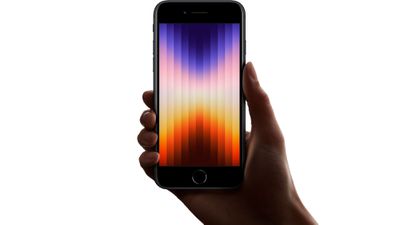
Signs of a dip in customer demand surfaced this week amid rumors that Apple is planning to cut iPhone SE production. Just weeks after releasing the iPhone SE, Apple allegedly told suppliers that it wants to cut back on iPhone SE production by as much as two to three million units because of a "weaker-than-expected demand," though some suppliers have refuted this report.
Popular Stories
Apple today confirmed to Reuters that it has acquired Q.ai, an Israeli startup that is working on artificial intelligence technology for audio.
Apple paid close to $2 billion for Q.ai, according to sources cited by the Financial Times. That would make this Apple's second-biggest acquisition ever, after it paid $3 billion for the popular headphone and audio brand Beats in 2014.
Q.ai has...
Last year, Apple launched CarPlay Ultra, the long-awaited next-generation version of its CarPlay software system for vehicles. Nearly nine months later, CarPlay Ultra is still limited to Aston Martin's latest luxury vehicles, but that should change fairly soon.
In May 2025, Apple said many other vehicle brands planned to offer CarPlay Ultra, including Hyundai, Kia, and Genesis.
In his Powe...
Apple recently updated its online store with a new ordering process for Macs, including the MacBook Air, MacBook Pro, iMac, Mac mini, Mac Studio, and Mac Pro.
There used to be a handful of standard configurations available for each Mac, but now you must configure a Mac entirely from scratch on a feature-by-feature basis. In other words, ordering a new Mac now works much like ordering an...
The calendar has turned to February, and a new report indicates that Apple's next product launch is "imminent," in the form of new MacBook Pro models.
"All signs point to an imminent launch of next-generation MacBook Pros that retain the current form factor but deliver faster chips," Bloomberg's Mark Gurman said on Sunday. "I'm told the new models — code-named J714 and J716 — are slated...
Apple is planning to launch new MacBook Pro models with M5 Pro and M5 Max chips alongside macOS 26.3, according to Bloomberg's Mark Gurman.
"Apple's faster MacBook Pros are planned for the macOS 26.3 release cycle," wrote Gurman, in his Power On newsletter today.
"I'm told the new models — code-named J714 and J716 — are slated for the macOS 26.3 software cycle, which runs from...