AT&T and Verizon Delay 5G Expansion to Address Aircraft Interference Concerns
AT&T and Verizon are delaying the rollout of a new 5G band in order to address concerns about interference with aircraft safety systems, reports The Wall Street Journal.
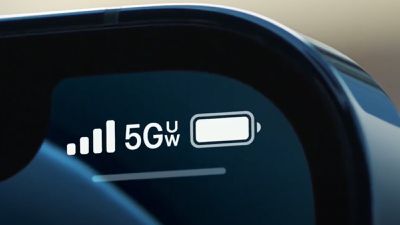
The two companies were set to launch C-Band spectrum on December 5. The C-band covers radio frequencies between 3.7GHz and 4.2GHz, and it is key for the expansion of 5G networks. AT&T and Verizon are now working with the Federal Aviation Administration to ensure there will be no interference, delaying the 5G deployment until January 5.
On Tuesday, the Federal Aviation Administration issued a warning [PDF] about potential 5G interference with radar altimeters, technology used measure a plane's distance from the ground. In the document, the FAA confirms that there have not been "proven reports" about equipment interference in countries where the spectrum is already available, but the agency still has concerns.
The FAA is asking radio altimeter manufacturers to submit equipment details on devices that are used in airplanes, and it has suggested that companies who produce radio altimeters do detailed testing to determine if the hardware is susceptible to interference from C-band spectrum. Aircraft manufacturers have been asked to submit data on the radio altimeters that are in use and to do their own interference testing.
The CTIA, a trade group representing the wireless industry, has said that C-band spectrum can be safely used without causing interference to aviation equipment, but aviation groups have said that the 5G expansion could result in "major disruptions to passenger air travel, commercial transport, and critical helicopter operations."
AT&T spokesperson Margeret Boles said in a statement that AT&T plans to work with the FCC and FAA to understand the interference concerns. "It is critical that these discussions be informed by the science and the data," she said. "That is the only path to enabling experts and engineers to assess whether any legitimate coexistence issues exist."
Popular Stories
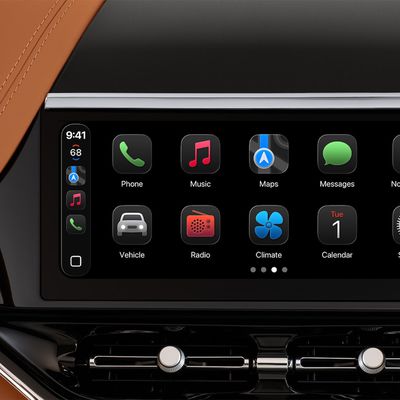
Last year, Apple launched CarPlay Ultra, the long-awaited next-generation version of its CarPlay software system for vehicles. Nearly nine months later, CarPlay Ultra is still limited to Aston Martin's latest luxury vehicles, but that should change fairly soon.
In May 2025, Apple said many other vehicle brands planned to offer CarPlay Ultra, including Hyundai, Kia, and Genesis.
In his Powe...
The calendar has turned to February, and a new report indicates that Apple's next product launch is "imminent," in the form of new MacBook Pro models.
"All signs point to an imminent launch of next-generation MacBook Pros that retain the current form factor but deliver faster chips," Bloomberg's Mark Gurman said on Sunday. "I'm told the new models — code-named J714 and J716 — are slated...
Apple is planning to launch new MacBook Pro models with M5 Pro and M5 Max chips alongside macOS 26.3, according to Bloomberg's Mark Gurman.
"Apple's faster MacBook Pros are planned for the macOS 26.3 release cycle," wrote Gurman, in his Power On newsletter today.
"I'm told the new models — code-named J714 and J716 — are slated for the macOS 26.3 software cycle, which runs from...
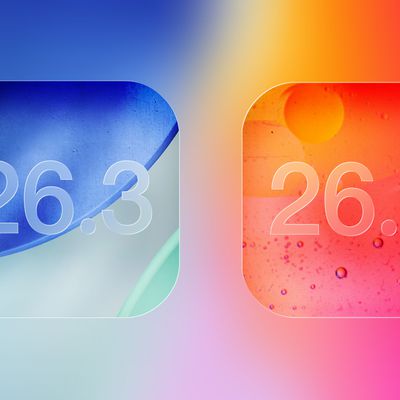
We are still waiting for the iOS 26.3 Release Candidate to come out, so the first iOS 26.4 beta is likely still at least a week or two away. Following beta testing, iOS 26.4 will likely be released to the general public in March or April.
Below, we have recapped known or rumored iOS 26.3 and iOS 26.4 features so far.
iOS 26.3
iPhone to Android Transfer Tool
iOS 26.3 makes it easier...
In 2022, Apple introduced a new Apple Home architecture that is "more reliable and efficient," and the deadline to upgrade and avoid issues is fast approaching.
In an email this week, Apple gave customers a final reminder to upgrade their Home app by February 10, 2026. Apple says users who do not upgrade may experience issues with accessories and automations, or lose access to their smart...