Apple Extends Lead Over Samsung As Biggest Buyer of Semiconductor Chips in 2020
Apple was easily the largest buyer of semiconductor chips in 2020, according to the latest data collected by Gartner. Apple spent $53.6 billion and took 11.9% of the global market share, representing 24% growth year-on-year, while Samsung was the second biggest buyer, spending $36.4 billion and taking 8.1% of the market, representing 20.4% growth year-on-year.
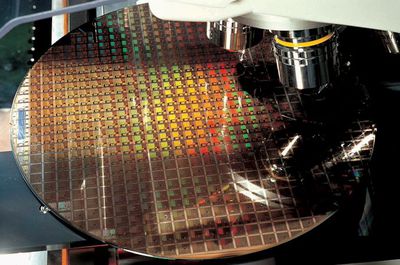
Together, the two companies consumed over $90 billion of the chips in 2020, a $16.6 billion total increase compared to 2019, making up 20 percent of the worldwide market.
Apple retained its position as the No. 1 global semiconductor customer in 2020, thanks mainly to the continued success of AirPods, special demand for Mac computers and iPads, and increasing NAND flash consumption. "Increasing demand for mobile PCs and tablets due to working from home significantly drove the production of Macs and iPads through 2020," said Masatsune Yamaji, research director at Gartner. "The company also began its transition to Apple silicon for its Mac product line in the second half of 2020."
The top 10 companies in 2020 remained the same as in 2019, but increased their semiconductor spend by 10% in 2020, and accounted for 42% of the total market, up from 40.9% in 2019. Samsung benefited from a big reduction in spending by Huawei, which remained in third position, despite being down 23.5% from 2019.
"The U.S. government increased trade restrictions on Huawei in 2020, limiting its ability to purchase semiconductors, which, in turn, limited its smartphone supply and reduced its market share. However, the Chinese market remains important for semiconductor vendors, as other Chinese smartphone OEMs stepped in to fill the vacuum created by Huawei in the second half of 2020," said Yamaji.
Among the top 10 companies, Xiaomi increased its spending the most (26%) in 2020, having been minimally impacted by the global health crisis thanks to its mainly online-driven sales model. Sanctions on Huawei also enabled Xiaomi to gain more market share in the smartphone market.
Popular Stories
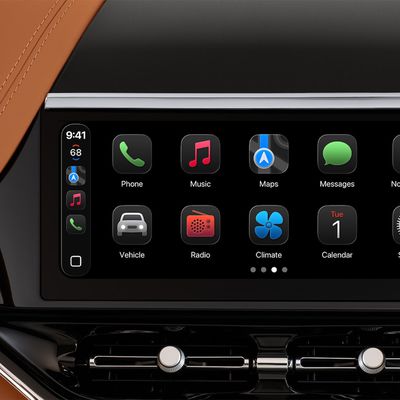
Last year, Apple launched CarPlay Ultra, the long-awaited next-generation version of its CarPlay software system for vehicles. Nearly nine months later, CarPlay Ultra is still limited to Aston Martin's latest luxury vehicles, but that should change fairly soon.
In May 2025, Apple said many other vehicle brands planned to offer CarPlay Ultra, including Hyundai, Kia, and Genesis.
In his Powe...
The calendar has turned to February, and a new report indicates that Apple's next product launch is "imminent," in the form of new MacBook Pro models.
"All signs point to an imminent launch of next-generation MacBook Pros that retain the current form factor but deliver faster chips," Bloomberg's Mark Gurman said on Sunday. "I'm told the new models — code-named J714 and J716 — are slated...
We are still waiting for the iOS 26.3 Release Candidate to come out, so the first iOS 26.4 beta is likely still at least a week or two away. Following beta testing, iOS 26.4 will likely be released to the general public in March or April.
Below, we have recapped known or rumored iOS 26.3 and iOS 26.4 features so far.
iOS 26.3
iPhone to Android Transfer Tool
iOS 26.3 makes it easier...
Apple is planning to launch new MacBook Pro models with M5 Pro and M5 Max chips alongside macOS 26.3, according to Bloomberg's Mark Gurman.
"Apple's faster MacBook Pros are planned for the macOS 26.3 release cycle," wrote Gurman, in his Power On newsletter today.
"I'm told the new models — code-named J714 and J716 — are slated for the macOS 26.3 software cycle, which runs from...
In 2022, Apple introduced a new Apple Home architecture that is "more reliable and efficient," and the deadline to upgrade and avoid issues is fast approaching.
In an email this week, Apple gave customers a final reminder to upgrade their Home app by February 10, 2026. Apple says users who do not upgrade may experience issues with accessories and automations, or lose access to their smart...