Rosetta Mac App Translation Process Can Take 20 Seconds on First Launch [Updated]

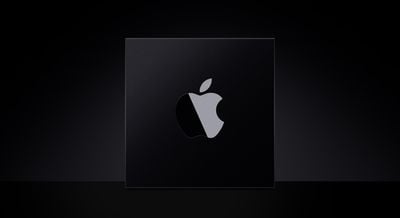
Given that Apple's new M1 chip is designed based on ARM architecture, apps built for Intel's x86 architecture will need to be run through Apple's translation layer Rosetta 2 in order to function on Apple Silicon Macs, and this process can take some time.
applesilicon
Microsoft this week indicated that when launching any of its Mac apps for the first time on Apple Silicon Macs, the apps will bounce in the dock for approximately 20 seconds while the Rosetta 2 translation process is completed, with all subsequent launches being fast. This applies to Word, Excel, PowerPoint, Outlook, OneNote, and OneDrive.

Apple's developer documentation acknowledges this matter, noting that the Rosetta 2 translation process "takes time" and that users "might perceive that translated apps launch or run more slowly at times" as a result:

If an executable contains only Intel instructions, macOS automatically launches Rosetta and begins the translation process. When translation finishes, the system launches the translated executable in place of the original. However, the translation process takes time, so users might perceive that translated apps launch or run more slowly at times.

To avoid this translation process, developers can create a universal binary for their apps, allowing them to run natively on both Apple Silicon Macs and Intel-based Macs with one executable file. Microsoft is one of many developers in the process of doing so.

A handful of apps have already been announced with universal support, including Darkroom, djay Pro AI, and OmniFocus.

The first Macs with the M1 chip will begin arriving to customers Tuesday.

Update - November 14: Microsoft has since changed the wording of its support document, and now simply says that the first launch of each Office app "will take longer," rather than specifying 20 seconds. We’re told this is because Microsoft has not yet confirmed exact speeds on production hardware.
Popular Stories

Aston Martin CarPlay Ultra Screen

Apple's CarPlay Ultra to Expand to These Vehicle Brands Later This Year

Sunday February 1, 2026 10:08 am PST by
Last year, Apple launched CarPlay Ultra, the long-awaited next-generation version of its CarPlay software system for vehicles. Nearly nine months later, CarPlay Ultra is still limited to Aston Martin's latest luxury vehicles, but that should change fairly soon. In May 2025, Apple said many other vehicle brands planned to offer CarPlay Ultra, including Hyundai, Kia, and Genesis. In his Powe...
Apple Logo Black

Apple's Next Launch is 'Imminent'

Sunday February 1, 2026 12:31 pm PST by
The calendar has turned to February, and a new report indicates that Apple's next product launch is "imminent," in the form of new MacBook Pro models. "All signs point to an imminent launch of next-generation MacBook Pros that retain the current form factor but deliver faster chips," Bloomberg's Mark Gurman said on Sunday. "I'm told the new models — code-named J714 and J716 — are slated...
iOS 26

iOS 26.3 and iOS 26.4 Will Add These New Features to Your iPhone

Tuesday February 3, 2026 7:47 am PST by
We are still waiting for the iOS 26.3 Release Candidate to come out, so the first iOS 26.4 beta is likely still at least a week or two away. Following beta testing, iOS 26.4 will likely be released to the general public in March or April. Below, we have recapped known or rumored iOS 26.3 and iOS 26.4 features so far. iOS 26.3 iPhone to Android Transfer Tool iOS 26.3 makes it easier...
Apple MacBook Pro M4 hero

New MacBook Pros Reportedly Launching Alongside macOS 26.3

Sunday February 1, 2026 5:42 am PST by
Apple is planning to launch new MacBook Pro models with M5 Pro and M5 Max chips alongside macOS 26.3, according to Bloomberg's Mark Gurman. "Apple's faster MacBook Pros are planned for the macOS 26.3 release cycle," wrote Gurman, in his Power On newsletter today. "I'm told the new models — code-named J714 and J716 — are slated for the macOS 26.3 software cycle, which runs from...
iOS 26 Home Feature

Apple Gives Final Warning to Home App Users

Tuesday February 3, 2026 8:55 am PST by
In 2022, Apple introduced a new Apple Home architecture that is "more reliable and efficient," and the deadline to upgrade and avoid issues is fast approaching. In an email this week, Apple gave customers a final reminder to upgrade their Home app by February 10, 2026. Apple says users who do not upgrade may experience issues with accessories and automations, or lose access to their smart...

Top Rated Comments

Unggoy Murderer Avatar
68 months ago
20 seconds is about the same amount of time it takes me to launch and use most crappy electron-based apps.

A single 20 second wait for an automatic and near native binary? Bargain if you asked me.
Score: 29 Votes (Like | Disagree)
Rudy69 Avatar
68 months ago
This is by far the ideal situation. You can't really beat ahead of time translation, pretty much will be faster once it's done no matter what.
Score: 13 Votes (Like | Disagree)
G725 Avatar
68 months ago
It would be interesting to see a comparison of native Geekbench and Rosetta Geekbench.
Score: 13 Votes (Like | Disagree)
midkay Avatar
68 months ago
This seems like a real non-issue in that it only happens once. However, I’m a bit surprised they didn’t go the one step further and pre-perform this translation during installation, as opposed to waiting for the user to attempt to launch the app.
Score: 7 Votes (Like | Disagree)
and 1989 others Avatar
68 months ago
To translate an application as massive as word, in up to 20 seconds is quite impressive. ~2Gb of application data.
Score: 7 Votes (Like | Disagree)
Lucifer666 Avatar
68 months ago

every time the app is launched?
No, it seems. Just once.
Score: 4 Votes (Like | Disagree)