AnandTech Finds iPhone 11 Pro Has 50-60% Higher Sustained Graphics Performance Than iPhone XS - MacRumorsOpen MenuShow RoundupsShow Forums menuVisit ForumsOpen Sidebar
Skip to Content

AnandTech Finds iPhone 11 Pro Has 50-60% Higher Sustained Graphics Performance Than iPhone XS

AnandTech today published its in-depth review of the iPhone 11 and iPhone 11 Pro, including a detailed overview of the processor and graphics performance gains of Apple's latest A13 Bionic chip.
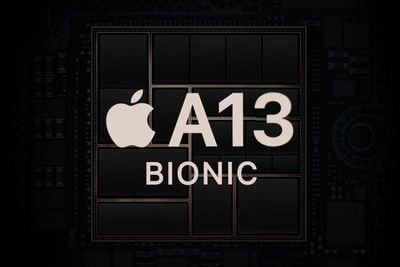
a13 bionic mockup
Starting with CPU performance, AnandTech found the A13 chip is around 20 percent faster than the A12 chip in last year's iPhone models, consistent with Apple's advertised claims. However, to fully achieve that improvement, the site claims Apple had to increase the peak power consumption of the CPU cores:

In virtually all of the SPECint2006 tests, Apple has gone and increased the peak power draw of the A13 SoC; and so in many cases we're almost 1W above the A12. Here at peak performance it seems the power increase was greater than the performance increase, and that's why in almost all workloads the A13 ends up as less efficient than the A12.

In terms of efficiency at the A13 chip's peak performance state, AnandTech believes the higher power draw will likely result in both the chip and the iPhone being more sensitive to temperatures and prone to throttling.

Apple says the A13 chip is up to 30 percent more power efficient than the A12 chip overall, encompassing all levels of performance.

In terms of overall performance, AnandTech emphasized Apple's lead in the mobile chip space, noting that the A13 posts almost double the performance of the next best non-Apple chip. The site also found the A13 "essentially matched" the "best that AMD and Intel have to offer" for desktop CPUs, at least based on SPECint2006, a suite of CPU-intensive cross-platform integer benchmarks.

AnandTech was even more impressed with GPU performance, noting that while peak performance has improved by roughly 20 percent as advertised, the iPhone 11 Pro had 50 to 60 percent higher sustained performance scores than the iPhone XS based on the high-end GFXBench graphics benchmark:

Where the new chip really shines and exceeds Apple's own marketing claims is in the sustained performance and efficiency of the new GPU. Particularly the iPhone 11 Pro models were able to showcase much improved long-term performance results, all while keeping thermals in check. The short version of it is that Apple has been able to knock it out of the park, delivering performance increases that we hadn't expected in what's essentially a mid-generation refresh on the chip manufacturing side of matters.

AnandTech is widely known for its coverage of components like CPUs and GPUs, so its iPhone reviews are highly regarded. AnandTech founder Anand Shimpi joined Apple's chipmaking team in 2014 and recently spoke about the A13 chip in an interview alongside Apple's marketing chief Phil Schiller.

Full Review: The Apple iPhone 11, 11 Pro & 11 Pro Max Review: Performance, Battery, & Camera Elevated by Andrei Frumusanu

Popular Stories

Apple Event Logo

Apple Working on All-New Operating System

Wednesday July 29, 2026 11:39 am PDT by
Apple is developing an all-new operating system that is essentially a mix of tvOS, watchOS, and iOS, according to Bloomberg's Mark Gurman. In a report this week, he said the operating system will feature a grid of icons, widgets, and apps, along with customizable clock faces. The new software platform is intended for Apple's long-rumored smart home hub. With built-in facial recognition,...
imac video apple feature

Apple Made Its Second-Biggest Acquisition Ever This Year

Wednesday July 29, 2026 12:03 pm PDT by
Apple this year acquired Israeli startup Q.ai for close to $2 billion, according to the Financial Times. That would make this Apple's second-biggest acquisition ever, after it paid $3 billion for the popular headphone maker Beats in 2014. This is also the largest known Apple acquisition since the company purchased Intel's smartphone modem business and patents for $1 billion in 2019. Q.ai...
Dynamic Island iPhone 18 Pro Feature

iPhone 18 Pro: Twelve Changes Coming to Apple's Next Flagship

Thursday July 30, 2026 3:43 am PDT by
We're less than two months out from the launch of Apple's premium next-generation smartphone lineup, and while we're not expecting a dramatic change in terms of functionality, there are still several enhancements rumored to be coming to the iPhone 18 Pro and iPhone 18 Pro Max. One thing worth noting is that Apple is reportedly planning a major change to its iPhone release cycle this year,...

Top Rated Comments

AvisDeene Avatar
89 months ago
If only Apple would put as much effort into increasing their desktop graphic performance.
Score: 27 Votes (Like | Disagree)

realtuner Avatar
89 months ago
Apple once again laying the smackdown on everyone.

It’s quite embarrassing how far ahead they are.
Score: 21 Votes (Like | Disagree)
89 months ago
What does Apple say to the god of diminishing returns?

Not today.
Score: 20 Votes (Like | Disagree)
89 months ago
That means better emojis.
Score: 14 Votes (Like | Disagree)
ToneDriver Avatar
89 months ago

If only Apple would put as much effort into increasing their desktop graphic performance.
Could be why
And I'm not being snarky. It's just that they have quite the vested interest in that big red part.

Attachment Image
Score: 14 Votes (Like | Disagree)
chucker23n1 Avatar
89 months ago

It’s mind boggling that Apple has so little RAM in its flagships, but it’s processors are so far ahead and efficient that iPhones can still outperform the competition.
It's fairly easy to explain at a technical level.

iOS apps are mostly AOT-compiled code with no garbage collection (typically written in ObjC, Swift or C++ and targeting the native CPU); Android apps are mostly JIT-compiled code with a garbage collector (typically written in Java or Kotlin and targeting the Java VM). The two have different performance characteristics; generally speaking, native code is faster especially at first execution, whereas JIT code can in some cases be faster when well-optimized against the current situation, but is typically slower.

One isn't necessarily better than the other, but it makes sense that the latter would require more RAM: whereas the former is already compiled, runs natively against the physical CPU, and has had memory allocations and deallocations defined during compile time, the latter needs each process to run a VM, a JIT compiler, and a garbage collector.
Score: 13 Votes (Like | Disagree)

🔗 Related Apple News & Rumors

Stay updated with the latest Apple ecosystem news and verified rumors