Google Outlines iPhone Vulnerabilities That Let Malicious Websites Steal User Data for Years, Now Fixed - MacRumorsOpen MenuShow RoundupsShow Forums menuVisit ForumsOpen Sidebar
Skip to Content

Google Outlines iPhone Vulnerabilities That Let Malicious Websites Steal User Data for Years, Now Fixed

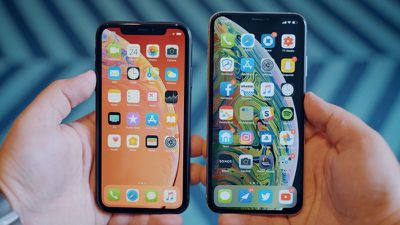
Google's Project Zero published a blog post this week about a previous security threat wherein malicious websites quietly hacked into the victim's iPhone. This small collection of hacked websites were used in what was described as "indiscriminate" attacks against unsuspecting visitors for years, but the threat has been addressed by Apple.
iphonexrxsmax
If the attacks were successful, a monitoring implant would be installed on the targeted iPhone, able to steal private data including messages, photos, and GPS location in real time. Google estimated that thousands of visitors headed to these websites per week over the course of two years, and that iOS versions ranging from iOS 10 to iOS 12 were exploited.

There was no target discrimination; simply visiting the hacked site was enough for the exploit server to attack your device, and if it was successful, install a monitoring implant. We estimate that these sites receive thousands of visitors per week.

TAG was able to collect five separate, complete and unique iPhone exploit chains, covering almost every version from iOS 10 through to the latest version of iOS 12. This indicated a group making a sustained effort to hack the users of iPhones in certain communities over a period of at least two years.

Project Zero discovered exploits for a total of 14 vulnerabilities in iOS, seven for Safari, five for the kernel, and two separate sandbox escapes. The team reported these findings to Apple in February, and Apple's release of iOS 12.1.4 that same month addressed the issues.

Google's deep dive into the iOS exploit can be read on the company's Project Zero blog.

Popular Stories

google pixel 10 fold 1

Google's Pixel 11 Event Set for August 12, a Month Before Apple Debuts Foldable iPhone

Tuesday July 7, 2026 11:48 am PDT by
Google will introduce its latest Pixel smartphones at an August 12 event, debuting the updated devices about a month ahead of when Apple is expected to announce new iPhone models. Google is expected to launch the Pixel 11, Pixel 11 Pro, Pixel 11 Pro XL, and a new Pixel 11 Pro Fold. Leaked CAD renders suggest the new smartphones will have slimmed down bezels, a slightly thinner design than...
Chrome Feature 22

Google Chrome's Gemini AI Features Roll Out to UK Users

Tuesday July 14, 2026 2:32 am PDT by
Google has announced the rollout of Chrome's latest AI features to Mac and PC users in the U.K., indicated by a new "Ask Gemini" button with a sparkle icon in the upper right side of the browser. Gemini in Chrome can work across multiple tabs, which is supposed to make it useful for comparing and summarizing information from several websites at once. It also integrates with Google...
Google Logo Feature Slack

Google and Epic Abandon Injunction Modification Request, Clearing the Way for Rival Android App Stores

Wednesday July 15, 2026 5:02 pm PDT by
Google and Epic Games this week withdrew their joint motion to modify an injunction requiring Google to support third-party app stores in Google Play. The two companies abandoned the request after it became clear the court was unlikely to allow it. Google is now bound by a permanent injunction issued in October 2024 requiring it to allow alternative app stores on Android devices. In a court...

Top Rated Comments

90 months ago
So what were the malicious sites?
Score: 72 Votes (Like | Disagree)
Expos of 1969 Avatar
90 months ago
The defenders will soon be here trying to explain how Apple was not at fault and that the company is really trying to put privacy priority # 1 (ha...ha...ha).
Score: 29 Votes (Like | Disagree)
realtuner Avatar
90 months ago
Stick that on a billboard
Sure. Along with the time Google discovered a security flaw in Safari and instead of notifying Apple so they could fix it they wrote malware to exploit it so they could keep tracking users.

So the moral of the story is: If Google can somehow embarrass Apple over an exploit they'll release information to the public. If they can use the exploit to their own advantage, they'll keep quiet about it.
Score: 23 Votes (Like | Disagree)
DCIFRTHS Avatar
90 months ago
So what were the malicious sites?
Same question. Read the articles, and didn’t see them listed. Maybe I missed them... I feel google has the responsibility to disclose them.
Score: 18 Votes (Like | Disagree)
realtuner Avatar
90 months ago
Sounds like working as intended. Bugs found, reported and fixed in the same month.
This.

Going to quote it simply to counter the inevitable posts saying Apple somehow screwed up....blah....blah....blah.

First off, Apple didn't ignore this exploit for years. They simply didn't know about it. The only reason it went unnoticed for so long is because it wasn't widespread. Once an exploit becomes common it's usually discovered quickly. This is why zero-days are so valuable and often sold to governments or others who can afford to pay a couple million for an exploit. It's also why those same people only use the exploits on targets they consider valuable, because once it's out there it will be discovered and fixed.

Secondly, Apple dealt with it immediately. Google notified Apple on Feb 1st and Apple released a patch on Feb 7th. This is a perfect example of Apple having superior security to Android. Exploits will always exist. Being able to quickly roll out a fix for an exploit is one of the most important methods in dealing with them. Something Android is absolutely horrible at.
Score: 16 Votes (Like | Disagree)
TheShadowKnows! Avatar
90 months ago
Kudos to Google's Project Zero in spades.
GOTO: https://googleprojectzero.blogspot.com/2019/08/implant-teardown.html


"... we examined how the attackers gained unsandboxed code execution as root on iPhones. At the end of each chain we saw the attackers calling posix_spawn, passing the path to their implant binary which they dropped in /tmp. This starts the implant running in the background as root. There is no visual indicator on the device that the implant is running. There's no way for a user on iOS to view a process listing, so the implant binary makes no attempt to hide its execution from the system.

The implant is primarily focused on stealing files and uploading live location data. The implant requests commands from a command and control server every 60 seconds.

Before diving into the code let's take a look at some sample data from a test phone running the implant and communicating with a custom command and control server I developed. To be clear, I created this test specifically for the purposes of demonstrating what the implant enabled the attacker to do and the screenshots are from my device. The device here is an iPhone 8 running iOS 12.

The implant has access to all the database files (on the victim’s phone) used by popular end-to-end encryption apps like Whatsapp, Telegram and iMessage. We can see here screenshots of the apps on the left, and on the right the contents of the database files stolen by the implant which contain the unencrypted, plain-text of the messages sent and received using the apps..."
Score: 16 Votes (Like | Disagree)

🔗 Related Apple News & Rumors

Stay updated with the latest Apple ecosystem news and verified rumors