Firefox today announced that the latest version of its web browsing software -- which it's calling "Firefox Quantum" instead of "Firefox 57" -- will be available as an update for users beginning November 14, with a beta of the browser hitting iOS, Android, and desktop today.
The company said that the biggest advantage of Quantum is its speed, which is twice as fast as Firefox 52 when measured using Speedometer 2.0, a benchmark that simulates modern web applications. Firefox said that Quantum takes advantage of multiple CPU cores offered by today's desktop and mobile devices, instead of running on just one core, resulting in a "dramatically faster" web browser.
The company updated a few other features so that Quantum runs smoothly, including making sure that the tab open on the browser downloads and runs prior to other tabs in the background. When compared to Chrome -- which Firefox directly compared itself to in a new video -- Quantum is said to be faster than Google's browser, "while consuming roughly 30 percent less RAM."
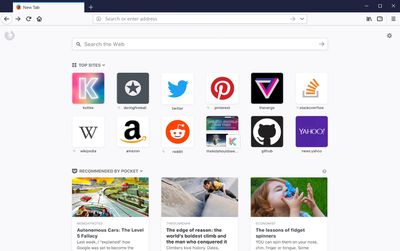
The user experience of Quantum has also been overhauled and enhanced through the company's Photon project, which tasked Firefox's design team to research and understand "how users perceive web browsers." The team's findings have resulted in a more "modern" design that's built for "task focused" users. Quantum also comes with more direct integration with read-it-later app Pocket, which Mozilla acquired last year.
The new, minimalist design introduces square tabs, smooth animations, and a Library, which provides quick access to your saved stuff: bookmarks, Pocket, history, downloads, tabs, and screenshots. Firefox Quantum feels right at home with today’s mouse and touch-driven operating systems: Windows 10, macOS High Sierra, Android Oreo, and iOS 11.
Quantum will also continue to support Firefox's "Tracking Protection" privacy technology, which the company found to mitigate invasive tracking of online activity throughout various studies. Specifically, Firefox's technology demonstrated a 67.5 percent reduction in the number of cookies set to a user's browsing habits during a visit to 200 websites. These improvements also allow for performance enhancements, according to Firefox, reducing page load times by as much as 44 percent and lowering mobile data usage by 39 percent on the sites visited in the study.
Firefox encourages users to sign up to be notified regarding news about the new Quantum browser, which can be done on the company's website right here. Ahead of the November 14 public launch, developers can also download the Firefox Quantum: Developer Edition starting today.
I don’t know why one would run any browser other than Safari on a Mac, especially a laptop or other mobile device. I’m certain that 90+% of users’ needs would be met by Safari, and Safari sips energy and contributes to increased battery life. Furthermore, the small percentage of users who run Chrome or Firefox out of necessity aren’t likely to change their habits for relatively small speed bumps and/or efficiency gains.
Superior speed, efficiency, cloud integration, and aesthetics are my reasons for running Safari and I don’t anticipate that changing any time soon. Even if a browser surpasses Safari in any one of those categories, no other browser is as good at all of them.
Since Firefox ranges from half the speed of Safari to non-functional now (sometimes, just never ending Javascript delays), this just might make it competitive finally. I say might.
I stopped saving cookies and history in Firefox for any length of time mainly because it really only works well with a clean slate to start with. Any history seems to boggle its mind. :(
Wednesday October 28, 2026 10:11 am PDT by Juli Clover
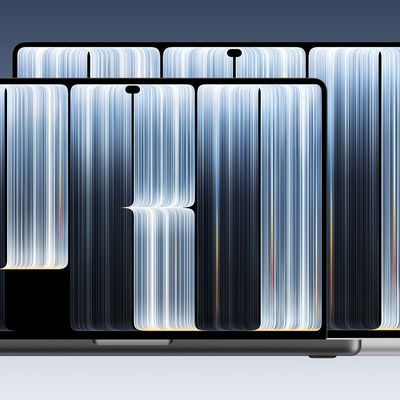
Apple today announced a new high-end MacBook Pro, which is available in 14-inch and 16-inch sizes. The new device has a PROLED XDR display that supports touch gestures, and a glowing rear Apple logo.
Pricing on the MacBook Pro starts at $2,899 for the 14-inch model and $3,399 for the 16-inch model.
Apple says the MacBook Pro has the "world's best display in a pro laptop." The PROLED...
Friday October 30, 2026 3:20 pm PDT by Joe Rossignol
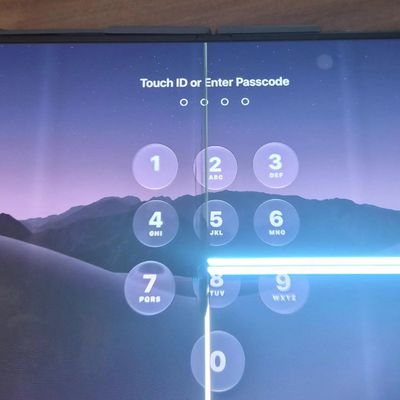
In a memo shared with Apple Stores and Apple Authorized Service Providers this week, and later obtained by MacRumors, Apple provided technicians with guidance on how to diagnose and address the iPhone Duo's inner display cracking issue.
If a customer reports the issue, Apple advised technicians to inspect the iPhone Duo and repair or replace it in accordance with their standard procedures....
Thursday October 29, 2026 1:47 pm PDT by Joe Rossignol
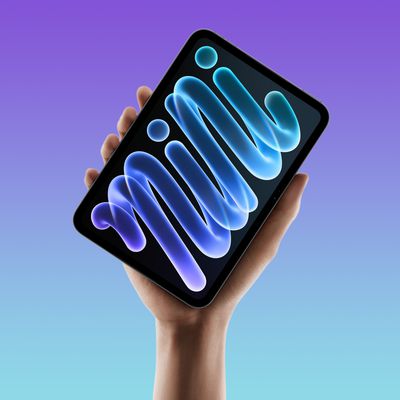
While the new iPad mini has an OLED display, the device does not support ProMotion, meaning the display's refresh rate is limited to 60Hz instead of 120Hz.
ProMotion support would have allowed for the iPad mini's refresh rate to automatically adjust from 10Hz to 120Hz depending on the content being displayed, but evidently Apple has kept the feature exclusive to the iPad Pro among iPad...

















































Top Rated Comments
Superior speed, efficiency, cloud integration, and aesthetics are my reasons for running Safari and I don’t anticipate that changing any time soon. Even if a browser surpasses Safari in any one of those categories, no other browser is as good at all of them.
I stopped saving cookies and history in Firefox for any length of time mainly because it really only works well with a clean slate to start with. Any history seems to boggle its mind. :(
Just compare these two shots of literally the same set of tabs open in each browser: