Apple's newest 2016 and 2017 MacBook Pro models offer new features like the Touch Bar and an expanded Trackpad, but they also lack features many deemed necessary, most notably any port other than USB Type-C. That means adapters, adapters, and more adapters.
DockCase is hoping to help by introducing a case for the MacBook Pro that has a USB-C dock built in, eliminating the need for most adapters.
As detailed in our video above, the case is made from a leather-like material that held up well in everyday use during our testing. The inside of the case is lined with micro fiber, and a magnetic flap helps keep your MacBook inside. The bottom of the case is what makes the DockCase different, with a full USB-C dock with Ethernet, HDMI, USB-C, USB-A, and SD card ports built right in. The dock connects to your MacBook Pro with an included USB-C to USB-C cable that tucks inside the case when not in use.
This case is currently a fully funded Kickstarter project so changes may come before the final release, but even with this pre-production model, everything works as it should. There are no connection issues and the data read speed is fast with support for USB 3.1 transfer speeds.
As for issues, it would have been great to see the included USB-C cable built into the case instead of free floating. Also, the case is rather large, particularly the 15" model. While it protects your 15" MacBook Pro, the case won't fit into many bags and will have to be carried.
DockCase will retail for $129 for the 13" MacBook Pro and $139 for the 15" MacBook Pro, and there's also a limited edition version for the MacBook for $119. However, if you back the Kickstarter campaign, you can snag the case for $50 cheaper. DockCase says the first orders will begin shipping out in November, but as with all Kickstarter projects, there could be delays, so use caution when backing a product from a first time manufacturer.
Personally, I don't view Type-C exclusivity as a problem at all. I don't use adapters and more adapters. I have a Type A adapter (see below) that I use on rare occasion - about as often as I pull my HDMI adapter out (very rarely). I just invested fully into Type-C and eliminated as much Type-A stuff as I could, as well as Micro-B, Mini-B, etc. For those purposes I have some nice Type-C to Micro B, Type C to Mini B, and Type C to full-size B cables. I bought battery power banks with Type C to utilize my new cables on the go, and have Type C chargers plugged into my car's 12V ports. I use a "legacy" Dell 5K display that takes dual DisplayPort input via two Type-C to DisplayPort cables that cost me $20 on Amazon. I use a tiny MicroSD card reader where the MicroSD card insert into a Type A port on one side, and has a Type C on the other so it works in either. I had an LG 5K display at my previous job, and the brilliance of it was that it did NOT try to be one of these stupid "shove every port in existence into it" dongles - it simply expanded the number of available Type C ports.
The adapter I use for Type A is the same one I use for wired Ethernet - it's made by Anker and has 3 Type A ports in addition to a network port. I rarely use those Type A ports since converting as much as I could to Type C though...
The "MacBook Pro's biggest problem" hasn't been a problem for me since about a week after I bought it. The biggest problem in our household computer situation now is all the old cables and devices I need for my previous MacBook Pro (now my wife's) to work with all the same stuff. It's just not enough of a problem to motivate me to spend another $4k!
Not a horrible idea - at least when compared to the need for either one large multipurpose dongle or multiple smaller dongles. However it still bugs me that Apple made these compromise solutions necessary in the first place.
I'll be sticking with my 2015 MacBook Pro for the foreseeable future. I can live without a USB-C port easier than I can live without all the other ports.
Friday October 30, 2026 3:20 pm PDT by Joe Rossignol
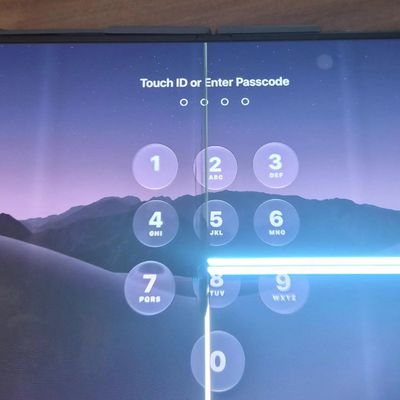
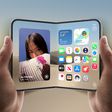
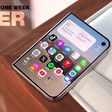
In a memo shared with Apple Stores and Apple Authorized Service Providers this week, and later obtained by MacRumors, Apple provided technicians with guidance on how to diagnose and address the iPhone Duo's inner display cracking issue.
If a customer reports the issue, Apple advised technicians to inspect the iPhone Duo and repair or replace it in accordance with their standard procedures....
Thursday October 29, 2026 1:47 pm PDT by Joe Rossignol
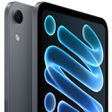
While the new iPad mini has an OLED display, the device does not support ProMotion, meaning the display's refresh rate is limited to 60Hz instead of 120Hz.
ProMotion support would have allowed for the iPad mini's refresh rate to automatically adjust from 10Hz to 120Hz depending on the content being displayed, but evidently Apple has kept the feature exclusive to the iPad Pro among iPad...
Thursday October 29, 2026 11:52 am PDT by Joe Rossignol
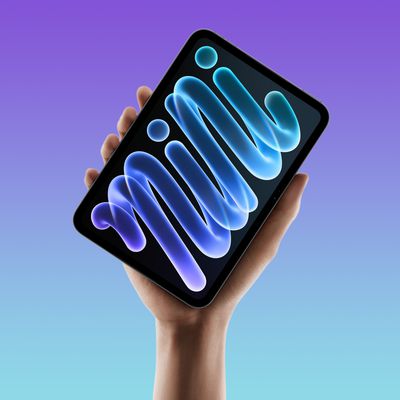
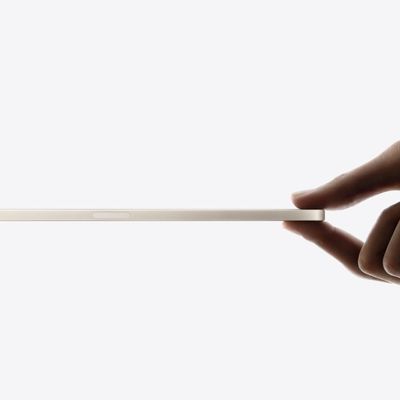
In the U.S. and most other countries, Apple's website shows the new iPad mini being held by pinched fingers, but this is not the case in South Korea.
The new iPad mini shown with pinched fingers on Apple's website in the U.S.
On its South Korean website, Apple simply shows an image of the iPad mini on its own.
The new iPad mini shown without pinched fingers on Apple's website in South Korea ...





































Top Rated Comments
The adapter I use for Type A is the same one I use for wired Ethernet - it's made by Anker and has 3 Type A ports in addition to a network port. I rarely use those Type A ports since converting as much as I could to Type C though...
The "MacBook Pro's biggest problem" hasn't been a problem for me since about a week after I bought it. The biggest problem in our household computer situation now is all the old cables and devices I need for my previous MacBook Pro (now my wife's) to work with all the same stuff. It's just not enough of a problem to motivate me to spend another $4k!
I'll be sticking with my 2015 MacBook Pro for the foreseeable future. I can live without a USB-C port easier than I can live without all the other ports.