Apple recently acquired Beddit Sleep Monitor, an app and sleep system designed to monitor daily sleep habits through the iPhone, according to an updated privacy policy posted both on the Beddit website and in the Beddit app when creating an account. A link within the app also directs to the Apple Privacy Policy.
As of May 8, the Beddit privacy policy says the following:
Beddit has been acquired by Apple. Your personal data will be collected, used and disclosed in accordance with the Apple Privacy Policy.
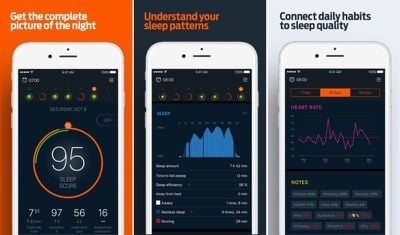
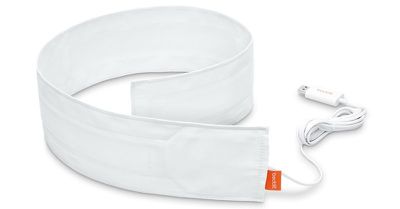
The Beddit 3 Sleep Monitor, which can be purchased from Apple for $150, is a thin, flexible sensor that's designed to be placed under the sheet on the top of a mattress. It collects and analyzes sleep-related data like sleep time and efficiency, heart rate, respiration, movement, snoring, room temperature, and room humidity.
All of the data collected by the Beddit Sleep Monitor is then made available to iPhone users through an accompanying Beddit iPhone app, which provides "personalized insights" and "customizable sleep coaching" to help users improve their sleep habits.
According to the Beddit website, the device uses ballistocardiography (BCG) to measure the mechanical activity of the heart, lungs, and other body functions. When the heart beats, for example, the Beddit sensor can measure the mechanical impulse generated by the acceleration of the blood through the circulatory system.
Based on the changes to the Beddit privacy policy, it appears Apple may have plans to continue selling the device and collecting health-related data from it, which could potentially be used to enhance future versions of products like the Apple Watch.
Sunday February 1, 2026 10:08 am PST by Joe Rossignol
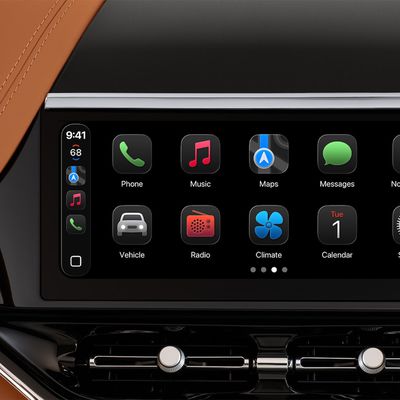
Last year, Apple launched CarPlay Ultra, the long-awaited next-generation version of its CarPlay software system for vehicles. Nearly nine months later, CarPlay Ultra is still limited to Aston Martin's latest luxury vehicles, but that should change fairly soon.
In May 2025, Apple said many other vehicle brands planned to offer CarPlay Ultra, including Hyundai, Kia, and Genesis.
In his Powe...
Thursday January 29, 2026 10:07 am PST by Joe Rossignol
Apple today confirmed to Reuters that it has acquired Q.ai, an Israeli startup that is working on artificial intelligence technology for audio.
Apple paid close to $2 billion for Q.ai, according to sources cited by the Financial Times. That would make this Apple's second-biggest acquisition ever, after it paid $3 billion for the popular headphone and audio brand Beats in 2014.
Q.ai has...
Sunday February 1, 2026 12:31 pm PST by Joe Rossignol
The calendar has turned to February, and a new report indicates that Apple's next product launch is "imminent," in the form of new MacBook Pro models.
"All signs point to an imminent launch of next-generation MacBook Pros that retain the current form factor but deliver faster chips," Bloomberg's Mark Gurman said on Sunday. "I'm told the new models — code-named J714 and J716 — are slated...
Saturday January 31, 2026 10:51 am PST by Joe Rossignol
Apple recently updated its online store with a new ordering process for Macs, including the MacBook Air, MacBook Pro, iMac, Mac mini, Mac Studio, and Mac Pro.
There used to be a handful of standard configurations available for each Mac, but now you must configure a Mac entirely from scratch on a feature-by-feature basis. In other words, ordering a new Mac now works much like ordering an...
Sunday February 1, 2026 5:42 am PST by Joe Rossignol
Apple is planning to launch new MacBook Pro models with M5 Pro and M5 Max chips alongside macOS 26.3, according to Bloomberg's Mark Gurman.
"Apple's faster MacBook Pros are planned for the macOS 26.3 release cycle," wrote Gurman, in his Power On newsletter today.
"I'm told the new models — code-named J714 and J716 — are slated for the macOS 26.3 software cycle, which runs from...
I've had a beddit for about a year. Love it. Great HW. Stoked on this acquisition! [doublepost=1494372843][/doublepost]
Not trying to be a offensive with the reply here, but does the sleep tracking diagnose you then? Or do you show the data to a physician and they diagnose based on that?
Seems weird it's 1/3 with a sleeping disorder. That's a high number...
This is such a great question. People with sleep disorders can monitor their sleep quality and treatment methods without frequent sleep tests in a lab (expensive and inconvenient). Also, the home results can show trends, sleep tests in a lab cannot.
Can someone explain to me why we need to track our sleep? If you can't catch up on sleep, what's data after the fact usable for?
Nearly a third of adults are afflicted with a chronic sleep disorder. If you aren't one of those you probably won't have much use for tracking your sleep. Of course you could have a sleep disorder and not know it.


 As of May 8, the Beddit privacy policy says the following: