Political Will for Encryption Law Has Weakened Since Apple-FBI Dispute

Support for encryption legislation in the U.S. has flatlined and the push for changes in federal law following the San Bernardino shootings has petered out, according to sources in congressional offices, the administration and the tech sector (via Reuters).

On February 16, a U.S. federal judge ordered Apple to help the FBI to unlock the iPhone owned by Syed Farook, one of the shooters in the December 2015 attacks in San Bernardino that left 14 people dead.
feinsteinburr

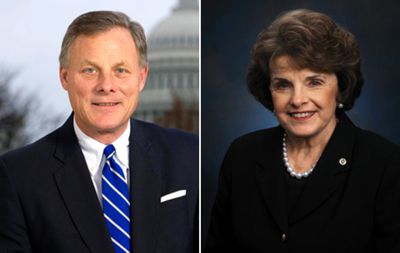
Senate Intelligence Committee leaders Richard Burr and Dianne Feinstein.

The FBI asked Apple to create a version of iOS that would both disable passcode security features and allow passcodes to be entered electronically, allowing it to then brute force the passcode on the device.

Apple announced that it would oppose the order in an open letter penned by Tim Cook, who said the FBI's request would set a "dangerous precedent" with serious implications for the future of smartphone encryption.

Apple claimed the software the FBI asked for could serve as a "master key" able to be used to get information from any iPhone or iPad - including its most recent devices - while the FBI claimed it only wanted access to a single iPhone.

Apple's dispute with the FBI ended on March 28, after the government found an alternate way to access the data on the iPhone through the help of "professional hackers" and withdrew the lawsuit as a result.

During the controversy, a Senate Intelligence Committee encryption bill was announced by committee leaders Richard Burr and Dianne Feinstein, which aimed to force companies to provide "technical assistance" to government investigators seeking locked data.

A released draft of the encryption bill in April revealed the scope of the proposed legislation, which was heavily criticized by security experts and the wider technology community, and described variously as "absurd", "technically inept", and "dangerous".

An open letter expressing "deep concerns" about the draft bill was subsequently signed by four coalitions representing Apple, Microsoft, Google, Amazon, and other major tech companies. At the same time, the White House chose not to offer public support for the legislation, and the administration remained deeply divided on the issue.

The CIA and NSA were also ambivalent, according to several current and former intelligence officials, because agency officials feared any new law would interfere with their own encryption efforts.

Now, despite Burr repeatedly insisting that legislation is imminent, no timeline exists for the bill, Democrats and Republicans on the Intelligence Committee have apparently backed away from the issue, and the political will to support its advance no longer appears to exist.

Despite the change in the political landscape, however, the FBI remains adamant that litigation over the encryption of mobile devices will continue.

In a briefing with reporters earlier this month, FBI director James Comey called encryption an "essential tradecraft" of terrorist organizations like ISIS, suggesting that the debate over whether the government can compel tech companies to unlock personal devices in the interest of national security is far from over.

Note: Due to the political nature of the discussion regarding this topic, the discussion thread is located in our Politics, Religion, Social Issues forum. All forum members and site visitors are welcome to read and follow the thread, but posting is limited to forum members with at least 100 posts.
Popular Stories

Aston Martin CarPlay Ultra Screen

Apple's CarPlay Ultra to Expand to These Vehicle Brands Later This Year

Sunday February 1, 2026 10:08 am PST by
Last year, Apple launched CarPlay Ultra, the long-awaited next-generation version of its CarPlay software system for vehicles. Nearly nine months later, CarPlay Ultra is still limited to Aston Martin's latest luxury vehicles, but that should change fairly soon. In May 2025, Apple said many other vehicle brands planned to offer CarPlay Ultra, including Hyundai, Kia, and Genesis. In his Powe...
Apple Logo Black

Apple Just Made Its Second-Biggest Acquisition Ever After Beats

Thursday January 29, 2026 10:07 am PST by
Apple today confirmed to Reuters that it has acquired Q.ai, an Israeli startup that is working on artificial intelligence technology for audio. Apple paid close to $2 billion for Q.ai, according to sources cited by the Financial Times. That would make this Apple's second-biggest acquisition ever, after it paid $3 billion for the popular headphone and audio brand Beats in 2014. Q.ai has...
Apple Logo Black

Apple's Next Launch is 'Imminent'

Sunday February 1, 2026 12:31 pm PST by
The calendar has turned to February, and a new report indicates that Apple's next product launch is "imminent," in the form of new MacBook Pro models. "All signs point to an imminent launch of next-generation MacBook Pros that retain the current form factor but deliver faster chips," Bloomberg's Mark Gurman said on Sunday. "I'm told the new models — code-named J714 and J716 — are slated...
14 inch MacBook Pro Keyboard

Apple Changes How You Order a Mac

Saturday January 31, 2026 10:51 am PST by
Apple recently updated its online store with a new ordering process for Macs, including the MacBook Air, MacBook Pro, iMac, Mac mini, Mac Studio, and Mac Pro. There used to be a handful of standard configurations available for each Mac, but now you must configure a Mac entirely from scratch on a feature-by-feature basis. In other words, ordering a new Mac now works much like ordering an...
Apple MacBook Pro M4 hero

New MacBook Pros Reportedly Launching Alongside macOS 26.3

Sunday February 1, 2026 5:42 am PST by
Apple is planning to launch new MacBook Pro models with M5 Pro and M5 Max chips alongside macOS 26.3, according to Bloomberg's Mark Gurman. "Apple's faster MacBook Pros are planned for the macOS 26.3 release cycle," wrote Gurman, in his Power On newsletter today. "I'm told the new models — code-named J714 and J716 — are slated for the macOS 26.3 software cycle, which runs from...

Top Rated Comments

Morky Avatar
127 months ago
In a briefing with reporters earlier this month, FBI director James Comey called encryption and "essential tradecraft" of terrorist organizations like ISIS
If encryption is essential tradecraft for terrorist organizations, then creating backdoors and weakening encryption in consumer electronics would have zero effect on them and only serve to weaken they security of a couple of billion people. Terrorists could, and I'm sure do, use other means to encrypt communications other than what comes out of the box in an iPhone or Android phone.
Score: 26 Votes (Like | Disagree)
PBRsg Avatar
127 months ago
One of my steadfast rules in politics: I want the opposite of whatever Feinstein wants.
Score: 17 Votes (Like | Disagree)
drumcat Avatar
127 months ago
Expect any future onerous legislation to be attached to some Save The Children bill.
Score: 10 Votes (Like | Disagree)
duffman9000 Avatar
127 months ago
I don't like judging a person by looks, but she looks downright evil. Like she is about to throw some puppies in the oven.
[doublepost=1464350680][/doublepost]
One of my steadfast rules in politics: I want the opposite of whatever Feinstein wants.
If she was for puppies I'd have to be against puppies.
Score: 9 Votes (Like | Disagree)
vvswarup Avatar
127 months ago
We like to talk about how special interest groups and the rich have too much influence over US politics at the expense of less well-off Americans. There are those who say that for this reason, we need term limits on Congress. This stupid encryption bill is another reason why we need term limits. These career politicians with no understanding of modern technology are proposing laws that are going to make our data less secure.

This law is tantamount to requiring a backdoor. That's just unacceptable. What do LEOs think they'll accomplish if they weaken encryption? To use the words of Comey, if encryption is an essential tradecraft of terrorist organizations, they'll just find a way to get their hands on encryption. By painting encryption as essential tradecraft of terrorist organizations, Comey is trying to make us believe that privacy is abnormal, and you want privacy, you're probably doing something that you shouldn't be doing.

If politicians have their way with this bill, only the bad guys will have privacy. The good guys who are just trying to protect critical information like credit card numbers, health data, and other things will be forced to do without it and will be turned into mindless drones of the government.
Score: 8 Votes (Like | Disagree)
Gymgenius Avatar
127 months ago
I don't believe it for a second.
Score: 7 Votes (Like | Disagree)