Apple Explains Privacy Policy Behind 'Hey Siri' and Live Photos

Recently, Apple has been quick to point out that security and privacy for its users is a priority for the company, repeatedly noting that Apple does not rely on serving ads based on user data to make money. Yesterday, Apple announced two new features, Live Photos and 'Hey Siri', that have raised questions about the privacy and security about the features. The company explained its privacy procedures to TechCrunch.
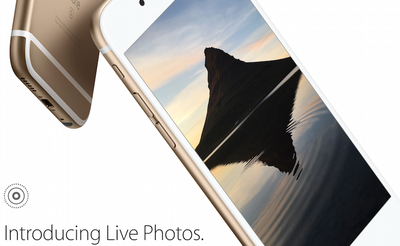
livephotos
Live Photos are treated like any other photo or video on an iPhone, which means that the Live Photo is encrypted at all times. The only way a Live Photo leaves a device is when a user decides to share it or selects to use iCloud. Live Photos record the 1.5 seconds before and after your picture, though Apple says the camera is restricted in what it can save.

“Although the camera is “recording” while you’re in Live Photo mode, the device will not save the 1.5 seconds before until you press the camera button,” says Apple. “The pre-captured images are not saved to the user’s device nor are they sent off the device.”

This means that the camera is always recording the last 1.5 seconds of footage it sees, though it will continuously delete that footage unless it's "saved" when a user takes a photo. The 1.5 seconds after a photo is taken is also saved when a user takes a photo. Live Photos is turned on by default, but a user can turn it off by clicking the orange Live icon in between the HDR and timer icons.

Hey Siri allows a user to active Apple's personal assistant with their voice, which means that the iPhone has to constantly "listen" for a user's vocal activation. However, Apple tells TechCrunch that nothing a user says is recorded until Hey Siri is activated.

The feature can only be activated in a two-step matching process. First, the iPhone must "hear" the general "Hey Siri" activation phrase. The phone then must match that activation phrase with the personalized way the user says "Hey Siri", which prevents the feature from activating when other people say the phrase. If the phone "hears" "Hey Siri" but it's not a vocal match for its owner, the feature will not activate. This process is done locally on the device, and no audio is sent off of the iPhone.

After "Hey Siri" is activated, the privacy and security protocols in place work similarly to how Siri works now. Audio is sent off to Apple and associated with a device using a random identifier rather than an Apple ID or other personal information. If a user turns off Siri, Apple will delete all the User Data associated with the random identifier.

"Hey Siri" is an optional feature that a user must opt into during iOS 9's setup process. Users, if they choose, can opt to never enable the feature.

The full explanation, including descriptions directly from Apple, can be read at TechCrunch.
Popular Stories

Aston Martin CarPlay Ultra Screen

Apple's CarPlay Ultra to Expand to These Vehicle Brands Later This Year

Sunday February 1, 2026 10:08 am PST by
Last year, Apple launched CarPlay Ultra, the long-awaited next-generation version of its CarPlay software system for vehicles. Nearly nine months later, CarPlay Ultra is still limited to Aston Martin's latest luxury vehicles, but that should change fairly soon. In May 2025, Apple said many other vehicle brands planned to offer CarPlay Ultra, including Hyundai, Kia, and Genesis. In his Powe...
Apple Logo Black

Apple Just Made Its Second-Biggest Acquisition Ever After Beats

Thursday January 29, 2026 10:07 am PST by
Apple today confirmed to Reuters that it has acquired Q.ai, an Israeli startup that is working on artificial intelligence technology for audio. Apple paid close to $2 billion for Q.ai, according to sources cited by the Financial Times. That would make this Apple's second-biggest acquisition ever, after it paid $3 billion for the popular headphone and audio brand Beats in 2014. Q.ai has...
Apple Logo Black

Apple's Next Launch is 'Imminent'

Sunday February 1, 2026 12:31 pm PST by
The calendar has turned to February, and a new report indicates that Apple's next product launch is "imminent," in the form of new MacBook Pro models. "All signs point to an imminent launch of next-generation MacBook Pros that retain the current form factor but deliver faster chips," Bloomberg's Mark Gurman said on Sunday. "I'm told the new models — code-named J714 and J716 — are slated...
14 inch MacBook Pro Keyboard

Apple Changes How You Order a Mac

Saturday January 31, 2026 10:51 am PST by
Apple recently updated its online store with a new ordering process for Macs, including the MacBook Air, MacBook Pro, iMac, Mac mini, Mac Studio, and Mac Pro. There used to be a handful of standard configurations available for each Mac, but now you must configure a Mac entirely from scratch on a feature-by-feature basis. In other words, ordering a new Mac now works much like ordering an...
Apple MacBook Pro M4 hero

New MacBook Pros Reportedly Launching Alongside macOS 26.3

Sunday February 1, 2026 5:42 am PST by
Apple is planning to launch new MacBook Pro models with M5 Pro and M5 Max chips alongside macOS 26.3, according to Bloomberg's Mark Gurman. "Apple's faster MacBook Pros are planned for the macOS 26.3 release cycle," wrote Gurman, in his Power On newsletter today. "I'm told the new models — code-named J714 and J716 — are slated for the macOS 26.3 software cycle, which runs from...

Top Rated Comments

Devie Avatar
136 months ago
The way Apple is about their customers privacy is the main reason I still use them as my primary personal devices even when I know another company may have a better or cheaper offering to perform the same task.
Keep this up Tim and I'll continue being a customer for life.
Score: 7 Votes (Like | Disagree)
Harmonious Zen Avatar
136 months ago
Rather a contrast to Cortana, which seems aggressively [re-]enabled and leveraged who knows how for data mining.
Just take a look at a company's business model and you'll know whether to worry or not. (Cough) Google.
Score: 7 Votes (Like | Disagree)
Abazigal Avatar
136 months ago
I don't see the point of Live Photos in the first place. For me, each Live Photo equals to a 3 sec video clip. So we could just take this short video and be done with it.

With Live Photos enabled and an increase in megapixels, the 16 GB storage devices will be running out of space much quicker and Apple seems to have a problem with a number 32 when it comes to a storage capacity. :) To somewhat balance it, they could have offered at least 10 GB of iCloud storage for free now.
The issue is that nobody goes around taking 3-second videos of everything around them, but everyone will take photos. So it's all in the implementation. People don't need to do anything extra. Every photo they take is a live photo automatically in addition to being a normal photo.

I can see this being a very "emotional" feature for the average consumer. Imagine a new parent holding down on a photo of their newborn child and watching it move. Now imagine showing it to all your friends and relatives. Imagine watching it move when you hold down on your wallpaper.

Now extend this to every other reason why you might take a photo. Your girlfriend or wife smiling at you. Your dog wagging its tail. I see this being huge, not just because of the technology behind it, but because of the emotional appeal it holds for the user. If it is one thing Apple understands better than any other company, it is who their market is and what appeals to them.
Score: 3 Votes (Like | Disagree)
Sill Avatar
136 months ago
how? I'm curious to hear
Back in the days when twisted pair copper wire ruled telecommunications, it was possible to bug a room by modifying phones to listen even when the phone was still "on the hook". You can read about this by searching for "Infinity XMTR" or "Infinity Transmitter". It was a real thing, everyone from spooks to LEOs to the mob used them. It could be done cheaply and simply, and all it required was physical access to the phone to install the parts. If I remember right, it was a combination Black Box (phreaker term for a piece that took the phone off the hook without significantly dropping the line voltage - otherwise after an extended period of use the bug would cause the old "off hook" warning klaxon that oldsters here should recall) and a physical switch that bypassed the the disconnect lever in the handset base.

The main thing here is that an Infinity install required physical access to the phone. If you suspected the phone, you would simply buy a new one wherever you chose, and potential spies would need to access it all over again. Back in the days when it was illegal to get a phone anywhere but the phone company, Infinity work was done by spooks at the telecoms so changing to a new phone would just get you another bugged phone. After the FTC or FCC or whomever changed the rules and allowed anyone to buy any phone anywhere from any manufacturer, Infinity work was a lot harder.

Later on, as phones became more logic-controlled, it may have been possible to take them off the hook remotely without any mods. Maybe the mods were ordered to be built in by the feds. I don't know, but I wouldn't put it past them. Just as Nixon would threaten to pull the broadcast licenses of news agencies that pushed him, so I wouldn't put it past the feds to threaten manufacturers who refused to put back doors in their gear. Just like I hear is going on in Silicon Valley now.
Score: 3 Votes (Like | Disagree)
citysnaps Avatar
136 months ago
I seriously doubt the data stays any longer than enough to do context follow on questions. Tech crunch article dealt more with initiating and was not a white paper on all the details
And, to the extent that it is, it's tagged to an anonymous id.
Score: 2 Votes (Like | Disagree)
Razeus Avatar
136 months ago
The way Apple is about their customers privacy is the main reason I still use them as my primary personal devices even when I know another company may have a better or cheaper offering to perform the same task.
Keep this up Tim and I'll continue being a customer for life.
And a customer who's always behind.
Score: 2 Votes (Like | Disagree)