Steve Jobs' Testimony Expected to Play Major Role in iPod Antitrust Lawsuit
Apple this week is scheduled to appear in court and face accusations that it deliberately crippled competing music services and players in an iPod class action lawsuit from 2005, reports The New York Times. The trial will feature testimony from Steve Jobs, whose emails and a videotaped deposition taken before his death will play an important part in the plaintiffs' case.
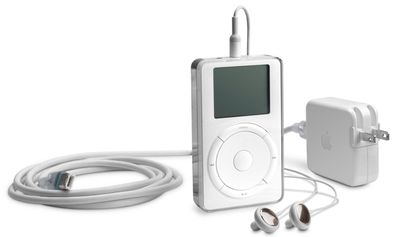
The complaint focuses on Apple's older iPod models, which only supported music purchased on iTunes and songs downloaded from CDs. Also being disputed is Apple's FairPlay system of encoding purchased music, which limited music playback to the iPod and not competing MP3 players. In the suit, consumers claim Apple violated antitrust law by deliberately limiting interoperability with competitors, while exclusively promoting its products and services.
The email testimony is expected to paint Steve Jobs as an aggressive businessman who worked hard to ensure the success of the iPod and iTunes. This success often came at the expense of smaller competitors, which were not allowed to connect to Apple's popular iPod ecosystem. In one already released email, Jobs addresses Apple's lack of support for the-then upcoming MusicMatch music store.
"We need to make sure that when Music Match launches their download music store they cannot use iPod," he wrote. "Is this going to be an issue?"
Part of the case also involves Apple's interactions with RealNetworks, which devised a workaround in 2004 that allowed content from its music store to be played on the iPod. In an angry statement released to the media, Apple accused RealNetworks of hacking the iPod and threatened to disable this functionality in future iPod software updates.
To counteract Jobs' testimony, Apple is expected to argue that updates to the iPod and iTunes were designed to improve the platform for the consumer and not cripple competing devices. The company also likely will point out that the price of the iPod has gone down over the years, despite Apple's alleged monopolistic behavior.
Popular Stories
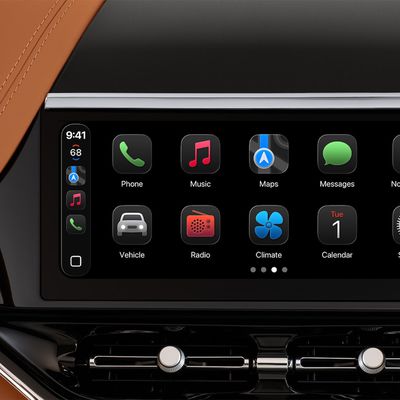
Last year, Apple launched CarPlay Ultra, the long-awaited next-generation version of its CarPlay software system for vehicles. Nearly nine months later, CarPlay Ultra is still limited to Aston Martin's latest luxury vehicles, but that should change fairly soon.
In May 2025, Apple said many other vehicle brands planned to offer CarPlay Ultra, including Hyundai, Kia, and Genesis.
In his Powe...
Apple today confirmed to Reuters that it has acquired Q.ai, an Israeli startup that is working on artificial intelligence technology for audio.
Apple paid close to $2 billion for Q.ai, according to sources cited by the Financial Times. That would make this Apple's second-biggest acquisition ever, after it paid $3 billion for the popular headphone and audio brand Beats in 2014.
Q.ai has...
The calendar has turned to February, and a new report indicates that Apple's next product launch is "imminent," in the form of new MacBook Pro models.
"All signs point to an imminent launch of next-generation MacBook Pros that retain the current form factor but deliver faster chips," Bloomberg's Mark Gurman said on Sunday. "I'm told the new models — code-named J714 and J716 — are slated...
Apple recently updated its online store with a new ordering process for Macs, including the MacBook Air, MacBook Pro, iMac, Mac mini, Mac Studio, and Mac Pro.
There used to be a handful of standard configurations available for each Mac, but now you must configure a Mac entirely from scratch on a feature-by-feature basis. In other words, ordering a new Mac now works much like ordering an...
Apple is planning to launch new MacBook Pro models with M5 Pro and M5 Max chips alongside macOS 26.3, according to Bloomberg's Mark Gurman.
"Apple's faster MacBook Pros are planned for the macOS 26.3 release cycle," wrote Gurman, in his Power On newsletter today.
"I'm told the new models — code-named J714 and J716 — are slated for the macOS 26.3 software cycle, which runs from...