Apple to Cease Selling Fitbit Activity Tracking Devices in Stores
Apple has plans to stop selling Fitbit's line of activity tracking devices in its stores as it prepares to launch its own Apple Watch in the coming months, reports Re/code.
While it is not known why Apple plans to cease selling Fitbit products, its decision comes shortly after Fitbit told its users that it had no plans to integrate with Apple's HealthKit at the current time, as it was "working on other exciting projects" for its users.
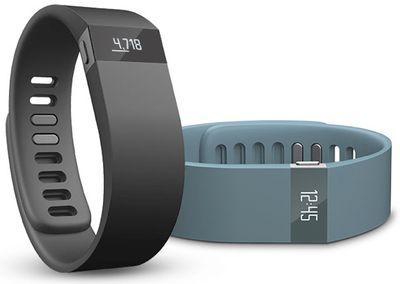
Fitbit's line of activity trackers are similar in function to the Apple Watch, offering users the ability to track their steps taken, distance traveled, calories burned, stairs climbed, and sleep quality. Recent rumors have suggested Fitbit has several new devices in the works that will launch soon, with all of the above features plus a heart rate monitor. A heart rate monitor is one of the key features of the Apple Watch.
Apple sells many other types of fitness tracking devices both in its online store and in retail locations, including the UP from Jawbone and the Nike Fuelband, and it is unclear whether Apple will continue to sell these devices or if the ban is limited to Fitbit.
Fitbit's activity trackers won't be the first products Apple has stopped selling in recent weeks. Just last week, news surfaced that Apple was preparing to remove Bose audio products from its stores. While the reason for that removal was unclear, it was likely related to Apple's recent Beats Electronics acquisition. Apple has indeed gone ahead and started removing the headphones from its retail stores according to both Twitter users and tips received by MacRumors.
Popular Stories
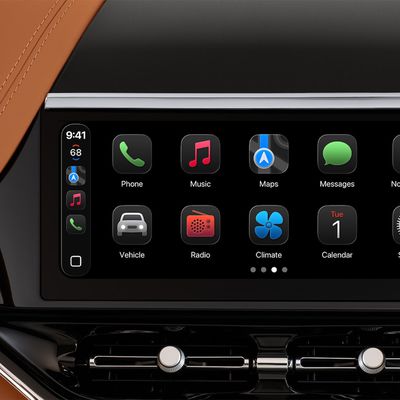
Last year, Apple launched CarPlay Ultra, the long-awaited next-generation version of its CarPlay software system for vehicles. Nearly nine months later, CarPlay Ultra is still limited to Aston Martin's latest luxury vehicles, but that should change fairly soon.
In May 2025, Apple said many other vehicle brands planned to offer CarPlay Ultra, including Hyundai, Kia, and Genesis.
In his Powe...
Apple today confirmed to Reuters that it has acquired Q.ai, an Israeli startup that is working on artificial intelligence technology for audio.
Apple paid close to $2 billion for Q.ai, according to sources cited by the Financial Times. That would make this Apple's second-biggest acquisition ever, after it paid $3 billion for the popular headphone and audio brand Beats in 2014.
Q.ai has...
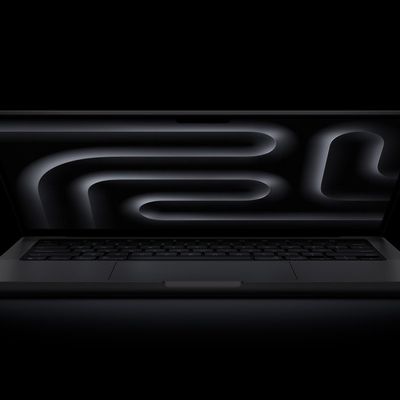
The calendar has turned to February, and a new report indicates that Apple's next product launch is "imminent," in the form of new MacBook Pro models.
"All signs point to an imminent launch of next-generation MacBook Pros that retain the current form factor but deliver faster chips," Bloomberg's Mark Gurman said on Sunday. "I'm told the new models — code-named J714 and J716 — are slated...
Apple recently updated its online store with a new ordering process for Macs, including the MacBook Air, MacBook Pro, iMac, Mac mini, Mac Studio, and Mac Pro.
There used to be a handful of standard configurations available for each Mac, but now you must configure a Mac entirely from scratch on a feature-by-feature basis. In other words, ordering a new Mac now works much like ordering an...
Apple is planning to launch new MacBook Pro models with M5 Pro and M5 Max chips alongside macOS 26.3, according to Bloomberg's Mark Gurman.
"Apple's faster MacBook Pros are planned for the macOS 26.3 release cycle," wrote Gurman, in his Power On newsletter today.
"I'm told the new models — code-named J714 and J716 — are slated for the macOS 26.3 software cycle, which runs from...