A Comprehensive Outline of the Security Behind Apple Pay - MacRumorsOpen MenuShow RoundupsShow Forums menuVisit ForumsOpen Sidebar
Skip to Content

A Comprehensive Outline of the Security Behind Apple Pay

Apple has described its new Apple Pay payments service, which is designed to be the first step towards the company's goal of replacing the wallet, as "easy, secure, and private." Apple Pay includes several different features that offer customers much greater security than a traditional credit card, including Device Account Numbers that replace credit card numbers, dynamic security codes for each transaction, and biometric payment verification through the use of Touch ID.

Ahead of the release of Apple Pay, TUAW's Yoni Heisler has taken an in-depth look at the security features built into the payments service, outlining the ways Apple is safeguarding customer information.

While Apple Pay is built on existing NFC technology, Heisler's research suggests it is the first implementation of the EMVCo tokenization specification, a newly introduced security framework designed to cover emerging payment methods. According to former credit card executive Tom Noyes, this specification is "the most secure payments scheme on the planet."
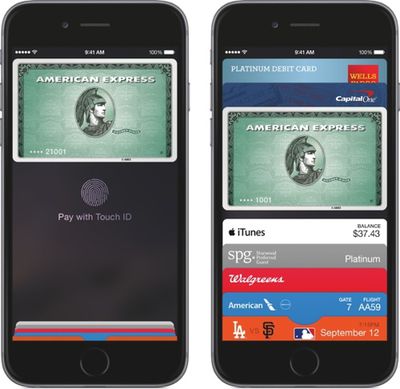
applepaytouchid
As previously rumored, Apple Pay utilizes a "token," which the company refers to as a Device Account Number, to replace a user's existing credit card number on the iPhone. A randomized 16-digit number, the Device Account Number ensures that no merchant is able to obtain a user's credit card number, protecting consumers from retail security breaches, as TUAW points out, because tokens are randomized numbers that cannot be decrypted back into a credit card number.

Device Account Numbers, or tokens, are paired with a dynamically generated one-time use code that replaces the credit card's CCV with every transaction.

Providing an additional layer of security, an Apple Pay-equipped iPhone at the time of each transaction also sends a dynamically generated CVV up the chain along with a cryptogram. The CVV is the three-digit string located on the back of your credit card and, in the case of Apple Pay, is a algorithmically-generated dynamic string that's tied directly to the token. The cryptogram itself "uniquely identifies the device" that created the token and, according to the EMV Payment Spec, is likely composed of encrypted data sourced from the token, the device itself, and transaction data. Note, though, that the precise components of the Apple Pay cryptogram aren't publicly known.

As noted by Heisler, a Device Account Number can't be used in a transaction without an accompanying one-time use cryptogram, which verifies that the "token in transit originated from the device being used." Cryptograms also carry transaction information like the merchant's identity and the amount of money being charged.

The transaction comprising the Device Account Number and accompanying cryptogram is further verified through the use of Touch ID, which essentially replaces insecure verification methods like passwords and PINs.

According to a credit card executive who spoke to TUAW, token transactions as implemented by Apple "are a new and much higher standard of security for electronic payments."

The amount of security built into provisioning tokens and supporting transactions is a new standard that I think will definitely shift fraud patterns going forward.

Apple Pay is expected to go live in October, enabled through an update to iOS 8. Hints of Apple Pay have already been found in the iOS 8.1 beta, which was seeded to developers on Monday. TUAW's full look at the security behind Apple Pay, which covers tokens, Touch ID, and more, is well worth a read.

Related Roundup: Apple Pay

Popular Stories

columbia apple pay

Apple Pay Promo Offers Discount on Columbia Gear

Thursday July 23, 2026 9:38 am PDT by
Apple today sent out emails letting Apple Pay users know about the latest promotion, which offers $20 off purchases of $120 or more from sportswear company Columbia. The $20 discount is valid when making a purchase from the Columbia website and using Apple Pay to check out. The discount is not available in Columbia retail locations, and products from the Amaze Puff Collection and the ROC...
Apple Event Logo

Apple Working on All-New Operating System

Wednesday July 29, 2026 11:39 am PDT by
Apple is developing an all-new operating system that is essentially a mix of tvOS, watchOS, and iOS, according to Bloomberg's Mark Gurman. In a report this week, he said the operating system will feature a grid of icons, widgets, and apps, along with customizable clock faces. The new software platform is intended for Apple's long-rumored smart home hub. With built-in facial recognition,...
imac video apple feature

Apple Made Its Second-Biggest Acquisition Ever This Year

Wednesday July 29, 2026 12:03 pm PDT by
Apple this year acquired Israeli startup Q.ai for close to $2 billion, according to the Financial Times. That would make this Apple's second-biggest acquisition ever, after it paid $3 billion for the popular headphone maker Beats in 2014. This is also the largest known Apple acquisition since the company purchased Intel's smartphone modem business and patents for $1 billion in 2019. Q.ai...

Top Rated Comments

154 months ago
A matter of time until someone's finger is hacked off? And, didn't they already hack the touch-ID system?

You mean that convoluted system that required a perfect copy of the persons fingerprint and something like four hours of fabrication? I wouldn't really call that "hacked." By the time they got a dummy fingerprint made up, I'd have realized my phone was missing and locked it via iCloud.
Score: 45 Votes (Like | Disagree)
154 months ago
Gw

And for all the Google Wallet fans out there, tokenization is a key differentiator between Apple Pay and Google Wallet.

So please lay off the comments saying that you've been using this for years. You haven't.

However I don't expect that Google will dawdle with incorporation of tokenization (which is an EMV standard - by no means exclusive to Apple). A decent fingerprint reader might take longer.
Score: 31 Votes (Like | Disagree)
taptic Avatar
154 months ago
Apple: setting the example of security and privacy for Google and the NSA since forever.
Score: 26 Votes (Like | Disagree)
154 months ago
Let's get this out of the way now...

No, a merchant doesn't have to sign up for :apple:pay. All of this is done on the back-end, by the credit card processing networks and the card-issuing banks.

If a merchant supports contactless card payments (PayWave, ExpressPay, PayPass), they can accept payments from your iPhone 6.

Merchants have to replace their point-of-sale terminals before 10/2015 anyway, if they haven't already done so. If their terminal doesn't accept EMV chip cards, the merchant will assume liability for fraudulent transactions.

The only determining factor is whether a merchant chooses to spend a bit extra money to add the NFC option to their point-of-sale terminal.

I'm tired of all the people complaining about "deficiencies" in :apple:pay, when they clearly don't even know how it is being implemented. Go read the referenced article, if you don't yet get it.
Score: 14 Votes (Like | Disagree)
taptic Avatar
154 months ago
A matter of time until someone's finger is hacked off? And, didn't they already hack the touch-ID system?
The chances of their being a psycho that starts shooting people in public are probably higher than a psyhco chopping peoples fingers off to shop with at CVS.

And no, people replicated someones fingerprint, but they need to have the original and a lot of time and patience. It's not much of a hack really...
Score: 13 Votes (Like | Disagree)
greytmom Avatar
154 months ago
Folks, if you are being held at gun or knife point so that a thief can get your pin or password, you've got bigger issues than the thief going on a shopping spree.
Score: 10 Votes (Like | Disagree)

🔗 Related Apple News & Rumors

Stay updated with the latest Apple ecosystem news and verified rumors