Audio Testing Confirms iPhone 6 Not Yet Capable of Direct HD Audio Playback

Earlier this year, Apple was rumored to be adding support for high-definition audio playback in iOS 8 and shipping new EarPods with the iPhone 6 in order to support this 24bit/96kHz standard. Apple ultimately made no such announcements for iOS 8 or the iPhone 6, and Mashable has now confirmed with some testing that Apple's latest iPhone 6 does not currently support high definition audio playback.
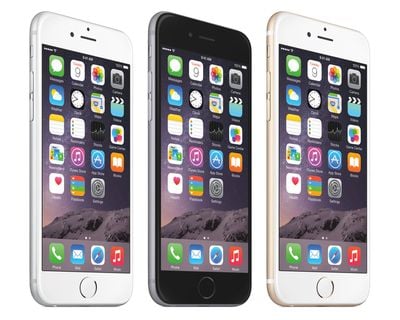
iphone6-stock-photo
With the help of audio testing expert David Ranada, Mashable tested several sample .wav files encoded at a 96kHz sampling rate with 24 bits per sample. The tracks were played using third-party apps such as Onkyo's HF music player and recordings were made through the headphone jack to determine the quality of the audio output.

The results show that iPhone 6 does not yet support HD audio playback, even though the audio hardware inside the phone may be capable of 24bit/96kHz output. According to teardown analyses, Apple's iPhone 6 includes the custom made Cirrus Logic 338S1201 chip, which is likely the successor to the Cirrus Logic CS42L61 chip used in previous iPhone models. Though also a custom build, the older CS42L61 chip is part of Cirrus Logic's CS42L51 family, which supports 24bit/96kHz HD audio.

It's hard to conceive of Apple either creating a custom chip that's less capable than the equivalent off-the-shelf component, let alone downgrading the audio capabilities of the iPhone's DAC in subsequent generations. So it stands to reason the DAC on board the iPhone 6 is capable of sampling 24-bit/96kHz audio.

It's possible, however, that Apple could later update iOS 8 with support for HD audio and enable the playback of hi-res music through the iPhone's headphone jack. Apple is accepting 24bit/96kHz uploads from musicians and is allegedly preparing to enable high-definition 24-bit downloads from iTunes.

Customers who want HD audio sooner will have to look at Lightning-equipped audio devices such as the recently announced Fidelio M2L headphones from Philips. The Fidelio M2Ls will connect to an iPhone or iPad via the Lightning port and will support 24-bit audio using an internal DAC and amplifier built into the headphone unit.
Related Forum: iPhone

Popular Stories

Aston Martin CarPlay Ultra Screen

Apple's CarPlay Ultra to Expand to These Vehicle Brands Later This Year

Sunday February 1, 2026 10:08 am PST by
Last year, Apple launched CarPlay Ultra, the long-awaited next-generation version of its CarPlay software system for vehicles. Nearly nine months later, CarPlay Ultra is still limited to Aston Martin's latest luxury vehicles, but that should change fairly soon. In May 2025, Apple said many other vehicle brands planned to offer CarPlay Ultra, including Hyundai, Kia, and Genesis. In his Powe...
Apple Logo Black

Apple's Next Launch is 'Imminent'

Sunday February 1, 2026 12:31 pm PST by
The calendar has turned to February, and a new report indicates that Apple's next product launch is "imminent," in the form of new MacBook Pro models. "All signs point to an imminent launch of next-generation MacBook Pros that retain the current form factor but deliver faster chips," Bloomberg's Mark Gurman said on Sunday. "I'm told the new models — code-named J714 and J716 — are slated...
iOS 26

iOS 26.3 and iOS 26.4 Will Add These New Features to Your iPhone

Tuesday February 3, 2026 7:47 am PST by
We are still waiting for the iOS 26.3 Release Candidate to come out, so the first iOS 26.4 beta is likely still at least a week or two away. Following beta testing, iOS 26.4 will likely be released to the general public in March or April. Below, we have recapped known or rumored iOS 26.3 and iOS 26.4 features so far. iOS 26.3 iPhone to Android Transfer Tool iOS 26.3 makes it easier...
Apple MacBook Pro M4 hero

New MacBook Pros Reportedly Launching Alongside macOS 26.3

Sunday February 1, 2026 5:42 am PST by
Apple is planning to launch new MacBook Pro models with M5 Pro and M5 Max chips alongside macOS 26.3, according to Bloomberg's Mark Gurman. "Apple's faster MacBook Pros are planned for the macOS 26.3 release cycle," wrote Gurman, in his Power On newsletter today. "I'm told the new models — code-named J714 and J716 — are slated for the macOS 26.3 software cycle, which runs from...
iOS 26 Home Feature

Apple Gives Final Warning to Home App Users

Tuesday February 3, 2026 8:55 am PST by
In 2022, Apple introduced a new Apple Home architecture that is "more reliable and efficient," and the deadline to upgrade and avoid issues is fast approaching. In an email this week, Apple gave customers a final reminder to upgrade their Home app by February 10, 2026. Apple says users who do not upgrade may experience issues with accessories and automations, or lose access to their smart...

Top Rated Comments

arbogast777 Avatar
148 months ago
So... you're telling us the iPhone doesn't have a feature that they never claimed it to have?
Score: 44 Votes (Like | Disagree)
Medic311 Avatar
148 months ago
The S version is usually when the real iPhone comes out
Score: 31 Votes (Like | Disagree)
normang Avatar
148 months ago
A whole article, based on a rumor, that Apple never announced, and most people's ears in most any ear buds or Beats are not going to notice any significant difference in quality, even if it were enabled.
Score: 23 Votes (Like | Disagree)
BB1970 Avatar
148 months ago
Basically iPhone 6 is a flop.

Most companies would love to have an Apple "flop"
Score: 17 Votes (Like | Disagree)
ouimetnick Avatar
148 months ago
Basically iPhone 6 is a flop.

Nah, Just the rumor mill creates unrealistic rumors, and other wishes that don't always become true, hence the term rumor.

noun
a currently circulating story or report of uncertain or doubtful truth: they were investigating rumors of a massacre | rumor has it that he will take a year off.
Score: 14 Votes (Like | Disagree)
Lictor Avatar
148 months ago
There is no noticeable difference between the 44.1kHz (we mostly listen to now) and 96kHz.
The human ear can't even hear above 20kHz, and the rest is just for filter purposes.

That's not what Shannon's theorem says. It doesn't state that sampling at twice the frequency is enough to be able to reproduce a perfect signal. What it states is that if you sample under twice the frequency, there is no way you will be able to reproduce a signal at that frequency... It's a minimum, not a maximum.

For instance, a young person will hear a signal at 20kHz. To capture that signal, you need to sample at at least 40kHz. Then, that young person will be able to hear something, but you will have lost a lot of characteristics of the signal - for instance, you will not be able to know if the original signal was a sawtooth, a square or a sinusoid. So, significant information will have been lost.

That's why CD recordings sounded metallic at first. The solution, which is applied on all CDs, was to cut the frequency around 16kHz to avoid the destruction of the characteristics of the signal around Shannon frequencies.

That's why 96kHz is interesting, because it keeps quality in the upper part of the spectrum.

Moreover, 24-96 is not only about 96kHz, it's also 24 bit. And there, you gain a lot. The problem with CD and digital capture in general is that the scale is linear while most of our senses use a logarithmic scale.
The result is that when you go at the bottom of your intensity, you have a very very low resolution in your sample, while the human ear (or eye) still have a good resolution. This is especially visible in photography: if you brighten the shadows, you will see a lot of banding, because the sample resolution is very low in the shadows. It's the same problem with audio: CD killed the dynamic range (hence the loudness war), because it's not that good when you have a lot of dynamic during the low volume ports.
Score: 13 Votes (Like | Disagree)