'Bash' Security Flaw in OS X Allows for Malicious Attacks on Devices and Services
 Security researchers from Red Hat have uncovered a new exploit in the common "Bash" command shell found in OS X and Linux which can be used to deploy malicious code with minimal effort. Due to the ubiquity of the Bash shell, the exploit can affect a wide variety of different web-connected devices and properties, including unsecured websites, smart home appliances, servers, and more.
Security researcher Robert Graham noted on his blog that the Bash exploit is "as big as Heartbleed," referring to the flaw discovered earlier this year in the popular OpenSSL software which secures connections between clients and servers:
Internet-of-things devices like video cameras are especially vulnerable because a lot of their software is built from web-enabled bash scripts. Thus, not only are they less likely to be patched, they are more likely to expose the vulnerability to the outside world.
Unlike Heartbleed, which only affected a specific version of OpenSSL, this bash bug has been around for a long, long time. That means there are lots of old devices on the network vulnerable to this bug. The number of systems needing to be patched, but which won't be, is much larger than Heartbleed.
Heartbleed was said to have affected 66% of the Internet, although Apple announced in April that the exploit did not affect its software or "key services." Apple also released updates for the AirPort Extreme and Time Capsule to better secure both web devices against Heartbleed.
A topic discussing the Bash exploit on StackExchange also notes that Apple did not include a fix for the bug in its latest round of security updates that came alongside the release of OS X Mavericks 10.9.5 last week. It is possible however that Apple will release a fix for OS X in the near future to address the exploit, similar to what it has done for other security issues in the past.
Popular Stories
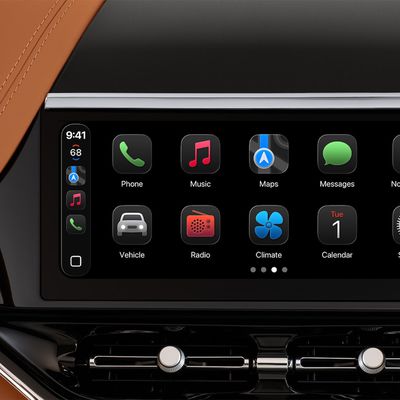
Last year, Apple launched CarPlay Ultra, the long-awaited next-generation version of its CarPlay software system for vehicles. Nearly nine months later, CarPlay Ultra is still limited to Aston Martin's latest luxury vehicles, but that should change fairly soon.
In May 2025, Apple said many other vehicle brands planned to offer CarPlay Ultra, including Hyundai, Kia, and Genesis.
In his Powe...
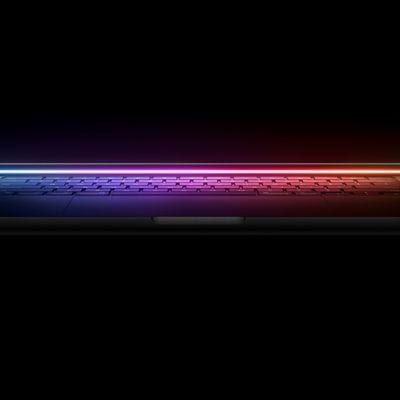
The calendar has turned to February, and a new report indicates that Apple's next product launch is "imminent," in the form of new MacBook Pro models.
"All signs point to an imminent launch of next-generation MacBook Pros that retain the current form factor but deliver faster chips," Bloomberg's Mark Gurman said on Sunday. "I'm told the new models — code-named J714 and J716 — are slated...
Apple is planning to launch new MacBook Pro models with M5 Pro and M5 Max chips alongside macOS 26.3, according to Bloomberg's Mark Gurman.
"Apple's faster MacBook Pros are planned for the macOS 26.3 release cycle," wrote Gurman, in his Power On newsletter today.
"I'm told the new models — code-named J714 and J716 — are slated for the macOS 26.3 software cycle, which runs from...
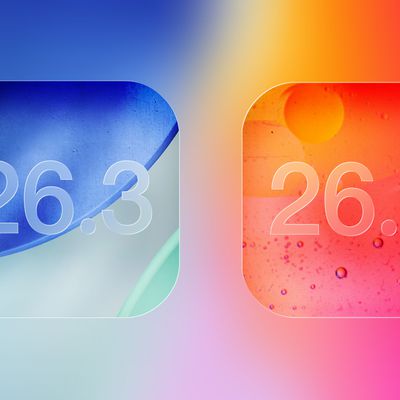
We are still waiting for the iOS 26.3 Release Candidate to come out, so the first iOS 26.4 beta is likely still at least a week or two away. Following beta testing, iOS 26.4 will likely be released to the general public in March or April.
Below, we have recapped known or rumored iOS 26.3 and iOS 26.4 features so far.
iOS 26.3
iPhone to Android Transfer Tool
iOS 26.3 makes it easier...
In 2022, Apple introduced a new Apple Home architecture that is "more reliable and efficient," and the deadline to upgrade and avoid issues is fast approaching.
In an email this week, Apple gave customers a final reminder to upgrade their Home app by February 10, 2026. Apple says users who do not upgrade may experience issues with accessories and automations, or lose access to their smart...