Researchers Show How Apple's App Approval Process Can Be Beaten by Malicious Apps
 Researchers from Georgia Tech submitted to the App Store and received approval for a malicious app, according to Technology Review. The researchers submitted an innocuous app that included inactive malware-type code hidden from Apple's app approval system.
When downloaded onto a test device after the app was approved, the app 'phoned home' and gained a variety of abilities that compromised the host phone.
This malware, which the researchers dubbed Jekyll, could stealthily post tweets, send e-mails and texts, steal personal information and device ID numbers, take photos, and attack other apps. It even provided a way to magnify its effects, because it could direct Safari, Apple’s default browser, to a website with more malware.
The researchers, including Long Lu, a Stony Brook University researcher who was part of the team at Georgia Tech, only put the app on the App Store very briefly and it was not downloaded by anyone other than research team members.
The team said that using monitoring code built into the app, they determined that Apple's app approval team only ran the app for a few seconds and that malicious code was not discovered by Apple's team. "The message we want to deliver is that right now, the Apple review process is mostly doing a static analysis of the app, which we say is not sufficient because dynamically generated logic cannot be very easily seen," said Lu.
Apple spokesman Tom Neumayr told Technology Review that the company made some changes to the iOS operating system in response to the paper, though he did not specify what the changes were.
Popular Stories
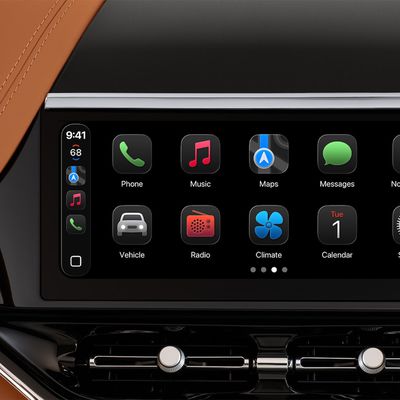
Last year, Apple launched CarPlay Ultra, the long-awaited next-generation version of its CarPlay software system for vehicles. Nearly nine months later, CarPlay Ultra is still limited to Aston Martin's latest luxury vehicles, but that should change fairly soon.
In May 2025, Apple said many other vehicle brands planned to offer CarPlay Ultra, including Hyundai, Kia, and Genesis.
In his Powe...
The calendar has turned to February, and a new report indicates that Apple's next product launch is "imminent," in the form of new MacBook Pro models.
"All signs point to an imminent launch of next-generation MacBook Pros that retain the current form factor but deliver faster chips," Bloomberg's Mark Gurman said on Sunday. "I'm told the new models — code-named J714 and J716 — are slated...
We are still waiting for the iOS 26.3 Release Candidate to come out, so the first iOS 26.4 beta is likely still at least a week or two away. Following beta testing, iOS 26.4 will likely be released to the general public in March or April.
Below, we have recapped known or rumored iOS 26.3 and iOS 26.4 features so far.
iOS 26.3
iPhone to Android Transfer Tool
iOS 26.3 makes it easier...
Apple is planning to launch new MacBook Pro models with M5 Pro and M5 Max chips alongside macOS 26.3, according to Bloomberg's Mark Gurman.
"Apple's faster MacBook Pros are planned for the macOS 26.3 release cycle," wrote Gurman, in his Power On newsletter today.
"I'm told the new models — code-named J714 and J716 — are slated for the macOS 26.3 software cycle, which runs from...
In 2022, Apple introduced a new Apple Home architecture that is "more reliable and efficient," and the deadline to upgrade and avoid issues is fast approaching.
In an email this week, Apple gave customers a final reminder to upgrade their Home app by February 10, 2026. Apple says users who do not upgrade may experience issues with accessories and automations, or lose access to their smart...