Google and Apple Losing Mobile Advertising Market to Publishers
 Research firm IDC today announced the release of a new report covering the mobile advertising market, noting that ad networks such as those from Google and Apple are losing traction to publishers able to use their size to drive their own advertising sales.
Where in past years, ad networks such as Google, Millennial Media, and Apple received most of the spending on mobile display ads, now publishers control the segment, thanks to very strong sales growth in the past year. Facebook, Pandora, Twitter, and The Weather Channel all registered strong sales in 2012 and all (with the exception of Pandora) popped onto the scene from zero sales in 2011. As a result, publishers controlled 52% of U.S. mobile display ad spending in 2012, compared to the 39% they received in 2011.
IDC notes that, despite slowing growth, the mobile advertising market continues to boom in the United States, growing 88% in 2012 to reach $4.5 billion to provide a massive opportunity for ad networks and publishers alike. The report notes that mobile advertising now accounts for 11% of all digital advertising, illustrating the strong momentum of mobile.
Apple has long faced an uphill battle to gain momentum with its iAd service, repeatedly slashing buy-in fees in order to lure and keep customers unwilling to commit to expensive advertising campaigns limited to Apple devices. The popularity of Apple's devices did allow Apple to rise to the number two spot behind Google in mobile display advertising, but IDC notes that Apple ($125 million gross revenue) lost that spot to Millennial Media ($151 million gross revenue) last year.
Apple's iAd program grew out of its 2010 acquisition of ad firm Quattro Wireless. Quattro founder and CEO Andy Miller left Apple in mid-2011, and since that time iAd has been overseen by senior vice president Eddy Cue as part of Apple's umbrella of Internet Software and Services.
Popular Stories
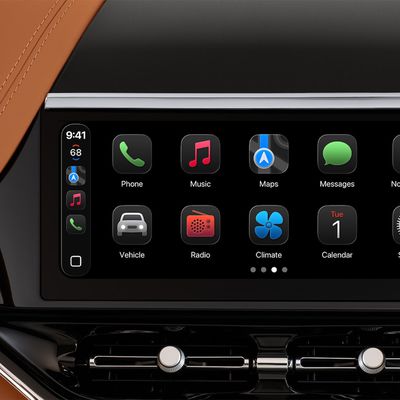
Last year, Apple launched CarPlay Ultra, the long-awaited next-generation version of its CarPlay software system for vehicles. Nearly nine months later, CarPlay Ultra is still limited to Aston Martin's latest luxury vehicles, but that should change fairly soon.
In May 2025, Apple said many other vehicle brands planned to offer CarPlay Ultra, including Hyundai, Kia, and Genesis.
In his Powe...
The calendar has turned to February, and a new report indicates that Apple's next product launch is "imminent," in the form of new MacBook Pro models.
"All signs point to an imminent launch of next-generation MacBook Pros that retain the current form factor but deliver faster chips," Bloomberg's Mark Gurman said on Sunday. "I'm told the new models — code-named J714 and J716 — are slated...
We are still waiting for the iOS 26.3 Release Candidate to come out, so the first iOS 26.4 beta is likely still at least a week or two away. Following beta testing, iOS 26.4 will likely be released to the general public in March or April.
Below, we have recapped known or rumored iOS 26.3 and iOS 26.4 features so far.
iOS 26.3
iPhone to Android Transfer Tool
iOS 26.3 makes it easier...
Apple is planning to launch new MacBook Pro models with M5 Pro and M5 Max chips alongside macOS 26.3, according to Bloomberg's Mark Gurman.
"Apple's faster MacBook Pros are planned for the macOS 26.3 release cycle," wrote Gurman, in his Power On newsletter today.
"I'm told the new models — code-named J714 and J716 — are slated for the macOS 26.3 software cycle, which runs from...
In 2022, Apple introduced a new Apple Home architecture that is "more reliable and efficient," and the deadline to upgrade and avoid issues is fast approaching.
In an email this week, Apple gave customers a final reminder to upgrade their Home app by February 10, 2026. Apple says users who do not upgrade may experience issues with accessories and automations, or lose access to their smart...