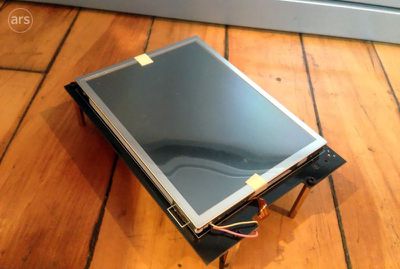
Ars Technica shares several photos of an early functional prototype of the iPhone from 2005, revealing a device closer in size to a thick iPad mini than an iPhone.
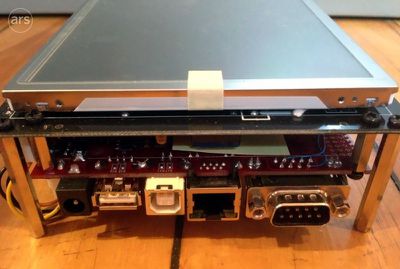
The photos were sent to Ars by an anonymous former Apple employee who worked on the project in the early 2000s. The prototype is 5x7 inches in size, and nearly two inches thick - though much of the thickness was to accommodate features like serial and Ethernet ports installed purely to use the device in a development environment.
Apple watchers have seen all manner of iPhone prototypes pop up on eBay, in court documents, and in leaked photos. But most were either close approximations of the first iPhone that was released in 2007 or of later models.
What we don't often get to see is early Apple prototypes, those from way before the iPhone started to look like a phone-like object. That's why we were excited to receive photos showing an in-house version of the iPhone from early 2005. The images to Ars through a former Apple employee who worked on various Apple hardware projects in the early 2000s and was thus exposed to some of the earliest versions of the iPhone.
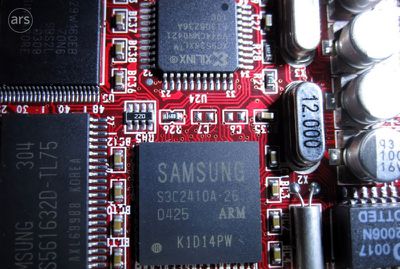
Ars Technica points out that the Samsung ARM chip used is "a distant relative of the chip the first iPhone ended up using, just older and slower."
Sunday February 1, 2026 10:08 am PST by Joe Rossignol
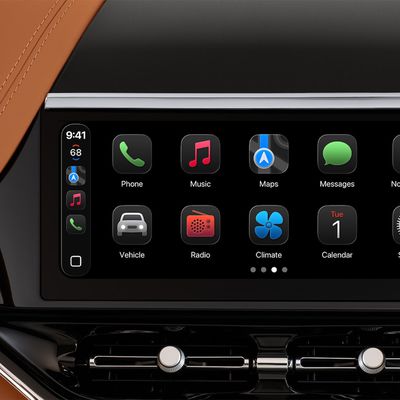
Last year, Apple launched CarPlay Ultra, the long-awaited next-generation version of its CarPlay software system for vehicles. Nearly nine months later, CarPlay Ultra is still limited to Aston Martin's latest luxury vehicles, but that should change fairly soon.
In May 2025, Apple said many other vehicle brands planned to offer CarPlay Ultra, including Hyundai, Kia, and Genesis.
In his Powe...
Sunday February 1, 2026 12:31 pm PST by Joe Rossignol
The calendar has turned to February, and a new report indicates that Apple's next product launch is "imminent," in the form of new MacBook Pro models.
"All signs point to an imminent launch of next-generation MacBook Pros that retain the current form factor but deliver faster chips," Bloomberg's Mark Gurman said on Sunday. "I'm told the new models — code-named J714 and J716 — are slated...
Tuesday February 3, 2026 7:47 am PST by Joe Rossignol
We are still waiting for the iOS 26.3 Release Candidate to come out, so the first iOS 26.4 beta is likely still at least a week or two away. Following beta testing, iOS 26.4 will likely be released to the general public in March or April.
Below, we have recapped known or rumored iOS 26.3 and iOS 26.4 features so far.
iOS 26.3
iPhone to Android Transfer Tool
iOS 26.3 makes it easier...
Sunday February 1, 2026 5:42 am PST by Joe Rossignol
Apple is planning to launch new MacBook Pro models with M5 Pro and M5 Max chips alongside macOS 26.3, according to Bloomberg's Mark Gurman.
"Apple's faster MacBook Pros are planned for the macOS 26.3 release cycle," wrote Gurman, in his Power On newsletter today.
"I'm told the new models — code-named J714 and J716 — are slated for the macOS 26.3 software cycle, which runs from...
Tuesday February 3, 2026 8:55 am PST by Joe Rossignol
In 2022, Apple introduced a new Apple Home architecture that is "more reliable and efficient," and the deadline to upgrade and avoid issues is fast approaching.
In an email this week, Apple gave customers a final reminder to upgrade their Home app by February 10, 2026. Apple says users who do not upgrade may experience issues with accessories and automations, or lose access to their smart...
I think everyone's readying way too much into this...
This isn't a prototype in a way that this hardware would have ever been pitched. This looks like a prototype board being used for software development. Dev boards like this get used all the time. You throw together some hardware that approximates the processor and memory structure that will be used for the final product and the software engineers get started while the hardware guys do their thing. They almost always have a lot of extra I/O used for debugging (like the Ethernet and serial port).
I've used very similar looking setups to develop software for locomotive air brakes and automotive ECUs. Nobody looked at the dev board and immediately though that it was the smallest air brake system they'd ever seen, or the slowest car. Seriously, the fact that a dev board used to develop software for the iPhone looked ugly means nothing.