In 1987, Apple produced a concept video demonstrating a future computer called the Knowledge Navigator. The tablet-like device offered the user a natural language interface, video conferencing, multi-touch display and access to a global network of information.
While seemingly the product of an overactive imagination, Apple's recent acquisition of Siri brings Apple a lot closer to that vision than ever before. Siri reportedly was born from the CALO artificial intelligence project which sought to fulfill a call for a "a cognitive computer system should be able to learn from its experience, as well as by being advised."
Apple's value in acquiring Siri appears to be focused on this personal assistance technology. Siri describes their technology:
Virtual Personal Assistants (VPAs) represent the next generation interaction paradigm for the Internet. In today's paradigm, we follow links on search results. With a VPA, we interact by having a conversation. We tell the assistant what we want to do, and it applies multiple services and information sources to help accomplish our task. Like a real assistant, a VPA is personal; it uses information about an individual's preferences and interaction history to help solve specific tasks, and it gets better with experience.
In fact, Siri's Chief Technology Officer Tom Gruber uses Apple's Knowledge Navigator video in his keynote and describes it as a "brilliant piece of vision work":
Gruber demos Siri and how it can accomplish tasks using a conversational interface and apply context to provide useful and personalized interactions. He also walks through what's possible today and how close we are getting. Given Apple's acquisition of the company (and presumably Tom Gruber), the talk is of particular relevance to Apple's future plans.
Sunday February 1, 2026 10:08 am PST by Joe Rossignol
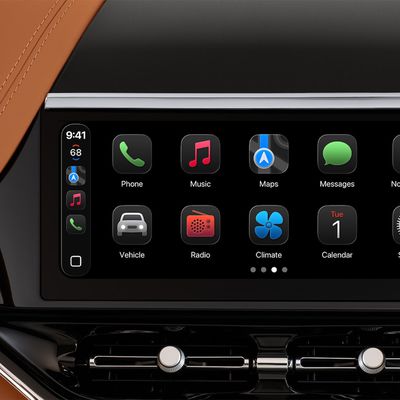
Last year, Apple launched CarPlay Ultra, the long-awaited next-generation version of its CarPlay software system for vehicles. Nearly nine months later, CarPlay Ultra is still limited to Aston Martin's latest luxury vehicles, but that should change fairly soon.
In May 2025, Apple said many other vehicle brands planned to offer CarPlay Ultra, including Hyundai, Kia, and Genesis.
In his Powe...
Sunday February 1, 2026 12:31 pm PST by Joe Rossignol
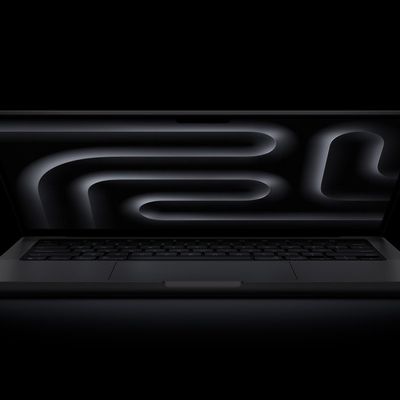
The calendar has turned to February, and a new report indicates that Apple's next product launch is "imminent," in the form of new MacBook Pro models.
"All signs point to an imminent launch of next-generation MacBook Pros that retain the current form factor but deliver faster chips," Bloomberg's Mark Gurman said on Sunday. "I'm told the new models — code-named J714 and J716 — are slated...
Sunday February 1, 2026 5:42 am PST by Joe Rossignol
Apple is planning to launch new MacBook Pro models with M5 Pro and M5 Max chips alongside macOS 26.3, according to Bloomberg's Mark Gurman.
"Apple's faster MacBook Pros are planned for the macOS 26.3 release cycle," wrote Gurman, in his Power On newsletter today.
"I'm told the new models — code-named J714 and J716 — are slated for the macOS 26.3 software cycle, which runs from...
Tuesday February 3, 2026 7:47 am PST by Joe Rossignol
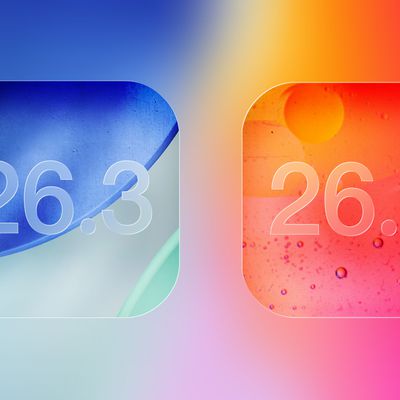
We are still waiting for the iOS 26.3 Release Candidate to come out, so the first iOS 26.4 beta is likely still at least a week or two away. Following beta testing, iOS 26.4 will likely be released to the general public in March or April.
Below, we have recapped known or rumored iOS 26.3 and iOS 26.4 features so far.
iOS 26.3
iPhone to Android Transfer Tool
iOS 26.3 makes it easier...
Saturday January 31, 2026 10:51 am PST by Joe Rossignol
Apple recently updated its online store with a new ordering process for Macs, including the MacBook Air, MacBook Pro, iMac, Mac mini, Mac Studio, and Mac Pro.
There used to be a handful of standard configurations available for each Mac, but now you must configure a Mac entirely from scratch on a feature-by-feature basis. In other words, ordering a new Mac now works much like ordering an...
should be noted that the knowledge navigator pre-dated the "world wide web" and most of the internet. Mosaic (first web browser) was released in 1993. so it was a pretty remarkable vision at the time.